Tuesday, March 3, 2020

God of War (2018) - Thoughts


It's a common misconception—if you're an adolescent male—to correlate maturity with "mature themes" meant for adults. Nudity, swearing, and excessive violence can feel like good markers for a "grown-up" story (just look how well it works for HBO shows), but this correlation gradually breaks down over time, especially when you expose yourself to heavy material wrapped in an innocent veneer (Inside Out, Marley & Me, etc.) Likewise, a lot of gritty, edgy media that you might've enjoyed as a teen for how "real" it was (Wanted, Wizard's First Rule, etc.) quickly loses its luster when you realize just how ugly glorified violence and gross sexual encounters can be.

2018's God of War displays a maturity that the series always lacked. Now, there's nothing wrong with wanting to create material that revels in its own juvenile themes, but the austere, self-serious plot of the original God of War trilogy was hard to buy into. It wanted to be mature—the first game opens with Kratos attempting suicide—but you had to suspend your empathy for a number of ghoulish events. Over the course of three games, the series never really attempted to analyze its gnarly penchant for bloodlust, at least it any significant way beyond pleas from doomed NPCs. It was a revenge story for revenge's sake, and while that's fine, PS4's quasi-reboot God of War is a massive step up that I never knew I wanted.


When the title was first revealed at Sony's 2016 E3 press conference, I was hesitant. First impressions told me it was a step in the wrong direction: an over the shoulder cam, slow walking segments, no blades of chaos, and your... son is along for the ride? It was a bold shake-up from what fans might expect, but it didn't really feel like God of War—at least from the footage I watched. Fast forward to when I played it several months after its release and it... still doesn't feel quite like God of War... but that's okay! What's important is that it feels good.

Well, maybe not at first; the game took a while—a long while—to get into. There's a lot of new systems to familiarize yourself with and a completely new control scheme that obliterates old habits (RIP Square Square Triangle). Usually it doesn't take too much time for a game to click with me—even something as bizarre as Final Fantasy XV falls into place after a couple of hours—but I basically got to the end of God of War before I felt like I knew what I was doing. Your mileage may vary here, but the game's tendency to over-complicate things with its wealth of upgradeable materials, sockets, runes, and stats can be pretty off-putting, especially if you're wary of ineffectual RPG creep in modern games. I wasn't keen on the amount of random pick-ups in Horizon: Zero Dawn, and God of War only exacerbated that problem.

Thankfully, the length of time it takes to familiarize yourself with God of War's systems and equipment is probably the worst part about the title. Kratos's journey into Norse mythology is a beautiful, immersive, and sizable adventure that rarely gets tedious (unless you're running through Niflheim). The open world structure is a massive boon to the series, giving the player a land sprinkled with mystery without the typical Ubisoft side quests confetti everywhere. Even during obvious fetch quest segments of the main story, there's plenty of dialogue to keep the player invested. And it's largely thanks to the new heart of the series: Atreus, Kratos's son.


The father-son dynamic is a fantastic inclusion. Games are still knee-deep in their "disgruntled dad" phase, but what's special here is that Atreus doesn't get damseled early on or killed off for tragedy; he's your reluctant partner in crime the whole adventure. You start God of War with an affinity for Kratos simply due to all the time you've spent with him (murdering people), but Atreus is the one with genuine curiosity, growth, and a sympathetic ear for the world around him. The franchise's lean into mythology has always been one of its best selling points, but the premise benefits greatly if it has a character like Atreus interested in all this deep, aggrandized lore. Plus some of the smaller, gentler moments between the father and son can certainly pull at your heartstrings... assuming you find Kratos's ornery nature forgivable.

Truth be told, Kratos is probably the second worst thing about the game, but his terribleness is very purposeful. It's placed in juxtaposition to all the characters around him: paralleling the Stranger, contrasting with the Witch of the Woods, and conflicting with his son. While comparisons between Kratos and others could be made in the older games, it was largely with manipulative antagonists that the player held no sympathy for—meaning the they'd side with the Spartan even as he brutalized women. God of War turns the lens on Kratos more frequently, every terse conversation with Atreus changing him bit by bit. Also, if it wasn't apparently already, I really have a soft spot for stories that condemn the morally questionable actions of their main character.

I haven't really discussed the combat outside of "it was confusing at first", and while I don't have a lot to say about it, I appreciated most of the changes. Enemies are diverse, there's a great assortment of special abilities, and the impact of your weapons is better than its ever been. Sound effects are chunky, animations have a visceral weight, and you're guaranteed to find at least a couple attacks that you'll obsessively fit into every other combo (Executioner's Cleave babyyyy!) It does suffer from having a wealth of button combinations that are easily mixed up (good luck remembering that your son can shoot arrows), and the leveling system is a real fickle mistress—if an enemy you hate shows up with a red number next to their health bar, prepare to restart. But those issues are minor blemishes in a system that works astounding well; never did I think I'd play a satisfying character action game with an over the shoulder camera.


God of War may not have become one of my favorite franchises, but the PS4 title makes the best case for the series yet. It grants Kratos ample room to grow, both in its plot and gameplay, and gives him a much-needed conscience in the form of his lovably naive son. It presents the player with a world so fascinating and fun that I did nearly every quest I could (besides the grueling challenges in Muspelheim), long after the credits had rolled. It may take a while to get into, but God of War has evolved well beyond what it once was, arguably becoming the most robust and engrossing title on the PS4. Even with games I love I'm usually not clamoring for a sequel, but I'll happily dip my toes back into Midgar's chilly waters whenever Santa Monica Studios should decide to return.

---------------------

Title image obtained from: softpedia.com

Wednesday, February 26, 2020

Secret of Mana - Thoughts


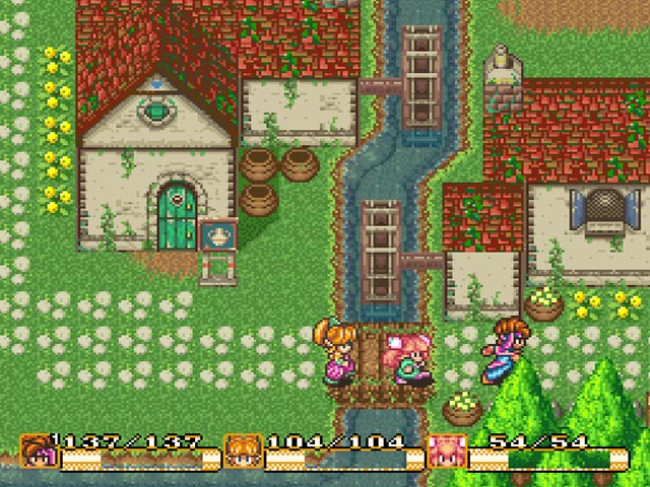
Secret of Mana fully embodies "style over substance". It's not a substanceless game but the best part about it by far is its presentation: the graphics are gorgeous, the music is serene, and the menu wheels are inventive. The visuals are so enticing that it'll hide the games faults until about two hours in, when you start to realize it doesn't play quite like you think it should. That doesn't ruin the experience per se, but it won't stop you from musing, "Man, this game should definitely be better than it is."

TURN TO CHANNEL 3: Unlock the ‘Secret of Mana’ and find a groundbreaking RPG

Perhaps part of this dilemma is that the story does little to detract from the crude gameplay—precisely because there's so little story in the first place. Secret of Mana is a simplistic, by-the-numbers hero's journey where the bad guys are really bad and the good guys are really good. There are a couple of interesting bits here and there (like the mana fortress destroying the ecology to stay afloat) but in the end the game pales in comparison to peers like Final Fantasy and Chrono Trigger. If there's a reason you keep playing the game, the plot will assuredly not be it.

What it might be, however, is the game's charming music. Secret of Mana is host to a bevvy of uplifting and energizing tracks, as well as some more thoughtful, melancholy pieces. I'd be remiss if I didn't mention that it has one of the most unique and electrifying final boss themes, that makes up for the relatively lackluster fight. And even if you're not blown away by the score, the sprite work and animations are fairly impressive. Areas are lively and elaborate, and the massive bosses are vibrant and sometimes—to their chagrin—adorable.


But the combat... good golly the combat. I praised the menu wheel for being a novel addition to the game, but it's cumbersome to navigate for single spells, meaning you probably won't be using them all that much. And when you do opt to dispose of a magically vulnerable foe, the rest of the party is forced to watch in stunned silence as the attack goes off... and occasionally misses due to invulnerability frames with no tell. This will happen every now and then for your spells, but your physical attacks are prone to whiffing. It'll get exhausting watching your fully charged-up attack ineffectually pass over an enemy, especially since the longer attack animations don't translate to, well, longer attacks. While there's a sound cue that goes off for a dodge/block/miss/etc, sometimes it won't go off at all and you'll be left wondering what you did wrong. I feel that it's a major failing of an action RPG to have such loose and slippery action.

The most creative part of the gameplay is that using spells from within a certain magic school will level that school up. So the more you heal, the stronger you healing becomes, which technically helps to diversify your spell list since you'll want at least a couple of strong elemental attacks. But like Final Fantasy II, this only works in theory, as your underleveled (and new!) spells will do such pitiful damage that they won't be worth the mana to cast (unless you're grinding). The weapon system works the same way, so you're likely to see the same attacks over and over unless you want to double your playtime diversifying.

And it's not like you'll need to either. Secret of Mana is far from being a difficult game, so long as your equipment is up to snuff. When it's not, bosses will steamroll over you hilariously fast (enjoy being pinned down by the tiger boss). With proper gear most battles are a cakewalk, and even when foes put up a fight, there's usually a spell that'll keep them stun-locked. Some duels can go on forever when you haven't leveled the boss's weakness (ugh the slime dude) but carrying a stock of walnuts ensures you have enough mana to burn through the opposition. At the end of the game I was skipping nearly every enemy, realizing they're less of a threat and more of a mana sink on the way to the boss. And it's always a bad sign when you want to spend as little time as possible interacting with the game's combat system.


I remember liking Secret of Mana as a kid. It was fun spending time in the crystal forest and the desert, nodding my head along to the sweet music as I gradually leveled Salamando. But coming at it as an adult, it's just so... bare-bones and unrefined. You get more personality from the sprites of the characters than you do the writing, and fighting enemies often feels like throwing blunt darts at a dart board. Secret of Mana has an amazing shell that showcases Square Soft at their best, but the yolk has turned more sour than I expected.
---------------------

Images obtained from: blazingcariboustudios.com, nepascene.com, rantingaboutgames.com, geeksundergrace.com

Wednesday, February 19, 2020

Uncharted: The Lost Legacy - Thoughts


[contains minor spoilers]

I went into Uncharted: The Lost Legacy expecting a brief, action-packed campaign. I walked away from it surprised that I had played yet another nearly full length Uncharted title. I don't know how Naughty Dog was able to churn out an adventure of this quality a year after Uncharted 4 was released, but I must confess that I'm impressed. Chloe Frazer's Indian expedition is a beautiful experience—something that only for this series could be considered "par for the course"—and returns the carefree attitude absent from A Thief's End. The villain is nasty, the player character is quippy, and there's a bunch of explosions and crumbling ruins and trains—Uncharted: The Lost Legacy is Uncharted to its very core. Which can be a good or a bad thing, depending on how you feel.


The bad thing about it, is that the game doesn't bring a lot of new ideas to the table. Sure, you've got the unlikely duo of Chloe (Nate's fiery ex) and Nadine (Uncharted 4's no-nonsense antagonist), but Chloe fills Nate's role very easily and Nadine is... well, Nadine's seriousness is actually fairly entertaining. But the friction between the two can feel a bit forced at times, especially when the biggest point of contention revolves around a decision that occurred offscreen. The banter and acting are enjoyable, but if you've played any of the other games in the series, there's nothing really remarkable about the heroines' interactions, even if the story wants you to get hyped for girl power.

The Lost Legacy is still great though. The Uncharted formula isn't something that invigorates me nearly as much as, say Dark Souls, but I can recognize that what's here is close to the cream of the crop. There's a really cool section of the game that's a miniature open world segment, letting you tackle its three "towers" in any order you wish. There's both optional side battles and observation puzzles, which gives you more of a reason to pay attention to your surroundings. It almost feels like a prototype for a new Uncharted game, but it's refined enough that you won't notice that while playing. And while you can spot some load times masked by muddy hills that are hard to climb, it speaks to Naughty Dog's professionalism that the entire zone is seamless and smooth (or at least was for my playthrough).


Before sitting down to write this entry, I wasn't sure about whether or not I preferred The Lost Legacy to Uncharted 4, but one big factor definitely tipped it over the edge for me: the combat. Nate's final adventure had him fighting in some unique but mazelike locales, whereas The Lost Legacy returns to predictable, flat settings. While buildings may have multiple stories to scope out and the open world section lets you tackle its encounters from any direction, the layouts are accessible and the enemies never exceeded double digits (not in the sandbox scuffles, at least). The biggest sign that I was gelling with the combat was being able to complete an encounter without getting spotted, which would've been an impossible task for me back in Uncharted 4. I may have adjusted to the new gunplay, or slowed my pace because I hadn't played the game before, but either way the fighting definitely clicked with me.

I have to admit that I did receive a smidgen of aid via the generous checkpoint system. And by generous, I mean really generous, as occasionally it would checkpoint me after I had died, whether from a mistimed jump or enemy reinforcements gunning me down. Being able to start ahead of my death saved me a bit of frustration, but it's a shame I wasn't given another chance to prove myself. The only other oddity The Last Legacy has is that the game has two final acts. You'll reach a point where it feels like the story is ready to wrap up... but then it keeps going... and ends on what I can only call a "retread." I guess the final act rug pull is a small subversion of the previous titles, but all it really does is take two very Uncharted-y events and swap their places.


Uncharted: The Last Legacy grants a much needed break from Nathan Drake & co. in favor of tracking a lost treasure through India with two fun gals. If you look under the hood, it's unfortunately not that different from the games that came prior, even with the bold new leads. But if you like carefree adventures, stunning visuals, and colossal architecture, The Last Legacy easily stands toe-to-toe with A Thief's End. Throw in a big fun free-form exploration segment, and you arguably have yourself the best Uncharted experience the PS4 has to offer—as long as you don't mind it being on the shorter side.
---------------------

Title image obtained from: geekireland.com

Wednesday, February 5, 2020

Uncharted 4: A Thief's End - Thoughts


Uncharted has never been a particularly complex or inventive franchise—but it sure as heck has been pretty. Jumping from the PS3 to the PS4, Uncharted 4: A Thief's End flexes Naughty Dog's "new tech" prowess like a professional body builder at a local gym. I thought I would get tired of announcing "wow this is a gorgeous vista!" four entries into the series, but Nathan Drake's final adventure kept me coming back for one more round. While the flabbergast-inducing eye candy is the premier feature of A Thief's End, the game also—surprisingly—diverts its attention away from non-stop gunfights towards more moments that reflect on Nathan Drake's achievements, mistakes, and regrets.

Which sounds cool... except that the narrative fails to capitalize on it.


I felt so disappointed by Uncharted 4's story on the first go-around that I dedicated a whole entry to it. Long story short: I felt A Thief's End was narratively dissonant, building itself (cleverly) towards one ending before closing out on its exact inverse. For this second playthrough, knowing what to expect helped me to focus on smaller bits that I had missed while on my search for the bigger picture. Uncharted 4 has a lot more slower, minor moments where the characters aren't bringing their quippy A-game to the table. That's not to say that they've stopped obsessing with being funny—just that there are a lot more breaths between ideas, as if they're actually thinking through what they're going to say in their head.

Thematically I still think the game is bunk, but I appreciate its narrative more than I used to, especially because A Thief's End could've played it safe like Drake's Deception did. There's a maturity to the series that hasn't been expressed before, something that likely couldn't have been expressed until Naughty Dog went and made The Last of Us. Nathan Drake is older, more conscious of his reckless adventuring lifestyle, and there's a bit more poison to his lies. Not enough, mind you, to turn the series into a fascinating critique on its plucky, mercenary-murdering attitude, but you'll still watch the story unfold with awe, captivated by its firm cinematography and believable acting. It's an engaging tale—but it's also one that lacks any sort of punch.

This ties directly into the blog entry I've already written, but slowing the story down to put Nate's mundane life on display doesn't really amount to anything. Don't get me wrong—it's really cool to see and I appreciate it—but there's no trenchant discoveries unearthed here. The plot twists and shocking reveals serve only as naked tools for drama (like Sully's """betrayal""" in the first game), unable or unwilling to dive any deeper than that. And I get that Uncharted is a lot less serious than The Last of Us, so diving into trauma may be a step too far, but then... why take adventuring so seriously? Why strip away bits of whimsy that the series previously exhibited, just to put more of an emphasis on realism and consequences? The old games may have tried to be too funny at times, but A Thief's End drives itself in the opposite direction, becoming so sober and understated that sometimes you come off of conversations simply feeling nothing.


I'm definitely being a bit too hard on Uncharted 4, but it's largely because I wanted big things from it in a post-The Last of Us world. The only aspect that I wasn't let down by were the visuals: water is gorgeous, character models are immaculately designed, Madagascar is downright breathtaking, the creeping foliage in the latter half of the game is dazzling, etc. etc. It's a lot of fun to stumble around and hop across rocks while paying attention to Nate's animation sequences, and almost every chapter has a great piece of eye candy to look at, whether it's thin seaweed shifting in a trench or a massive clock tower clinking away. The puzzles are also pretty good too, sometimes demanding quite a bit from your spatial reasoning, though they're few and far between.

Combat on the other hand... is not my favorite. If I was to rank the action in the series, I'd probably say 2 > 4 > 3 > 1, but there's a wide gulf between 2 and 4, and a grenade-shaped asterisk between 4 and 3. Besides me not liking the weapons as much and cursing the damage-based recoil, A Thief's End also botches most of its sandbox fights. The open areas you're allowed to fight in are gorgeous, vertical, asymmetrical zones with a lot of nooks and crannies... which all make it hard to keep track of foes without getting detected. And when you inevitably get spotted, you'll run around and shoot manically for a couple of minutes, just to have a shotgun guy to hop down from some unseen ledge and fill your ass with lead. Uncharted 4's wild and nonlinear sandboxes made it impossible to think up a strategy after I had failed them a few times, something that the older games—even if they were more frustrating—would at least allow. Even if the combat in Uncharted 4 is secretly good and I'm stubbornly not understanding it, the gunplay being shelved for the sake of the story meant I hardly had a chance to warm up to what little was there.


Nathan Drake's swansong is a fitting one for the series. I may bemoan a lot of aspects about it here, but Uncharted 4: A Thief's End is a remarkably polished game that delivers entertainment, at the very least. The problem, of course, is that while polish may obscure the blemishes, it can't hide them forever. A Thief's End doesn't feel vestigial like Uncharted 3 does, but its proud ambition doesn't lead anywhere—well, anywhere truly praiseworthy. It's a good game that'll leave you exhausted. It's a beautiful title that frequently loiters about. It's a fitting end for a franchise that always played it safe.
---------------------

Title image obtained from: ResetEra.com

Thursday, January 30, 2020

Uncharted 3: Drake's Deception - Thoughts


[contains minor spoilers]

In many ways, there's not much that separates Uncharted 2: Among Thieves from Uncharted 3: Drake's Deception. The third entry in the series is very similar in style, tone, and pacing to its older sibling, and likewise blows Drake's Fortune out of the water in terms of quality. Perhaps the most noticeable difference is that while Among Thieves leans into cooler climates for its latter half, Drake's Deception steers toward an arid desert in its final act. But if you play the games back to back, climate isn't the only thing that separates these two—you'll inevitably notice that combat has gotten more... explosive.


Thematically, Drake's Deception remains very familiar and frankly unambitious. A lot of old story beats get plucked from the other games, including mythical lost cities, fake-out deaths, Nate reconnecting with Elena, and a dull villain guarded by a detestable henchman. It's all entertaining, mind you; the playful banter between the main cast (as well as the stellar mocap) is on point as always, carrying the player through the plot even if the road feels well-trodden. Likewise the set pieces and spectacle are what you'd expect: loads of deteriorating architecture, extended chase sequences peppered with gunfire, and a really elaborate (and cool) vehicle sequence that leaves Nate exhausted and alone.

But there's not really anything that sets Drake's Deception above Among Thieves. By sticking so close to the Uncharted formula, the game struggles to etch out its own identity, especially since the villain—and by extension the story—is so flat. Cutter is a delightful addition to the Uncharted crew, but he spends more time out of the game than in it. The only narrative curve balls thrown at the player are the dizzying drug trips and desert scene, the former always managing to overstay its welcome. But admittedly, the desert scene is probably one of the highlights of the game: it allows the game to take a break from Nate's intrepid lifestyle to torture him over his misfortune, all while keeping the player wondering what will happen next. It's a very un-Uncharted-y experience that I wish the game had tried to flirt with more, rather than playing it so "safe" for the most part (or perhaps "conventional" is a better word, since Nate is no stranger to "unsafe" environments.)


You know what's really unsafe though? Trying to remain behind cover in Drake's Deception. The game's new tool for removing entrenched players is grenade spam, which gets fairly ridiculous the deeper into the story one gets. The player can now retaliate by chucking grenades back to their owner, but it can be a risky move as missing the throw window will get you blown to smithereens. This motivates the player to be even more mobile than before, which just doesn't work when the game only throws scant pieces of cover at you. The really laborious instances are few and far between, but when they pop up it can feel like you're grappling with raw RNG instead of engaging in a complex combat system.

For the most part, I was lukewarm on most of the gameplay, as it really felt like I had been there, done that. The one exception was the ship graveyard: that particular set piece has held up exceptionally well, as it is the best part of the game. The whole concept is gnarly and novel, giving the player a handful of rusted sandbox environments to hunt their foes in. The player can dip beneath the waters to avoid detection, and the constantly undulating environment interferes with your scouting, presenting you with a unique challenge (can this enemy see me? Wait was that a guy over there?) It's just a shame that the entire section is a pointless, wild goose chase that has no bearing on the plot; it felt like a tech demo that Naughty Dog really wanted to showcase, but had no idea where to slot into the story.

The last bit I want to mention is that the puzzles are a lot better. They're still somewhat rudimentary, but they're considerably more elaborate than those in Among Thieves (the chateau crypt and metallic shadows being my favorites), and they thankfully don't rely as heavily on checking your notebook as before. If anything, playing Drake's Deception reminded me of how disappointing the puzzles were in 2; enigmatic mechanisms and secret rooms are nearly as important to the concept of exploration as climbing up the face of a crumbling temple is.


There are undoubtedly times when Uncharted 3: Drake's Deception is the most impressive and unique entry in the series—but for the most part, it can't escape from being the grenade-obsessed little brother of a more successful title. Among Thieves is definitely a good game to emulate, but I can't emphasize enough how much the familiar story beats drag the game down. The better puzzles don't negate the more volatile combat, and the warmer settings aren't necessarily more intriguing or jaw-dropping than what the player's already seen in the snowy mountains. The phenomenal ship graveyard section encapsulates Drake's Deception well: is it fun and exciting? Sure! Does it feel necessary to the overall Uncharted experience? Uh, no, not really.

Monday, January 20, 2020

Pandemic Legacy: Season 1 - Thoughts


[contains minor spoilers]

Brief note about aforementioned spoilers: I try not to specifically spoil anything important from the game, but know that any details that are different from the base game of Pandemic are technically a spoiler, so just be aware of that. If the game is currently sitting on your board game shelf, I recommend skipping this whole article and just starting it right now.

Pandemic Legacy: Season 1 is a fascinating experiment. Four diseases break out across the world every time you sit down to play, and you must globe hop in an attempt to stymie the infections, biding your time until you have enough city cards to eradicate each plague. Being a legacy game, what happens in one game can affect all future games; if Paris begins rioting early into your playthrough, it'll probably burn itself down to the ground in a future session. While Pandemic Legacy has a lot of fantastic mechanics at its core, I'd contest that what keeps players coming back to the game is this simple question: when the world begins to crumble, how would you mitigate casualties?


I've never really loved Pandemic. It's a palatable blend of soft strategy and random card pulls, but I've always preferred as little RNG as possible in my board games. At times Pandemic can feel too dependent on what cards your team draws, and it's also a game where one player can effectively make all the decisions. My board gaming group lives a considerable distance away from me, so rather than bug them about playing a legacy game every time I visit, I decided to solo Pandemic Legacy to see what all the fuss was about. I was concerned about the difficulty playing alone—especially since I lost the two practice games I played beforehand—but it honestly wasn't all too bad! After a few plays you get used to when the epidemic cards pop up (ie cards that worsen the condition of infected cities), and every unlucky card pull is usually counterbalanced by a narrow victory.

Pandemic is plenty of fun on its own, but the Legacy version is where the premise of the franchise really shines. Early on in my playthrough, South America and Africa got hit hard with disease. In the base game I would've helplessly watched as the continents rapidly went dark, but here I could try and slow their decay. And doing all you can is a good idea too: Pandemic Legacy lasts a full year in-game, with each play session covering a month or half a month, meaning you'll play anywhere from 12-24 times total. And while losing cities is bad in the base game, here they'll become frequent hot spots that spread infection every time you play. So when South America and Africa began deteriorating in the first quarter of my year, I was faced with a grueling choice: do I run my operatives in to halt the outbreaks there, or focus on the main objective in the hopes of finishing the game faster? One session I chose the former, and it cost me my win that month.

But as my campaign continued on, it became harder and harder to save cities on the brink of disaster, especially when I received ways to quarantine those danger zones. One of the coolest things about Pandemic Legacy is that it has a lot of "unlockable" content that's tucked away in boxes and portfolios, which the game will tell you when to open. And it doesn't add more to the game as much as it starts to transform how you'll play and interact with it. You'll acquire more options for moving your characters, empowering your cards, or stopping diseases—all of which are frequently backed by the game's military forces. So rather than send in medical teams to treat sick citizens, I was marching troops to the border to prevent anyone—infected or healthy—from leaving. One month I was rushing operatives into Africa to save it, the next I was setting up blockades and reporting that everyone inside was already lost. As I watched Africa fall, I told myself "this is the only way to keep the world safe!"


Moments like that and many others are what elevate Pandemic Legacy above its parent game. In the base game, the novelty of seeing a continent wracked by disease loses its impact after the first experience, but in Legacy you have to live with your decisions. I had failed Africa, and was forced to watch as South America slowly, month by month, descended into chaos. And every now and then the damage would bleed over into Europe and North America, and I'd reconsider my priorities. The casualties were already so high—could I really condemn Atlanta and Madrid to the same fate? (The answer was eventually "yes" to the former.)

Besides having difficult decisions, Pandemic Legacy is phenomenally well-balanced and fun to play. Every major unlock adds a new mechanic to the game, keeping it from getting stale while not overloading you with too many moving parts. The game is easy to learn and gives you plenty of customization in the form of end-game upgrades for your characters and cards. It layers on a good amount of strategy at a very natural pace, but the game's biggest draw still goes to the tough questions that'll arise as a city begins to fall. The only thing I was really disappointed in was the scoring system you're given after Pandemic Legacy ends (one specific category is cruelly "all-or-nothing"), but it's a minor complaint to an otherwise excellent campaign.


Pandemic Legacy isn't the best introduction to modern board gaming, but it's accessible nature basically means there's no reason not to play it. It's a stressful game, but it's never punishing; you might panic over the state of the world as epidemic cards are pulled in quick succession ("no not Khartoum again!"), but you'll learn to accept the consequences and move on. And as you do so... as you quarantine another dying city... as you replace all your medical personnel with generals and soldiers... you'll start to wonder, "is what I'm doing necessary? Is it right? Could I have done more?" And the answers will range from bittersweet, to downright haunting.

Even if you're not a big board game person, you should still play Pandemic Legacy—you won't regret the experience.
---------------------

Images obtained from: spieledeluxe.com, richcontext.com, boardgamequest.com, polygon.com

Monday, January 6, 2020

klocki - Thoughts


The connection to Hook is immediately apparent as soon as klocki boots up: it's a no frills, no story, no nonsense puzzle game that's all about exercising your wits for around an hour. Unlike Hook however, you likely won't walk away from it thinking "was that really it?" I enjoyed Hook but couldn't really say it hooked me; klocki on the other hand, kept me enthused all the way to the end.


The biggest difference between the two games (besides the bright colors) is that klocki changes up how you interact with it. It's primarily a game about moving squares around so that they form either complete circuits or rounded-off line segments, but the mechanics will be shaken up every five levels or so. At first you'll patching together simple circuits, then you'll be creating circuits on three dimensional objects, then the way in which you can spatially manipulate the tiles will change, then you'll be making multiple circuits, etc. It starts off extremely simple but gets visually complicated, to the point that outsiders will likely be unable to parse any information at the final puzzles.


Like I mentioned, what keeps klocki ticking is that any time you get bored or frustrated with a mechanic, the game will quickly shift over to something else. The only time I'd argue that it gets particularly vexing is when sliding blocks are introduced, since the rigidness of that mechanic doesn't flow with the laid-back pace of the rest of the game. Thankfully the three 9x9 stint of sliding puzzles is the worst of it; for the most part, klocki is a relaxing game to mellow yourself out with at the end of a long day. Like Hook it's not a brain burner in any way shape or form, but it'll still provide a gentle release seeing your lines light up.