Monday, April 20, 2020

A Way Out - Thoughts


[contains minor spoilers]

I'm not sure where I stand on A Way Out—I've been left kind of... confused and unimpressed. The premise behind the game is amazing: it's a cinematic, co-op-only campaign about busting out of jail and getting sweet revenge. Despite both characters having their own distinct personalities and motivations, there's a lot about them that just doesn't mesh with the gameplay or the story. Honestly, A Way Out makes a good case for why realistic dialogue was removed for Brothers.


Hazelight's first game, Brothers: A Tale of Two Sons, is an excellent experience about two kids on a journey to save their father. What sticks out to the player the most throughout it (besides the purposefully awkward controls) are the moments of levity the brothers can engage in, as well as the gut-wrenching ending. Strangely, A Way Out unabashedly mimics these two facets, but comes across as more confused and dissonant due to it.

The main characters being playful and absent-minded in Brothers is great because they're literal kids. But in A Way Out, a mere day after escaping from prison, our convict protagonists invade someone's house and can... play piano? Smell flowers? Build a house of cards? The miscellaneous activities the players can partake in are fun, but they detract from the urgency of the story. Players can opt to avoid silly things, but then they risk missing out on dialogue and character flavor—the ingredients the game is built around. And humdrum activities like watching TV or petting an animal may be within the realm of realism, winding up a sewing machine serves no purpose other than to say, "Hey, look what we programmed into the game!"


Likewise the dialogue isn't natural in a plot that demands it to be. Tonally, Hazelight hits on all the right points, but conversations are frequently stilted, weird, and forced. A Way Out is written with the script consciously in mind, instead of an ear for how conversations should carry from line to line. And even when the dialogue doesn't sound foreign, there's usually not enough substance to what's being said. Most of the game (barring the final act) is played at face value, giving you few reasons to invest in its characters or loathe its cartoonish antagonist. You're better off enjoying the characters for their archetypes and thinking of the story as a pulpy 70s revenge flick.

The reason I'm so down A Way Out isn't because it's terrible; the game was just surprisingly mediocre. It looks alright and is entertaining for the most part, a couple of good co-op ideas popping up now and then. For example, there are occasionally forks in the road that ask the players if they want to solve a problem quietly or with violence, and being forced to row a boat together provides for some good laughs. The cinematic framing of the cutscenes and gameplay—which allow you to view the world through both character lenses at once—is a brilliant touch as well. There's also some fun gunfights the players get to partake in, which is laudable considering this is Hazelight's first crack at that style. However, at the heart of A Way Out is its narrative and its protagonists, and neither one really escapes being a shortcoming of the game.


I like the director behind the game, Josef Fares. I think he's a strong visionary that handles tragedy in his works very well. I believe the problem, however, is that he's a subpar writer—or at least, A Way Out has shown that the script needed more revisions and a serious editor. There's a little bit too much residual DNA left from Brothers here, and while the final act is the strongest moment of the game, the intrigue it brings is too little too late, and honestly comes across as forced. A Way Out's template could be used to make an interesting game in the future, but 'll likely always remember it as a goofy co-op adventure that left me scratching my head.

---------------------

Images obtained from: ea.com, ShyGuys.io, VentureBeat.com, TechRadar.com

Saturday, April 11, 2020

Mass Effect - Thoughts


The beginning of the most epic trilogy on the Xbox 360 is as rocky as a cliff's face. BioWare's Mass Effect is an active struggle to play—it fights back against your RPG and TPS instincts, trying to blend both but being good at neither. What it is, however, is an extremely stable bedrock to one of the best video game universes of all time. Mass Effect's aesthetics, characters, and interlocking political struggles are second to none in the seventh console generation, and no amount of clunky combat or barren worlds could ever change that.


I think an interesting distinction should be made here: Mass Effect's universe is engrossing but not particularly poignant. It doesn't have a deeper statement to make about our society like Papers, Please, nor is its plot something that can only be done in the video game format like Undertale. What it does well is delightfully simple: it gives you a fully 3D, novelesque sci-fi/fantasy universe to explore on (mostly) your own terms. You'll get to converse with various species, visit colorful planets, and dive into scads of lore and fictional physics. Mass Effect is a big playground where the goal isn't to find and create interesting gameplay scenarios like in sandbox games—it's to merely learn more. Discovering another codex entry or resolving a dispute between business partners is the crux of the game, not player expression.

This is the main reason why Mass Effect works despite its plentiful shortcomings. At the end of the day, what you'll retain from your experience are the conversations, character struggles, and anxiety over the choices you didn't pick. The last aspect—the choices—can unfortunately have shallow results (especially as the series reaches its close), but it feels meaningful in the moment, pushing you to ponder strange-yet-relatable hypothetical conundrums, like "can this species proselytize on the space-UN's property without a permit?" I think these questions can be enlightening without any kind of consequential follow-through, just because it gets you ruminating over which side of the fence you stand on. That's not to say I don't wish the series had greater ramifications for your actions, but that's not really a problem that the first game has to grapple with.


What is a problem is the gameplay. And no, not just the rubbery Mako sections—the gunplay in Mass Effect is a shockingly jittery and imprecise. Although I'm playing through the series as an Adept on the second hardest difficulty available, the challenge put forth by the game really wasn't an issue (especially once my entire biotic catalog was available). My gripes stem from the fact that fighting enemies is rarely satisfying: the framerate is constantly tanking, your weapon accuracy is laughable, foes are either stationary target practice or blitzing you, re-positioning is cumbersome, and the cover system is so sticky that you're better off manually dancing around corners. Meanwhile, whenever your allies aren't body blocking you or dying to god knows what, they're whittling enemies away at imperceptible rate. Keyword being imperceptible, as its an adjective the game is far too comfortable with.

A big problem with Mass Effect is that it wants to be an RPG without providing the information of one. There are no combat logs or floating damage numbers—the best you can surmise from your damage is how fast the enemy health bar (or tiny shield blip) lowers when you're on the offensive. The game provides you with information on the level up screen, but hard numbers about damage, distance, and percentages are fuzzy when you can't observe them during the gameplay. Leveling up truly feels like an arbitrary experience, outside of grabbing whatever nodes give you access to new abilities. And not even all of them are necessary; by the end of the game I was bulldozing through everything with just Lift and Marksman, the former for disabling foes and the latter for as my best DPS ability. I found that Warp and Stasis weren't even worth the time required to select them from the radial menu.

I don't really like the combat in Mass Effect, but thankfully the player can easily adapt to it. Neither the gunplay nor the (often hilarious) Mako sections reach truly abysmal depths—both are mostly a mediocre roadblock to the story. It also doesn't help that the bulk of side missions take place on the same mountainous, featureless planetoids which all happen to contain one of three buildings-slash-battle arenas. Between sniffing out missions in the Citadel's endless, labyrinthine hallways and having every side mission conclude in one of three drab locations, I was more than happy to be done with the game. I barely even touched its arena-based DLC, which featured endlessly spawning enemies (joy.)

Oh, and the last thing I need to begrudge is that inventory management (on the 360 at least) is a downright mess. You can only delete items one at a time, and any weapons or armor mods you purge return you back at the top of the list where your best gear is, meaning you have to scroll all the way down to find the junk you're trying to toss, delete it, and then repeat the process again. For scores of items. It's cumbersome and on top of that I found a large portion of the mods to be useless—why would you want to pick a mod that poisons enemies or slightly bypasses shields when you can choose the one that gives you nearly 40% more damage to most of the enemies in the game? For a game that prides itself on decision making, the gear you acquire has very little of it.


I don't think my good will for the Mass Effect series was misplaced: the first game spins one hell of a yarn that's ultimately rewarding to play through, even as a stand-alone entry. But it's as adventurous as it is unrefined. Mass Effect's laurels rest on its premise and narrative, not on its combat... or its performance... or its planet variety... combat... enemy variety... AI... or even the game's cinematography, which turns cutscenes into be dizzying shish kabob of quick cuts. But for BioWare to stumble this much and avoid landing flat on its face meant they were onto something truly special with Commander Shephard's enduring debut.

(As a side note: I'm actually of the opinion that driving the Mako provides a nice change of pace and is no worse than the shooting sections. Being at the helm of the galaxy's bounciest tank is not great, but it's no more repetitive and obnoxious than the rest of the game.)

---------------------

Images obtained from: steam.com, TheMotleyCrew.com, youtube.com, imgur.com

Tuesday, March 31, 2020

Spider-Man - Thoughts


[contains minor spoilers]

Spider-Man is a better game than it is a story. It may be because I've immersed myself in good comics lately, but I was expecting more from a non-adaptation video game of New York City's favorite webslinger. Thankfully you don't need to have a strong plot to have fun—Insomniac's forte has always been delivering a colorful city for the player to feel like an empowered god in, and it's no different here. And while the combat system wears its Arkham Asylum inspiration on its sleeve, the pendulum-based traversal is the freshest, most exciting way to explore an open world game to date.


Spider-Man ends on a whimper. That's about as spoilery as I'll get for this article. It includes a lot of interesting villains from the series but focuses on two of them, telling a surprisingly somber story about betrayal... which would be right down my alley, except that it doesn't say anything meaningful. I came away from the plot thinking "wow Spider-Man did not have fun" rather than "wow, what an amazing tale!" A greater contrast could've been drawn between the villains, or better yet, a redemptive arc added to the most sympathetic of the two. It could just be that I was expecting more literary analysis out of a story concerned first and foremost with high-stakes drama, but that doesn't stop me from feeling like I was told a video game story from the early 2000s.

Thankfully that's the only truly outdated aspect of the Spider-Man. The biggest surprise for me was how nice it felt being able to swing around a realistic portrayal of Manhattan—or as realistic as a yokel like me could decipher. It's great being able to gawk at the breadth of architectural variety as you zoom between buildings, down congested streets, and fly over roofs hundreds of feet in the air. Like with Assassin's Creed, being able to vertically scale a digitally rendered version of a city is fun in and of itself, without any combat, objectives, or skill trees to meddle with. Occasionally I'd linger over a ledge, spinning the camera around, wondering how both humanity and Insomniac made all of this. And including multiple times of day is the icing on top of this beautiful cake.


But the web slinging! What a cool system! It takes a while to get comfortable with, but once you become familiar with Spider-Man's physics, it's a surprisingly deft mode of travel. The way you can masterfully weave around buildings and rocket from zip points to maintain speed is riveting; slinging around the city keeps the player constantly engaged, even when they're not on a mission. I never played Spider-Man 2 on PS2 so you can only imagine how impressive I found all of this. Not once was I impelled to use fast travel, simply because it was so fun and freeing to be this fast, this nimble, this graceful.

The combat—while fun—is noticeably less impressive. While the "press button when light above head goes off" is straight from Batman's playbook, what I didn't expect was how fundamental the gadgets would be to Spider-Man's repertoire. I was slow to adapt to the combat because I paid little mind to my toolkit in the beginning, earning myself a good butt-whoopin' most of the time. When I finally decided to buckle down and rotate through abilities, I was alarmed at how easy the game became. Spider-Man carries with him multiple tools to disable swarms of goons, and even well-armed foes are no match for a morally questionable kick off a roof (which, no joke, nearly made me laugh every time). In a way there's almost too many tools, making the hardest part about the combat determining how next you'd like to dispose of your enemies.

That may not be a bad thing however; at its heart, Spider-Man is all about empowerment. Every side mission grants a different type of currency upon completion, of which you'll need multiple to unlock improvements for your gadgets and new suits (there's also a skill tree but it isn't really worth mentioning). The side-missions vary in type and rarely repeat, which is a delight (well, barring the active crimes, which are everywheeere). One moment you'll be clogging up holes on water towers, another you'll be taking on waves of enemies in a melee arena, and sometimes you'll pivot away from an armed robbery just to chase after a pigeon. The abundance of side missions with no fighting or timer adds a chill buffer to the main story's combat & stealth focus. And speaking of which: the stealth sections are joyless—their only upside is that it shows you how much it sucks to not be Spider-Man.


It doesn't take a rocket scientist to guess that pairing Insomniac up with the world's most popular super hero would produce a damn good game. It probably won't blow your socks off unless you're a big fan of Peter Parker, but it does a good job of showcasing why it's so fun to don the blue and red and go crime fighting. The missions are rarely stale, the combat is decent, and being able to leap off of a roof and swing through a narrow alleyway, your toes skimming across the hot concrete, provides a thrill I haven't experienced before. If the story was stronger, I'd be more star-struck with Spider-Man—as it stands, I'm mostly walking away pleased I played it.

(Oh, and making J. Jonah Jameson a Glenn Beck-esque fear peddler is a brilliant touch.)

Friday, March 20, 2020

Nioh DLC - Thoughts


[contains minor spoilers]

I am no stranger to difficulty. Nor am I unacquainted with Team Ninja challenges—I often enjoy them for the most part. I think they lean too hard on absurd multi-boss fights (eat your heart out Dark Souls 2) but I appreciate how high they set the hurdle. Team Ninja not only asks you to play perfectly, but to do so in fights where you're hopelessly outmatched for an extended period of time. They make masochistic encounters that only Platinum Games can rival, and even then PG has the foreknowledge not to make the "normal" playthrough of a game as soul-crushingly harsh as Team Ninja frequently does.

Which leads me to the agony of Nioh's DLC triple threat.


This was not an easy endeavor to overcome. Having bested the Souls games numerous times, I can say without hesitation that the Nioh DLC is the hardest Souls-like challenge I've faced*. Each pack contains 6-8 merciless missions that get progressively harder, eclipsing whatever gear you may have scraped together in NG+. I went in knowing I would struggle somewhat, but didn't realize I'd practically have to best most of the bosses suffering less than ten hits (and in some cases, nearly none). The main campaign of Nioh was formidable, but it often gave me the gear I needed to press on and overcome. But here? Maria was a brick wall the likes of which I've rarely seen.

I mean—just—uh—what? I was doing no damage to this boss while she could grab me in the blink of an eye, killing me instantly. I shuffled into heavy gear so that I could survive the grab, but then she would teleport around, break my guard, and kill me instantly that way. The previous two boss fights were lengthy and vicious, but this was a new dimension of cruelty; did I really have to play perfectly for over five minutes? Was this what was really expected of me?

And were the other two DLC areas going to be even harder?


Thus, I finally started engaging with two things I didn't really care about or utilize before: Reforging & Soul Matching. Most of the time if gear I acquired had a better attack or defensive stat than what I had equipped, it was the better choice. Getting minor buffs like "Wind +10" felt like a nice, not necessary, bonus. But now I had to reframe my thinking: what were the weapons I was really using? What was the stance I fought in most of the time? What were the non-attack attributes I needed? It definitely got overwhelming at times (is Break +12 better than Proficiency +13%????), especially when I was juggling multiple weapons and comparing all of their stats to one another. But gradually I honed two swords, a spear, and an odachi that I would use to shake the heavens.

It also helped that I learned slamming two weapons of the same level together resulted in a better weapon (ie two +3 swords can be used to make a single +4 blade). All of the Divine weapons I had horded from various side missions and NG+ could now be used to provide my main weapon with a little extra damage, which helped push me through the rest of the DLC. I still ran into a couple of road blocks along the way—the elite enemies in the second DLC are a nightmare for someone that doesn't parry—but I managed to finish the DLC campaign and most of the side missions solo.

Relief washed over me when I finally completed it, if only for the fact that I didn't let Team Ninja best me. There was some fun to be had in meticulously combing over my weapons in search of improvements, but I'm miffed that the DLC was so punishing—on the base NG no less! I wanted to finish the damn game and move on to other titles in my backlog (I've been sitting on Hollow Knight for over a year), and I couldn't help but wonder if I was wasting my time. A part of me knew I probably was, my personal stubbornness the only anchor keeping the game installed. But the struggle is over now, and even if it's a meaningless accomplishment in the grand scheme of things, there's a small, perhaps puerile joy in the fact that I didn't give up.


I appreciate that the Nioh DLC forces you to examine your equipment. I also like the timed arrows volleys at the start of the second DLC. But... that's about where my praise ends. Nioh's main story is difficult and occasionally unfair, but you can coast through it learning a handful of combos and utilizing your spirit buddy at key instances. The DLC, on the other hand, is a raw challenge befitting of experts. And even though I finished it, I definitely walked away realizing that I am no Nioh expert—and nor am I willing to put in anymore time to become one.


*The Defiled Chalice & Lud & Zallen CoC NG+ excluded.

Tuesday, March 3, 2020

God of War (2018) - Thoughts


It's a common misconception—if you're an adolescent male—to correlate maturity with "mature themes" meant for adults. Nudity, swearing, and excessive violence can feel like good markers for a "grown-up" story (just look how well it works for HBO shows), but this correlation gradually breaks down over time, especially when you expose yourself to heavy material wrapped in an innocent veneer (Inside Out, Marley & Me, etc.) Likewise, a lot of gritty, edgy media that you might've enjoyed as a teen for how "real" it was (Wanted, Wizard's First Rule, etc.) quickly loses its luster when you realize just how ugly glorified violence and gross sexual encounters can be.

2018's God of War displays a maturity that the series always lacked. Now, there's nothing wrong with wanting to create material that revels in its own juvenile themes, but the austere, self-serious plot of the original God of War trilogy was hard to buy into. It wanted to be mature—the first game opens with Kratos attempting suicide—but you had to suspend your empathy for a number of ghoulish events. Over the course of three games, the series never really attempted to analyze its gnarly penchant for bloodlust, at least it any significant way beyond pleas from doomed NPCs. It was a revenge story for revenge's sake, and while that's fine, PS4's quasi-reboot God of War is a massive step up that I never knew I wanted.


When the title was first revealed at Sony's 2016 E3 press conference, I was hesitant. First impressions told me it was a step in the wrong direction: an over the shoulder cam, slow walking segments, no blades of chaos, and your... son is along for the ride? It was a bold shake-up from what fans might expect, but it didn't really feel like God of War—at least from the footage I watched. Fast forward to when I played it several months after its release and it... still doesn't feel quite like God of War... but that's okay! What's important is that it feels good.

Well, maybe not at first; the game took a while—a long while—to get into. There's a lot of new systems to familiarize yourself with and a completely new control scheme that obliterates old habits (RIP Square Square Triangle). Usually it doesn't take too much time for a game to click with me—even something as bizarre as Final Fantasy XV falls into place after a couple of hours—but I basically got to the end of God of War before I felt like I knew what I was doing. Your mileage may vary here, but the game's tendency to over-complicate things with its wealth of upgradeable materials, sockets, runes, and stats can be pretty off-putting, especially if you're wary of ineffectual RPG creep in modern games. I wasn't keen on the amount of random pick-ups in Horizon: Zero Dawn, and God of War only exacerbated that problem.

Thankfully, the length of time it takes to familiarize yourself with God of War's systems and equipment is probably the worst part about the title. Kratos's journey into Norse mythology is a beautiful, immersive, and sizable adventure that rarely gets tedious (unless you're running through Niflheim). The open world structure is a massive boon to the series, giving the player a land sprinkled with mystery without the typical Ubisoft side quests confetti everywhere. Even during obvious fetch quest segments of the main story, there's plenty of dialogue to keep the player invested. And it's largely thanks to the new heart of the series: Atreus, Kratos's son.


The father-son dynamic is a fantastic inclusion. Games are still knee-deep in their "disgruntled dad" phase, but what's special here is that Atreus doesn't get damseled early on or killed off for tragedy; he's your reluctant partner in crime the whole adventure. You start God of War with an affinity for Kratos simply due to all the time you've spent with him (murdering people), but Atreus is the one with genuine curiosity, growth, and a sympathetic ear for the world around him. The franchise's lean into mythology has always been one of its best selling points, but the premise benefits greatly if it has a character like Atreus interested in all this deep, aggrandized lore. Plus some of the smaller, gentler moments between the father and son can certainly pull at your heartstrings... assuming you find Kratos's ornery nature forgivable.

Truth be told, Kratos is probably the second worst thing about the game, but his terribleness is very purposeful. It's placed in juxtaposition to all the characters around him: paralleling the Stranger, contrasting with the Witch of the Woods, and conflicting with his son. While comparisons between Kratos and others could be made in the older games, it was largely with manipulative antagonists that the player held no sympathy for—meaning the they'd side with the Spartan even as he brutalized women. God of War turns the lens on Kratos more frequently, every terse conversation with Atreus changing him bit by bit. Also, if it wasn't apparently already, I really have a soft spot for stories that condemn the morally questionable actions of their main character.

I haven't really discussed the combat outside of "it was confusing at first", and while I don't have a lot to say about it, I appreciated most of the changes. Enemies are diverse, there's a great assortment of special abilities, and the impact of your weapons is better than its ever been. Sound effects are chunky, animations have a visceral weight, and you're guaranteed to find at least a couple attacks that you'll obsessively fit into every other combo (Executioner's Cleave babyyyy!) It does suffer from having a wealth of button combinations that are easily mixed up (good luck remembering that your son can shoot arrows), and the leveling system is a real fickle mistress—if an enemy you hate shows up with a red number next to their health bar, prepare to restart. But those issues are minor blemishes in a system that works astounding well; never did I think I'd play a satisfying character action game with an over the shoulder camera.


God of War may not have become one of my favorite franchises, but the PS4 title makes the best case for the series yet. It grants Kratos ample room to grow, both in its plot and gameplay, and gives him a much-needed conscience in the form of his lovably naive son. It presents the player with a world so fascinating and fun that I did nearly every quest I could (besides the grueling challenges in Muspelheim), long after the credits had rolled. It may take a while to get into, but God of War has evolved well beyond what it once was, arguably becoming the most robust and engrossing title on the PS4. Even with games I love I'm usually not clamoring for a sequel, but I'll happily dip my toes back into Midgar's chilly waters whenever Santa Monica Studios should decide to return.

---------------------

Title image obtained from: softpedia.com

Wednesday, February 26, 2020

Secret of Mana - Thoughts


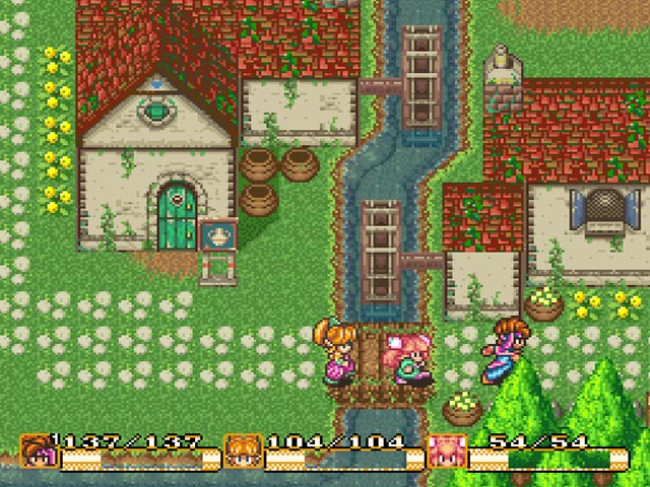
Secret of Mana fully embodies "style over substance". It's not a substanceless game but the best part about it by far is its presentation: the graphics are gorgeous, the music is serene, and the menu wheels are inventive. The visuals are so enticing that it'll hide the games faults until about two hours in, when you start to realize it doesn't play quite like you think it should. That doesn't ruin the experience per se, but it won't stop you from musing, "Man, this game should definitely be better than it is."

TURN TO CHANNEL 3: Unlock the ‘Secret of Mana’ and find a groundbreaking RPG

Perhaps part of this dilemma is that the story does little to detract from the crude gameplay—precisely because there's so little story in the first place. Secret of Mana is a simplistic, by-the-numbers hero's journey where the bad guys are really bad and the good guys are really good. There are a couple of interesting bits here and there (like the mana fortress destroying the ecology to stay afloat) but in the end the game pales in comparison to peers like Final Fantasy and Chrono Trigger. If there's a reason you keep playing the game, the plot will assuredly not be it.

What it might be, however, is the game's charming music. Secret of Mana is host to a bevvy of uplifting and energizing tracks, as well as some more thoughtful, melancholy pieces. I'd be remiss if I didn't mention that it has one of the most unique and electrifying final boss themes, that makes up for the relatively lackluster fight. And even if you're not blown away by the score, the sprite work and animations are fairly impressive. Areas are lively and elaborate, and the massive bosses are vibrant and sometimes—to their chagrin—adorable.


But the combat... good golly the combat. I praised the menu wheel for being a novel addition to the game, but it's cumbersome to navigate for single spells, meaning you probably won't be using them all that much. And when you do opt to dispose of a magically vulnerable foe, the rest of the party is forced to watch in stunned silence as the attack goes off... and occasionally misses due to invulnerability frames with no tell. This will happen every now and then for your spells, but your physical attacks are prone to whiffing. It'll get exhausting watching your fully charged-up attack ineffectually pass over an enemy, especially since the longer attack animations don't translate to, well, longer attacks. While there's a sound cue that goes off for a dodge/block/miss/etc, sometimes it won't go off at all and you'll be left wondering what you did wrong. I feel that it's a major failing of an action RPG to have such loose and slippery action.

The most creative part of the gameplay is that using spells from within a certain magic school will level that school up. So the more you heal, the stronger you healing becomes, which technically helps to diversify your spell list since you'll want at least a couple of strong elemental attacks. But like Final Fantasy II, this only works in theory, as your underleveled (and new!) spells will do such pitiful damage that they won't be worth the mana to cast (unless you're grinding). The weapon system works the same way, so you're likely to see the same attacks over and over unless you want to double your playtime diversifying.

And it's not like you'll need to either. Secret of Mana is far from being a difficult game, so long as your equipment is up to snuff. When it's not, bosses will steamroll over you hilariously fast (enjoy being pinned down by the tiger boss). With proper gear most battles are a cakewalk, and even when foes put up a fight, there's usually a spell that'll keep them stun-locked. Some duels can go on forever when you haven't leveled the boss's weakness (ugh the slime dude) but carrying a stock of walnuts ensures you have enough mana to burn through the opposition. At the end of the game I was skipping nearly every enemy, realizing they're less of a threat and more of a mana sink on the way to the boss. And it's always a bad sign when you want to spend as little time as possible interacting with the game's combat system.


I remember liking Secret of Mana as a kid. It was fun spending time in the crystal forest and the desert, nodding my head along to the sweet music as I gradually leveled Salamando. But coming at it as an adult, it's just so... bare-bones and unrefined. You get more personality from the sprites of the characters than you do the writing, and fighting enemies often feels like throwing blunt darts at a dart board. Secret of Mana has an amazing shell that showcases Square Soft at their best, but the yolk has turned more sour than I expected.
---------------------

Images obtained from: blazingcariboustudios.com, nepascene.com, rantingaboutgames.com, geeksundergrace.com

Wednesday, February 19, 2020

Uncharted: The Lost Legacy - Thoughts


[contains minor spoilers]

I went into Uncharted: The Lost Legacy expecting a brief, action-packed campaign. I walked away from it surprised that I had played yet another nearly full length Uncharted title. I don't know how Naughty Dog was able to churn out an adventure of this quality a year after Uncharted 4 was released, but I must confess that I'm impressed. Chloe Frazer's Indian expedition is a beautiful experience—something that only for this series could be considered "par for the course"—and returns the carefree attitude absent from A Thief's End. The villain is nasty, the player character is quippy, and there's a bunch of explosions and crumbling ruins and trains—Uncharted: The Lost Legacy is Uncharted to its very core. Which can be a good or a bad thing, depending on how you feel.


The bad thing about it, is that the game doesn't bring a lot of new ideas to the table. Sure, you've got the unlikely duo of Chloe (Nate's fiery ex) and Nadine (Uncharted 4's no-nonsense antagonist), but Chloe fills Nate's role very easily and Nadine is... well, Nadine's seriousness is actually fairly entertaining. But the friction between the two can feel a bit forced at times, especially when the biggest point of contention revolves around a decision that occurred offscreen. The banter and acting are enjoyable, but if you've played any of the other games in the series, there's nothing really remarkable about the heroines' interactions, even if the story wants you to get hyped for girl power.

The Lost Legacy is still great though. The Uncharted formula isn't something that invigorates me nearly as much as, say Dark Souls, but I can recognize that what's here is close to the cream of the crop. There's a really cool section of the game that's a miniature open world segment, letting you tackle its three "towers" in any order you wish. There's both optional side battles and observation puzzles, which gives you more of a reason to pay attention to your surroundings. It almost feels like a prototype for a new Uncharted game, but it's refined enough that you won't notice that while playing. And while you can spot some load times masked by muddy hills that are hard to climb, it speaks to Naughty Dog's professionalism that the entire zone is seamless and smooth (or at least was for my playthrough).


Before sitting down to write this entry, I wasn't sure about whether or not I preferred The Lost Legacy to Uncharted 4, but one big factor definitely tipped it over the edge for me: the combat. Nate's final adventure had him fighting in some unique but mazelike locales, whereas The Lost Legacy returns to predictable, flat settings. While buildings may have multiple stories to scope out and the open world section lets you tackle its encounters from any direction, the layouts are accessible and the enemies never exceeded double digits (not in the sandbox scuffles, at least). The biggest sign that I was gelling with the combat was being able to complete an encounter without getting spotted, which would've been an impossible task for me back in Uncharted 4. I may have adjusted to the new gunplay, or slowed my pace because I hadn't played the game before, but either way the fighting definitely clicked with me.

I have to admit that I did receive a smidgen of aid via the generous checkpoint system. And by generous, I mean really generous, as occasionally it would checkpoint me after I had died, whether from a mistimed jump or enemy reinforcements gunning me down. Being able to start ahead of my death saved me a bit of frustration, but it's a shame I wasn't given another chance to prove myself. The only other oddity The Last Legacy has is that the game has two final acts. You'll reach a point where it feels like the story is ready to wrap up... but then it keeps going... and ends on what I can only call a "retread." I guess the final act rug pull is a small subversion of the previous titles, but all it really does is take two very Uncharted-y events and swap their places.


Uncharted: The Last Legacy grants a much needed break from Nathan Drake & co. in favor of tracking a lost treasure through India with two fun gals. If you look under the hood, it's unfortunately not that different from the games that came prior, even with the bold new leads. But if you like carefree adventures, stunning visuals, and colossal architecture, The Last Legacy easily stands toe-to-toe with A Thief's End. Throw in a big fun free-form exploration segment, and you arguably have yourself the best Uncharted experience the PS4 has to offer—as long as you don't mind it being on the shorter side.
---------------------

Title image obtained from: geekireland.com