Saturday, April 29, 2017

Final Fantasy I (Dawn of Souls) - Thoughts


[contains minor spoilers]

Like with a lot of entertainment media, going back to a storied franchise's humble roots can be a difficult thing to do. The Final Fantasy series is one that's loved and adored by millions, but only a small fraction of those players are likely to have completed the original NES title. I, admittedly, am not one of them—even though my brother had a copy of the game growing up, I wouldn't really start to get into RPGs until the PS2/Gamecube era, and by then the last thing I wanted to do was trudge through an archaic NES RPG. Luckily for myself (and many others) Square Enix remade the first and second Final Fantasy titles and packaged them together in a single GBA cart, dubbed Final Fantasy I & II: Dawn of Souls. With updated graphics, streamlined gameplay, and an enhanced story, players could finally reach the end in less than half the time it took to complete the original. While I greatly appreciated the changes the first time I played through the remake, my most recent playthrough saw a lot more... turbulence.


The Dawn of Souls edition of Final Fantasy I is torn between two eras. It proudly retains the flavor of the original game's world, staying loyal to its structure, dungeons, enemies, and equipment. Besides the graphics and music, the area that receives the most robust change is the gameplay: the level cap is doubled, additional healing items have been added, and the potentially irksome spells-per-day system has been replaced (there's also four bonus dungeons, but I'll cover those later). On paper, this sounds like a fair balance, offering the player a chance to explore the classic world of Final Fantasy I while removing a lot of unfriendly burdens. But once you clear the Marsh Cave, you'll realize that all these changes have made the experience far too easy and, by default, boring.

Here are three aspects that outright neuter the Final Fantasy I experience:

1) Items are cheap
2) The encounter rate is high
3) You can save anywhere

In conjunction, these ensure that the player is well-stocked on healing aids, always properly leveled, and never in danger of losing any progress. For example: got a battle with a Fiend coming up? Chuck ethers at your mages, save, and proceed to steamroll the poor sap. Since the mechanics of the original game aren't all that complex, fights are pretty easy to find the optimal solution to. This causes a lot of battles to blend together into the same mindless "mash A to win" marathons, especially since every monster dies in one hit from your strongest team member anyway. Even the fearsome Fiends fall prey to this tactic, their combat repertoire a pitiable mess since few use any sort of unique spells or status debuffs.

The repetitive combat creates a surprisingly aggravating experience when combined with the unchanged maze-like layouts of the original Final Fantasy I dungeons. That game had sprawling underground complexes that were risky to explore due to your limited spell charges, but with infinite heals and an atrocious encounter rate, you'll find yourself sighing and groaning as you run into yet another dead end or open a treasure box with a scant 500 gil inside. The final dungeon in particular is a monotonous slog, lacking any kind of danger whatsoever since you'll likely be packing 99 hi-potions, ethers, and phoenix downs. Note that I'm not declaring the NES version to be better; I simply find that the changes to the gameplay to stand at odds with the plodding dungeon & encounter design of the original.


Something I find inexcusable in both versions of Final Fantasy I is the long-winded trading quest after Astos. It's essentially a massive waste of time through areas you've already explored, which may have originally offered a chance to give the player more XP and gil, but provides nothing of value here. You deliver the crystal ball to Matoya, then sail across the sea to wake the elf prince up, then back to Cornelia, then over to the dwarves to deliver the explosives, then back to your ship to sail through a single patch of sea. To make matters worse, the vampire-cleansing Earth Cave quest is also a blatant waste of time that occurs right after the trading quest! Had the player been given a chance to buy the Exit or Teleport spells maybe I could excuse its existence, but those are saved for the class upgrades, which occur after you've already explored the dungeons you have to backtrack your way out of.

For all the flak I give it, Dawn of Souls at least introduces four bonus dungeons that are capped by four vicious boss fights each. And even though these fights are the most engaging parts of the game, Dawn of Souls manages to fumble this by forcing you to replay the dungeon if you want to fight more than one boss. The bonus dungeons are just as dull as the regular ones too, and the fact that the floors are randomly arranged means that some runs of it will be more of a headache than others (that purple forest is torture). I tried to explore them during this playthrough but was tired of the game rudely bloating my play time, opting to head into the final dungeon and finish this adventure instead.

For what it's worth, my battle against Chaos was pretty spectacular, especially since I refused to use ethers while I was knee-deep in the Chaos Shrine, hoping it would make my struggle more tense and momentous. The mechanics of the Chaos fght itself isn't all that complex—Chaos tends to only throw out physically damaging attacks—but at least having to juggle restorative spells with replenishing my mages' MP added a dimension of strategy to the scuffle. At the end only my Grand Master Bric survived, a mere 180 health left in his worn, shaken body. But was it worth eight hours to play for that amazing, succulent victory?

Not really.


Final Fantasy I in Dawn of Souls offers a crooked glimpse into the appeal of the original, not only showing the faults of the NES title but creating a few of its own in the process. These problems were fairly glaring during my time with it: without limited spells dungeons become a cinch, the battle tactics of the monsters you'll face are woefully outdated (my mages didn't get silenced once!), and progress through the game is purposely obfuscated at times. I feel that the game is serviceable if you feel you need to play something resembling the original game; the prettier palette and faster gameplay are a definite improvement. Outside of historic curiosity though, your time will be better spent on nearly any other entry in the series.

Saturday, April 22, 2017

Accepting that I Will Die Before I Finish All of the Games I Own - Opinion


Revisiting Final Fantasy I & II: Dawn of Souls on the GBA has resurfaced a morbid thought I've had for some time now: "I'm never going to finish all these games". Since gaming is my primary hobby, I've accumulated a lot of cartridges and discs over the years, so much so that I've currently run out of boxes to stuff them into. Yet as I grow older and look back on a number of titles—like the NES version of Final Fantasy I for instance—I've recognized that there really is no point in it being there. I mean, Square's roleplaying swan song looks nice as a collector's item sandwiched between Fester's Quest and Fire 'n Ice, but why am I keeping it if I'm never going to play it? And it's not that I necessarily don't want to either; it's just that there are so many other games in my mental queue ahead of Final Fantasy that I'm honestly going to die before I get around to even starting it.

Ever since I was a kid, I took immense pride in finishing a game, despite that I almost always used Game Genie to accomplish the feat. Before I knew how to properly spell I had my mom assist me in writing down the titles of games I had conquered, creating a very small but empowering list of virtual achievements. It wasn't something I'd openly brag about at school (at least not that I can consciously remember); I simply made the list to remind myself of the places I've explored in the 8-bit realm. As I grew older and gaming expanded, I couldn't maintain my humble little list, but the burning desire to "complete" games and other pieces of media stuck with me throughout my adolescence and into my adulthood.

I make no attempt to proselytize or defend the value of judging media based upon whether or not it's been "beaten"; in many ways, this line of thinking is a shallow way to reflect upon an experience, akin to keeping notches on your bedpost for every person you've slept with. But it is what it is—my completionist methodology strongly influenced my preference to consume media that has a terminable end, pushing me away from simulation & multiplayer games, as well as long-running TV shows & comic books. I've slowly learned to appreciate the merits of perpetual art (I'm part of a comic book podcast after all), but my fondness lies first and foremost with products I can essentially "cross off a list" when I'm done.

That's why as long as a game had end credits that could be reached, it was my goal to reach them. Even lesser known and mediocre titles like Magic Boy for DOS and Spy Hunter for Gamecube were given a fair shake in my hands, due to my juvenile delusion that all games were created equal and fair (developers are smart people so they make smart design decisions, right?). I eventually had to acknowledge that I probably won't beat every game made in history of the medium, but I was certain that I could finish all of the games I at least owned, even if they seemed insurmountable at the time. And thinking about that filled me with a flurry of excitement—there were so many worlds, characters, and gameplay systems left to explore!

Nowadays, as I slowly approach the age of 30, that endeavor feels more bleak than bright. It's not because I feel "too old" or I've come to hate playing video games or anything, but there are some titles I simply don't want to spend more time on than I already have. Part of the reason I started this blog was to jot down concrete thoughts on nearly every game I played so I'd have a handy place to direct people to if they wanted my opinions on a certain title. But when I think about replaying certain games for a review—like Kingdom Hearts or the Gears of War series—there's a part of me that feels my time would be better spent elsewhere, especially as I search for a way to bring in a stable income. And if I feel that way about games I've already played, then what about those that I've yet to touch? Am I always going to look at titles like the Xenosaga trilogy, Septerra Core, and Holy Diver as time-sinks I'm more than happy to procrastinate playing until it's too late?

This predicament reminds me of a poignant existential truth (that I can't quite remember the origin of): throughout your life, there exists an unrealized instance with every single person you know in which you will say "goodbye" to them for the last time. Since everybody passes away, we might say "I love you" to a person without fully comprehending that it might be the very last time we'd say so. In the same way (though obviously less emotionally damaging), there exists one last time that we engage with every piece of media, whether we know it or not. As a kid I was stoked to play through all the Zelda and Mario games biennially—now as I finish up The Legend of Zelda: Breath of the Wild, I'm painfully cognizant that I'll only ever replay the entire Zelda series maybe one or two more times in my life. All of my experiences with each piece of media have a finite end, and as I grow older I'll become more and more aware of each one.

Part of the good news is that this revelation isn't one that fills me with overwhelming dread (that moment came about while I was in college). No, this is the slow ebbing of childhood optimism and wonder; the acceptance of another naive dream crushed beneath the weight of time and mortality. It's the start of skepticism towards the games I place on my wishlist and the gradual acceptance that there's no real reason to keep over half of the games I own. This is not necessarily a good or bad thing either—like with my "completion" habit, it simply is, and I'm learning to accept it day by day. I may not be able to complete every game I own (I'm sorry Final Fantasy on NES—we never even got to have our final "goodbye"), but as long as I'm spending my time on the things I feel are most important, I'm sure my inner child won't mind too much.


Friday, April 7, 2017

Horizon Zero Dawn - Thoughts


Horizon Zero Dawn is perhaps the stupidest name for one of the coolest new IPs to come out this generation. It's a title so vague and meaningless that you could swap the nouns around and it would still produce the same word salad. Know what's a more fitting appellation? Posthistoric Robopocalypse: Rise of the Bowwoman. I wouldn't dare say that's a good name, but it most accurately represents what Horizon succeeds in doing—throwing the player into a tribal world overrun with robotic animals while also providing them the means to eventually overcome it. Across the +30 hour journey, you'll learn how to scavenge for parts, craft a multitude of ammo types, and hunt majestic machinations, until you become the master of this lawless domain. And by god, it is a gorgeous, brilliant, phenomenal experience that has (figuratively) blown my pants off.


The most unimaginative stunt that Horizon pulls is that it unabashedly copies from Ubisoft's open-world playbook. There's settlements to liberate, goodies to collect, raw materials to gather, side quests to stumble upon, and a nifty little skill tree to fill out, which all feels familiar if you've played any of the newer Far Cry titles. Luckily it's a solid blueprint to copy from, providing the player with dozens of hours of content to explore without going too far overboard (the icon-littered map may look crazy but your points of interest are relatively few). Had I not played and fallen in love with Far Cry 3 years prior I would've been head over heels for Horizon, but being able to recognize the tropes and gameplay loops of the open-world genre kept my enthusiasm mostly grounded.

Yet despite how familiar the structure of the world felt, it was the world itself that left me breathless. From the colorful, jaw-dropping vistas to the individual fibers of the robo-fauna's muscles, Horizon's resplendent landscapes exudes both majesty and marvel. The cybernetic critters don't feel strangely conspicuous or anachronistic, thanks in part to their elegant, animalian design, as well as the reverence Horizon's denizens show towards them. The way each tribe uses robotic components as decorative ornaments looks bizarre at first, but you slowly grow acclimated to it, eventually commending NPCs and their splendiferous headdresses (well, if you're me that is). There's a curious sense of fashion to Horizon's world that is one part ancient and one part sci-fi, two polar qualities that are never at odds as you venture from place to place, culture to culture.

Speaking of, each tribe comes with their own history, belief, and political clout in the world, leading the small state-sized landmass to feel like its own Mass Effect universe. True, you can identify archetypal fantasy civilizations in each culture (the Carja are patriarchal imperials, the Banuk are mountain mystics, and the Oseram are straight-up dwarves), but the way they're fleshed out adds some variations to each formula. Whereas collecting lore in a lot of other games tends to add personal/micro detail to the world, Horizon's scrolls act more like historical accounts of one culture's depictions of another, subject to whatever fallacies that may entail. And the quality of writing isn't merely just present in the plethora of text files—side quests routinely provide more of an incentive beyond "go fetch this thing because I said so". Perhaps you'll be looking for a lost lover that's been enlisted with the Shadow Carja, or needing to decide whether a mentally troubled man is a danger to his tribe, or infiltrating a deranged bomb expert's trap-laden valley. Even if a lot of the decisions you make don't have a massive impact on Horizon's world, the fact that you feel like an important player and actively want to learn more is enough to keep you poking around for hours on end.


One of Horizon Zero Dawn's most impressive feats (of which there are many) is that it makes the main mission as important and interesting as all of the side ones. This is no simple task; Bethesda games are rightly lambasted for having underwhelming main missions despite open world RPGs being their expertise. Guerrilla Games skirts this issue by pumping their central plot full of fascinating tidbits and lore, prompting the player to push onwards in order to uncover more juicy details (and perhaps save the world in the process). I won't spoil any of it, but the fact that Horizon takes time to convincingly explain why there are robotic dinosaurs prowling the land is something I totally wasn't expecting. Honestly, this is probably the most intriguing AAA plot I've played this generation.

Lastly, I suppose I should mention something about the gameplay, eh? As demonstrated by my enthusiasm, Horizon's world-building is undeniably its premier attraction, but the gameplay is no slouch either. There's a variety of weapons to use (each with their unique ammo types) and every enemy you face has weak zones to target, ensuring a combat depth that goes beyond "just shoot them in the head". However the more time you spend playing the game the more you have to acknowledge the its eccentricities: for instance, Horizon pegs itself as an RPG but the only way to increase damage is to find and equip damage modules, which is quite unintuitive at first (upgrading only gives you more ammo types). Some enemies are also too mobile for you to reliably hit their weak points, causing endgame battles to ultimately favor blast damage arms (tripcaster, shadow sling). The melee combat feels pretty loose and shoddy—I'm not asking for God of War combos but there's really only two "branches" of slow attacks the player can perform, leading to a lot of senseless button mashing. Oh—slightly unrelated—but gathering health for the health pouch is a chore (the gain you get per herb really needs to be doubled)

I call these eccentricities and not faults because for the most part, the combat works as intended. Once you learn to utilize the roll and its i-frames, facing off against Horizon's fiercest predators can be extremely thrilling, whether it be the ice-spitting Snapmaw or the boulder-manipulating Behemoth. The mighty Stormbird in particular is a feast for the eyes and thumbs; its devastating lightning and dive attacks serve as a suitable test for your dexterity; tying the colossal foe down a challenge for your aim. I didn't even mind grappling with Horizon's few humanoid foes, the base infiltrations a fun endeavor that I always somehow managed to mess up (got close to ghosting a couple of them!) The game is lenient enough that you never have to be on your A-game even on Hard, but it demands that you respect its robotic inhabitants, quick to remind you that their serrated iron teeth can tear you limb from limb. You'll achieve a sense of pride in slowly working your way up the food chain, toppling each unique metal monstrosity one by one, until you become the most dangerous predator around.


Horizon Zero Dawn isn't perfect, but at no point did I ever find myself chiding the game for its shortcomings. Every time I played it I was excited; every story beat I reached surprised me; every battle I fought engaged me. Horizon didn't feel like a product churned out to appeal to a specific "hardcore" market—it was a game crafted with great care that sought to captivate as much as it wanted to entertain. With its lush world, compelling story, and flexible combat, this debut has earned itself the honor of being the strongest title the PS4 currently possesses. What Guerrilla Games has pulled off is an extremely commendable feat; the worst part about having to write this entry is accepting that my time with Horizon is over.

Bravo Bowwoman, bravo.
---------------------

Images obtained from: youtube.com, iansteffen.com

Friday, March 31, 2017

Blaster Master Zero - Thoughts


[contains minor spoilers]

So... what was Inti Creates and Sunsoft's goal when they set out to make Blaster Master Zero? I'm hesitant to call it a "re-imagining" because Zero contains enough new ideas to feel like a fully fledged sequel to the NES classic, but at the same time it rigorously sticks to old layouts, visuals, and enemies. I definitely had a fun time overall—Inti Creates has yet to disappoint me with their (non-Mighty) 2D efforts—but it left me puzzled as to its purpose. I couldn't help but feel that if it had made up its mind on whether it wants to be a sequel or a remake, my adoration for it would soar past what I can only deem as "nostalgic tepidity".


On all fronts, Blaster Master Zero absolutely nails the presentation. Old areas and enemies are lovingly updated into HD, and the new backgrounds, obstacles, and bosses fit in perfectly with the old crew. The soundtrack utilizes the classic Sunsoft sample channel from the NES, and while it doesn't hit the astral heights of the original OST, there's a handful of worthy tunes that are excellent additions and always a joy to hear. Sound effects are delightfully crunchy and the animations are both flashy and smooth, especially in regards to SOPHIA's devastating final ability. While I had a lot of fun with Blaster Master Overdrive, it doesn't quite capture the look, feel, or tunes of the franchise as perfectly as Zero does.

Even though I dislike how the game is caught somewhere between a sequel and remake, I do respect the care the Zero team put into recreating each level. A number of areas have been more or less translated directly from their original incarnations (Area 1, 8), while others got considerable gameplay tweaks and face-lifts (Area 2, 4, 6, 7) and a few underwent a complete redesign (Area 3, 5). Every stage feels like it properly honors  its original analog, while at the same time trying to do something a little different or new (like adding conveyor belts to the on-foot segments of Area 3). It's both interesting and surprising to run through each level and see what's different versus what's stayed the same (Level 2 is perhaps the only one that feels too different, due to the completely new setting).


Blaster Master Zero falls flat on its face in regards to difficulty, however. Completing the original is an absolutely brutal endeavor to undertake (even with the pause glitch!), while Zero barely puts up a fight the entire game. This is due more to overarching game design than it is the fault of any particular level; health & ammo pick-ups are plentiful and Jason's fully powered-up rifle is insanely strong (rapid fire? Check. Wide shot? Check. Pierces walls? Check.) Limited continues are discarded in favor of a generous checkpoint system, and the game embraces modern Metroidvania design, letting you collate a number of health-ups and shiny new weapons to steamroll through foes with. The lack of difficulty isn't necessarily an egregious mark of shame the game bears, but it is disappointing to play something with Blaster Master in the name when it doesn't bite back—at least chew on my arm a little bit!

The level design feels like a bit of missed opportunity, too. I liked the numerous gimmicks added to the on-foot sections, but the design often doesn't go far enough to make gameplay interesting. For instance, the rising goo section of Area 2 is a cool obstacle but at no point does it feel like it meshes with the gameplay to offer an interesting combat puzzle—most of the time you simply wait for the goo to recede and trudge forward. The same thing happens with the rushing water segments in Area 4 and the moving lifts in Area 5; the game is packed with a whole lot of waiting that gives you absolutely nothing to do but wait. The in-vehicle stages thankfully fair somewhat better in this regard, though your armaments are still strong enough to neutralize most of the enemy placement. The two levels I enjoyed the most were Area 6 and 7, the former for its awesome crystal-ejecting proximity mines that destroy fragile footing, and the latter for its tricky stealth segments, rewarding you for patient play but allowing you to sprint to the next screen should you get caught.

It's cool stuff like that that I wish I saw more of: designs and additions not beholden to the blueprints of the original stages. Blaster Master Zero could've handily stood on its own merits but since it attaches so much of itself to the NES title, I feel like comparisons are unfortunately inevitable. Had your arsenal been powered down to force you to switch weapons more, the level design made meaner to punish sloppy play, and the stages taken on drastically different themes to make the game feel inspired by the original instead of eager to please it, this could've easily stood shoulder to shoulder with the first. Perhaps the Zero shouldn't have aimed to bank so hard on nostalgia or perhaps the game simply needed to include a hard mode—either way, it certainly feels like it's lacking something.


Blaster Master Zero is unquestionably a game for Blaster Master fans. It respects its source of inspiration while building on its foundation, delivering a fun, varied, and solid experience. And yet it really doesn't show much ambition until the very end, content to lay back and stack the firepower in the player's favor, as if its ultimate goal was to bring in new fans. If doing so means that we'll get a sequel I'll retroactively consider this a blessing, but for a game that was supposed to be my dream-team combination (Inti Creates and Sunsoft? YES PLEASE), I can't help but expect just a teeny, tiny bit better from Blaster Master Zero. Maybe someday I'll do a "no power-up" challenge and discover some glittering gold that wasn't there before.
---------------------

Images obtained from: inticreates.com, youtube.com, dualshockers.com, snailtoothgaming.com

Wednesday, March 22, 2017

Contra - Thoughts


Short, sweet, pure, and simple: Contra is a game about few words—all that matters is how quickly you can react to rapidly approaching bullets. It's one of the best games to showcase the merits of the 8-bit era, being easy to pick up but tricky to complete on your first try. Despite the common conception that the Konami Code is required in order to stand a chance, Contra is a surprisingly fair outing, provided you're willing to persevere past your first GAME OVER. With a little bit of patience (plus the Spread Gun by your side), you'll soon transform into a Schwarzenegger-style one-man-army, complete with snarky quips you'll instinctively toss at your television.


Your progression path through Contra isn't as creative as its sequels, but it offers up a solid set of levels. There's a meaty amount of jungle treading, waterfall climbing, snowfield hopping, and industrial hazards to avoid as you blast your way into the (literal) heart of the enemy base. Each level is rigged with various turrets, guards, and runners to slow your sprint through the stages, pushing the player to pay attention to every corner of the screen. What makes each stage design a stroke of genius is that Contra constantly uses verticality, forcing the player along one path while tasking them with being mindful of gunners on the other. This is actually an aspect that's curiously absent from other games in the franchise, and wouldn't appear again until Contra 4 (where it came back with a vengeance).

Where the game stumbles a bit is in the forward-running sequences, though they're not particularly detrimental to the overall experience. I think the best way I can describe them is by spouting a phrase I would've used when I first played it decades ago: they're weird. The gameplay definitely works for the most part—the hitboxes are luckily not as loose as something like Iridion 3D—but it doesn't feel as tight, responsive, or snappy as the rest of the game. That, and the corridors for each facility are completely similar (barring the back wall) so there's not much flavor to these levels outside of the color scheme and boss rooms. However, even these stages adhere to Contra's philosophy of keeping the player on alert, obstacles coming in all shapes and sizes as you focus down the wall's weak points. It's for this reason that they don't feel too out of place or mismatched in this game, despite the glaring perspective change.


Besides the levels requiring both persistence and vigilance to surpass, the power-ups play a pretty significant role in Contra too. A striking design choice that's missing from a lot of modern games nowadays is an intentional imbalancing of weapons: Contra's Spread Gun is far and away the most versatile (and powerful!) ability in the game. The vertical threats in the stage design fold beneath the player when they're granted the ability to attack in an expanding cone, and bosses melt under the shotgun-like blast of the Spread bullets. Couple this with the Rapid Fire pick-up and it becomes fairly easy to make it through the entire game without a death, so long as you remember which traps come next. Compare this to something like the Flame Gun—a weapon with such a low rate of fire that it's almost better to entirely avoid it—and multiple modes of play (and difficulty!) are born from whichever armaments you hold. While it's feasible to finish the game sticking to your standard pea shooter, the sheer might and power of the Spread Gun is one of those lovely little additions that helps Contra stick out amongst its peers.

Perhaps the greatest of Contra's strengths is that it's quick to beat. And by quick, I mean twenty minutes—including deaths! If the game lasted thrice as long I could see its difficulty wearing out the more death-sensitive players (this is actually my main criticism of Hard Corps: Uprising), but the brisk pace of the game aids in enduring its memory, making it an easy title to recommend. It's also one of the reasons why I feel that its difficulty is severely overstated; the time it takes to learn and memorize scores of other NES titles downright eclipses the effort it requires to conquer Contra. I'm not trying to thumb my nose at anyone that has struggled with the game, but Contra definitely could've gone to far darker places if it had any intention of being malicious or time-wasting. It also helps that the final stage feels more like a victory lap than anything, something that the future titles would violently pivot away from.

Lastly, Contra is a fantastic co-op game. Armed with a second player to cover your six, you'll be free to charge forward through the level, effectively doubling the survivability of your squad. And even when one of you falls in combat, Contra's life-stealing system is a clever way to teach trust to young players, allowing them to argue where/when it's appropriate to borrow a player's extra life. It also helps demonstrate that it can be more fun to play together and lose than let one person carry the torch for the sake of winning the game (though I admit I was guilty of convincing my sister of the latter plenty of times). Throw in the fact that there weren't a hell of a lot of simultaneous multiplayer games at the time, and Contra not only stands tall as one of the best action games for the NES, but perhaps its best co-op experience as well.


Contra's difficulty belies its approachability. Beneath the tough, macho veneer is a frantically fun frenzy of bullets, guns, explosions, and shameless Alien ripoffs; I can't fathom how anyone could play the game and outright hate it, unless dying a few times is beyond the pale. It's simple to understand and a joy to play, two qualities which have gradually been lost to gaming as the medium has aged and shed its arcade roots. Contra isn't a leisurely walk through the park but it tends to rewards patience and observation more than it punishes you for not knowing what's coming up next. There's a good reason many look back fondly on Bill & Lance's commando escapade debut—run'n'gun games don't get much more accessible than this.

Thursday, March 9, 2017

Silent Hill: Downpour - Thoughts


[contains minor spoilers]

After playing Silent Hill: Downpour, I'm kind of glad the franchise is dead. The quality of the Silent Hill series has been on a downwards trajectory since Origins (some will erroneously claim 4 but that's a different argument for another day), however Downpour is the first title to truly sully the brand. At least with Homecoming you can see that they were earnestly attempting to mimic the greatness of prior entries; Downpour takes the good will of Silent Hill fans and thoroughly crushes it. The momentary glimmers of intrigue fail to outweigh the boorish visuals, thematic bluntness, and despicable combat that await you inside Silent Hill's pitchy swan song.


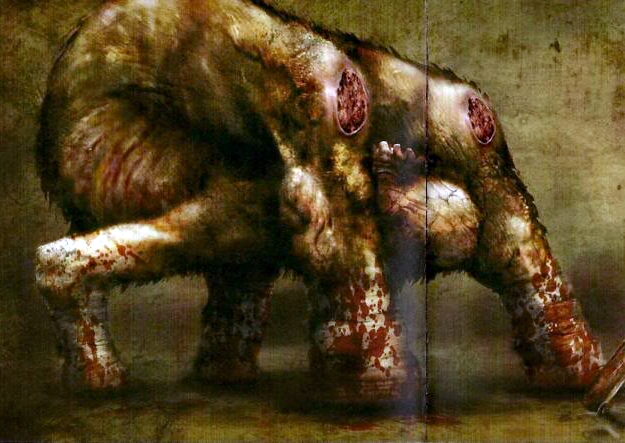
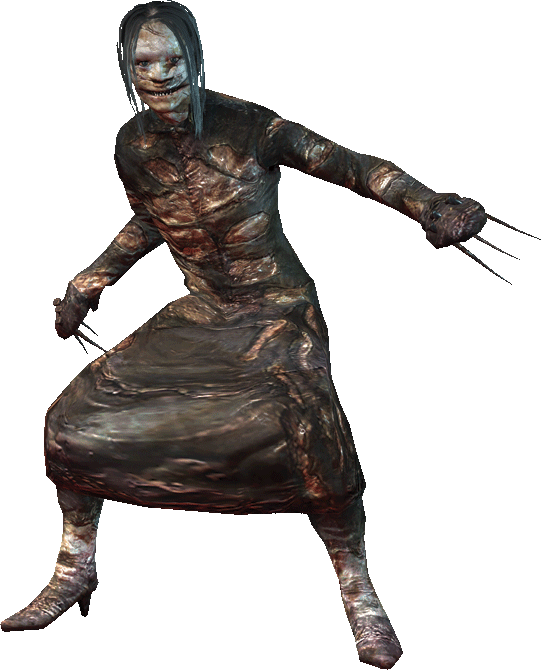
I'm going to start with the subject that riles me up the most—the monsters. In Silent Hill: Downpour, there's a scant four enemy variants! Only four! Not only that, but three of them are simple humanoids that lack any deformities, gigantism, or grotesqueness that the series is infamous for. I cannot emphasize just how upsetting this is to me; in a franchise full of extremely unnerving, fleshy abominations, why is it that Downpour is content to assault the player with this? The final boss of the game is somewhat disturbing but that's the lone exception; Silent Hill Downpour has paradoxically the most boring yet goofiest ensemble of enemies to ever grace a Silent Hill title. Gone are all attempts at subtlety or intricate design made to disgust the player. Scared of mines? Here are some gaunt, hairless trolls! Scared of jail? Here are shirtless prisoners with steel helmets à la Clockwork Orange! Scared of the police? Here is a cop car with barbed wire wrapped around its bumper!

The deliciously rotten mania that pervaded the series is painfully absent here, as Downpour's main character Murphy is as deep as a puddle. The game wants to evoke psychological horror but there's no contextual evidence that Murphy loathed prison or even regretted his jail time. Hell, we're not even given any evidence that his fellow inmates assaulted or scarred him; the only thing they're keen on doing is making dumb remarks before the game even begins. The story attempts to center itself around guilt and regret, two themes which seem apt given Murphy's incarceration, but these topics practically go nowhere outside of a handful of cutscenes. You'll collect scores of documents and complete half a dozen side quests, yet none of these will provide any sort of depth or character to an already paper-thin plot. Most of the notes you collect are rather boring and mundane, failing to color the town of Silent Hill in perverse, weird ways like the other games (they were actually so dull and listless that I couldn't help but think of Extermination as I read them).


The town of Silent Hill itself feels completely abandoned this time around—not eerily abandoned in a way that precisely conveys the unbearable woe at living there, but just... abandoned. Long stretches of silence await you as Murphy ambles through alleyways and treads down vacant streets, momentarily interrupted by enemies that are a cinch to outrun. It may not sound entirely dissimilar from the other games, but I promise that it's a significantly different experience when you play it, one that has left the Silent Hill of yore lame and neutered, now a former shell of its once haunting self. But hey, at least there's sidequests and puzzles to solve around the town!

The handful of houses you can explore for some light puzzle solving is arguably when Downpour is at its best. This isn't because the puzzles are brilliant or novel—I think what's here is pretty good, albeit largely unremarkable—but because any time you have to grapple with the game's terrible combat is when you realize what a mess the gameplay really is. The Silent Hill series has never had good combat, but it was at least tolerable while waiting for the next nightmarish story beat. Downpour on the other hand is too eager to throw the player into gladiatorial scenarios, especially in the game's latter half. Enemies take a pretty hefty beating to put down, your weapons quick to snap against their durable hides whenever they're not constantly blocking, dodging, or scrambling across the ceiling. There's no ebb or flow to the combat; fights are nonsensical and disorganized, highly reminiscent of the worst 2D arcade brawlers.

Outside of the serviceable puzzles and atrocious combat, there's not much left that's able to hold Downpour together. Nearly every item in the world that you come across is a weapon of some kind, and since you can only hold one you rarely feel the need to explore once you settle on something better than a stick. The design of the otherworld has its moments at times, but feels less like the rusted bowels of Hell and more like an Alice in Wonderland spinoff, complete with sideways stairs and kooky clock dials to cross. There's a strange, unexplained void that shows up every now and then to prompt chase sequences, which don't feel like they follow any kind of logic since the void can maneuver through physical barriers (for instance, if you head up a U-shaped flight of stairs it's likely to start sapping your health through the floor below). These sequences feel phenomenally dumb to play, as if an executive from Konami complained that Silent Hill wasn't cinematic enough and needed more scripted sequences and QTEs (which I forgot to mention—there's QTEs!) I found myself murmuring "well at least there are otherworld sections" in defense of this game, which is about the time I realized how low the bar had fallen for the franchise.


Silent Hill: Downpour is what I would best describe as "amateur fan fiction come to life". It tries to tick all of the boxes of what one might imagine Silent Hill to be: a tortured main character, spooky monsters, foggy town, multiple endings—but it lacks the nuance and craft the prior entries had mastered. It doesn't seek to carve its own path but merely vaguely imitate its predecessors, misunderstanding how important the concepts of unease and dread are to the franchise. Downpour is not a disgrace the same way Duke Nukem Forever is, but it's a soulless step down from greatness, a Korn to Silent Hill 2's Nirvana (speaking of, Korn composed the theme song to this game—a fitting union in retrospect!) The best way to describe how abysmal the game is is to walk you through how it squandered a good scare:

Inside of the Silent Hill monastery, there's a theater stage that has a witch's house prop from a Hansel & Gretel play. Inside of the house, there's an old chest that's locked by a puzzle, wherein you're trying to rotate the cubes on a grid until they form the portrait of a young girl sitting on a beach. In the center of the frame is the girl's doll, its smiling grimace squarely positioned on its own cube. After completing the picture I found that the chest still wasn't unlocking, and that's when I realized I had to rotate the head of the girl's doll to its true face. With a trepidatious hand I selected the cube with the doll and slowly spun it... to reveal a part of the girl's body I had placed elsewhere. Turns out what I had actually mistaken was a cube on the girl's left foot for her right foot, and simply needed to rotate that to complete the picture. After grabbing what I needed and leaving, the real "surprise" I received was when the house prop collapsed behind me, revealing that the structure had been two-dimensional the entire time! I couldn't help but chuckle, musing how this revelation was the perfect analogy for this game.
---------------------

Images obtained from: silenthillmemories.net, gamester81.com, rocketchainsaw.com, silenthill.wikia.com

Sunday, February 26, 2017

The Last Guardian - Thoughts


There aren't a lot of games that have animal companions. It's kind of a strange fact if you think about it—a huge number of people have experience with rearing or at least taking care of a pet, but our nonhuman buddies are often neglected, sidelined, or forgotten in video games. I mean, quantifiably there's Dogmeat, Epona, and... various pokemon? Hell I'm almost tempted to say I can name more pivotal robot characters than animal ones! I don't bring this up to specifically disparage the state of pets in the video game industry, but rather as a way to emphasize just how utterly unique The Last Guardian feels. Gone are waypoints, HUD elements, skill trees, and upgrades; The Last Guardian is a subdued journey about you and your feathered friend seeking freedom together, learning to rely on one another in order to escape the confines of a beautiful—and unbelievably cruel—stone sanctuary.


There is a slight addendum to my claim about The Last Guardian's uniqueness—the game alarmingly resembles Team Ico's debut, Ico. Both games share similar tribal worlds, earthen fortress settings, restrained soundtracks, and muted stories. This isn't even taking the gameplay into account, which, in spite of the size disparity of Trico and Yorda, is heavily dependent on environmental puzzles and finding ways to safely scale gargantuan buildings. From mood alone I would argue that The Last Guardian is as much as a spiritual successor to Ico as Demon's Souls is to Dark Souls. In case you're wondering why I'm harping on their similarities so much, it's predominantly because your feelings on one game will likely predict your feelings on the other.

For instance, I greatly appreciate Ico, but man, do I not enjoy playing it. The same is true here; controlling the boy in The Last Guardian is like piloting a drunken, magnetized child at times, especially when the action gets frantic. In some ways it can aid the authenticity of the gameplay—the "scripted" sequences that would feel safe in something like Uncharted are far more real and prone to error here, every jump resulting in an unknown outcome (more than once the game went into epic slow motion during a leap that nevertheless lead to my death). But whenever you miscalculate your fiddly jump trajectory or inexplicably find yourself glued to Trico despite hammering the cross button, frustration will start to build and your tolerance for the game's wonkiness can quickly drop. I still firmly believe The Last Guardian is worth experiencing in spite of its faults, it's just that as a video game it's a pretty rough product (the framerate goes on a pretty wild roller coaster ride). I liken it best to an art film like A Girl Walks Home Alone at Night, where I'm left breathless by its brilliant style, but find it hard to claim that my overall experience resembled anything "fun".


But The Last Guardian doesn't need to be fun to be good—in fact, the tone throughout the majority of the game is decidedly un-fun; in spite of the bright, friendly mood the game projects, The Last Guardian is actually one of the darkest, most melancholy games I think I've ever played. It may not be immediately apparent during its introduction, but a huge amount of the game is spent helplessly watching your innocent companion get stabbed with spears, fall off of buildings, and fight against its bestial instincts. Rather than being placed in the shoes of the muscle-bound hero that's determined to save his (typically female) partner, The Last Guardian's child is a feeble bystander to many of the horrific events that play out, only able to console the beleaguered beast with soft words and gentle rubs after the action has subsided. And in typical Team Ico fashion, the game gets resoundingly brutal at the end; expect to clutch your pet close after the credits roll.

The big reason the game is so proficient at evoking pathos is due to how realistic the mythical monster feels. The animations string together to form a very smooth and very lifelike creature; Trico hops like a bird, moans like a dog, and is often obstinate like a cat. It's kind of a stroke of genius to portray your ally as a clueless pet, because it narratively masks any AI pathing discrepancies you'll notice when trying to lure Trico from one place to the next. Frustrated that your pal refuses to stand on its hind legs to  boost you up to a nearby window? Well you shouldn't expect a wild animal to follow all your orders on the first day it meets you! Don't get me wrong—you'll still get vexed when Trico doesn't do what you want it to do—but this explanation is a useful way to get you to treat your companion less like a faulty string of algorithms and more like a clumsy, silly, gentle friend.

Spending time in the more quiet moments of the game with Trico is where the The Last Guardian really shines, especially when you're in one of the game's many stunning outdoor environments. Coincidentally though, this is typically when you're interacting with it the least. Besides the mechanical problems with your player character, I don't really have a lot of love or appreciation for the puzzles here either—nearly every challenge exists to obfuscate your progression. Puzzles by definition serve that very purpose, but the quandaries here are more naked and blunt, like looking for a ladder out of reach or finding a ledge for Trico to jump to. There are definitely some inventive solutions to uncover along the way, as well as some pretty wild predicaments you'll find yourself uncomfortably thrust into, but the game isn't quite as mentally stimulating as I was hoping it would be (which I admit can be a tall order—hell, I managed to find Portal 2 disappointing).


There's a lot of clunkiness to The Last Guardian that clearly distinguishes it as a game caught between generations. It's a title I wouldn't advise to anyone that looks down upon "walking sims" or "video game stories" with scorn, as I would hesitate to call any of its gameplay engaging in and of itself. But The Last Guardian isn't (and needn't be) entirely concerned with the moment-to-moment details of its mechanics; Team Ico's laconic masterpiece knows precisely what it wants to do and executes on its premise flawlessly. It's a game with tremendous heart, passion, and vision; The Last Guardian might not be an enthralling video game, but it stands tall as a gorgeously crafted piece of art that will rend your heart to ribbons.
---------------------

Images obtained from: wikipedia.org, segmentnext.com, gametransfers.com, playstationlifestyle.net