Showing posts with label Iridion/Nanostray. Show all posts

Wednesday, October 5, 2016

Nanostray 2 - Thoughts


In regards to each of Shin'en's previous shmup titles, I've always had a fondness for their peculiar camera choices. Sure, it made dodging bullets quite awkward and it wasn't always clear if you were going to collide with something, but their cinematic bent was a style fitting for the experimental handheld series. Nanostray 2—Shin'en's final attempt at a "straight" shooter—is their most conventional and streamlined entry yet: gone are the strange perspectives and questionable collisions. Instead, we're given a game that takes notes from Life Force, providing ship-partnered "options" and alternating perspectives every other stage. Though I can't help but gravitate towards the other titles in the series (for no reason other than nostalgia alone), from a design standpoint Nanostray 2 is undoubtedly Shin'en's best shooter.


Part of the reason why I didn't warm to Nanostray 2 when I was younger is that the Adventure mode (the standard shmup campaign in the game) was structured too rigidly for me to complete. Whereas the previous games had an imbalanced health system where one bullet took a small chunk off of your health bar while any ship collisions outright killed you, Nanostray 2 addresses this by making all damage immediately lethal. I do prefer playing STGs that take this "1 hit = death" approach, but Nanostray 2 awkwardly attaches limited continues it, making it so you have to restart a level should you lose all your lives on said stage. Not only that, but the game saves your lives remaining if you quit to the main menu, which means that all lives lost on a stage are permanent unless you hard reset the handheld.

While it's fair to say this keeps the game feeling like an oldschool shooter that you have to complete in a single sitting, I think the simultaneous inclusion of one hit deaths, limited continues, restart upon game over, and inability to return to an old save makes Adventure mode ultimately too demanding. Knocking out two of those facets would've provided me with an enjoyable—and still challenging!—experience, but instead I had to play it with a prudent mindset, powering off my DS should I die within the first minute of a stage. Thankfully there is an Arcade mode that lets you play the individual stages with five lives and all of the weapons available, but there's no cozy middle ground between the two modes; you're either playing each level as its own separate experience or struggling to make it through the brutal campaign thanks to its harsh, disciplinarian structure...

... which is a shame too, because the game is pretty fun!


With the shedding of unconventional camera angles comes more conventional gameplay. No longer do you have to pray to the RNG gods for your warping hitbox to avoid damage near the top of the screen—its pretty clear what the size of your ship is and when you'll get hit. Like with the first Nanostray, you have a handful of nifty special weapons available to you, though you'll only be able to equip one of them for a mission (and why would you pick anything other than the highly damaging Ionstrike?). The luminescent satellites orbiting your ship can be placed into three customizable configurations which is neat too, though like with the special weapons you're likely to find something that works for you and stick to it. There's also challenge modes and cute minigames that add some quirky variation to an otherwise standard shmup, but they feel more or less like distractions from the delicious meat of the main game.

Eight decently sized levels are at the core of Nanostray 2, and there's not a lot to comment on here other than that they're a blast to shoot through. Perhaps the most disconcerting thing while playing the game is that difficulty is all over the place: Nanostray 2 peaks in difficulty at Naizoh Habitat (level 3) while Daitoshi Station (level 5) is the easiest in the game. Besides that perplexing roadbump, you'll get plenty of variation from each of the settings and their denizens, whether it be the claustrophobic sewers of Kohai City, the Life Force-inspired organic interiors of the Naizoh Habitat, or the arctic laboratories of Himuro Base. Bosses are also a hoot to duel too, nearly all of them (besides the first) putting up a fair fight on your very first encounter. In a way, it truly feels like Shin'en took everything they learned about level design from the previous titles and applied it here. The game is crisp, clean, and offers some no-nonsense fun from its first stage to its last, no doubt helped by the standardized camera angle.


As prosaic as it sounds, Nanostray 2 in one word is "competent". The unattractive parts have been hewn off in favor for more stability, almost all of the weirdness of Iridion 3D finally stripped away. True, I think it doesn't have heart in the same way the old GBA titles did (their soundtracks probably played a major part in establishing that), but it's not hard for me to recommend Nanostray 2 to STG fans looking for some portable action. Had Adventure mode been more accommodating, I could easily list this as the best shmup designed for handhelds—as it stands now, it's simply one of the best.

(And a special thanks to Manfred Linzner for contributing so much to these games... awesome to see him promoted to director here!)
---------------------

Images obtained from: nanostray2.com

Sunday, January 25, 2015

Nanostray - Thoughts


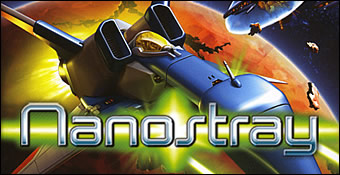
With the release of the Nintendo DS in 2004 came a new STG out of Shin'en's workshop to accompany it in 2005. Rather than reuse the Iridion license, we received Nanostray instead, a very similar shmup with a significant graphical overhaul. Gone are the rendered backgrounds and awkward sprite stretching; sleek polygonal ships strafing at high speeds now rule the battlefield. The action is faster and the enemies hit harder in Nanostray, making it a pretty irresistible package for shmup fans thirsting for a portable shooter, as long as you can get over some the eccentricities.


Out of its predecessors, Nanostray stays the closest to Iridion II (unsurprisingly). The camera angle, bombs, multiple power-ups and general difficulty adheres to the guidelines already printed out, though in some ways Nanostray is a bit more intense. More bullets are present on the screen at once, and your own arsenal has been heavily upgraded; each of the weapons & their respective energized shots are well balanced and have noticeable uses, whether it be the boss-crushing side shot or the handy undulating lightning emission. You'll find yourself switching up shot-types a lot more often, though the process of doing so has been made unfortunately complicated.

Since the Nintendo DS's primary feature is the duplicate touch screen, some awkward touch controls are thrown in for good measure. To view your remaining power or to change your weapons, you have to consult the bottom screen, which tends to split your focus in pivotal moments—the power-ups suffer the most from this, as their individual windows of opportunity can be very brief. I would've preferred L&R to be designated for this purpose (they serve no actual function in the game), though it's not entirely too terrible once you get nimble enough at tapping the colored icons between safe spots.


The new hardware makes itself known not only in the controls and crisp visuals, but also the speed of the game. Slowdown aside, the game moves quick and plays quick, being closer to an arcade-style shmup than the Iridion games ever felt. I'm a bit sad to see the rendered backgrounds gone, but the game is obviously better for ditching its wonky handling of sprites, and still looks quite nice even today. With that said about the graphics, I'm not entirely sure about how I feel on the music—despite Manfred Linzner's continued work on Shin'en's titles, the tracks here are less distinctive and catchy than the GBA games. Even sadder is that the option is missing to fiddle with audio levels, as the current mixing allows enemy explosions to tower over the tunes.

Nevertheless, the entire package still glitters at the end of the day. The levels and waves of enemies are varied, the challenges can be a thrill to tackle, the bosses provide a delightful (and dreadful) spectacle, and the game only has a few other kinks outside of what I've mentioned (like how the playing field is more limited than the player thinks it is). The energized shots are a great addition to the series, and the leniency of infinite continues in the Normal mode ensure that even the greenest of amateurs can see this journey through to its end. It's just fun stuff overall.


Nanostray feels very akin to Iridion II, but it's a lot less graceful—more wild and uncaring—than its predecessor. This makes the game personally more engaging, and even with its short length it provides a satiating experience. The Advanced difficulty hits the sweet spot between being punishing and too lenient, and the challenge mode adds a teensy bit of variation in case you ever get bored of the campaign. Nanostray won't find itself among the ranks of other elite STGs like Gradius or Mushihimesama, but it does a damn fine job at what it sets out to do.
---------------------

Images obtained from:  jeuxvideo.com, journaldugamer.com, archaic.fr

Thursday, December 4, 2014

Iridion II - Thoughts


When Shin'en was considering what the sequel to Iridion 3D would be, it must have been clear from early on that their peculiar flying perspective had to be scrapped. Yet they probably didn't want to abandon their knack for making gorgeously fluid scrolling backgrounds, so they settled on an isometric perspective for Iridion II instead. The game suffers no sophomore slump compared to its idealistic sibling, featuring more levels, more weapons, infinite continues, tighter controls, better design, and a challenge mode in addition to its campaign and arcade routes. Though I do prefer Iridion 3D for purely sentimental reasons, I admit there's few better shmups you'll find on the GBA than this one.


In a way, however, that speaks largely to the GBA's lackluster library of shooters, as Gradius Galaxies is the only other one I can think of that's worth looking into. Iridion II is a good game that's marred by a few errors here and there (a constant conclusion I come to with the Iridion/Nano series as a whole). As I stated above, having a lot of levels (15!) and shot-types (6 with each being upgradable twice) do a lot to make it feel like a well-realized shmup, taking a good hour and a half to chow through. Level diversity is exceptionally strong, with some stages focusing on enemy gimmicks like proximity mines or bouncing shards of ice, while others favor static hazards like windmill-operated doors or screen-filling cruisers menacingly floating by. There's a great pool of bosses here too, many of them featuring simple—but creative—attack patterns (except for that atrocious orb that surrounds itself with barricades).

I wish I could say the same for the weapons, but the game flubs up a bit here. Iridion II is great at letting you choose between multiple abilities to upgrade, giving you a personal preference that was absent in the last game (where it was more "powerup du jour"), but one minor aspect keeps you essentially locked into using one ability per level—whenever you pick up the item that lets you upgrade a shot-type, what the game fails to tell you is that using said item on a maxed-out weapon will refill half your health. Since continuing after death is check-point based this time around (rather than being continuous), stocking up on a couple of these items is very important as they basically serve as extra lives. Therefore the best thing to do is to find the shot-type you think does the most damage and just stick to that; they all do relatively the same amount, so you at least have some flexibility in your choosing.


The only thing I can think of that Iridion 3D might tout over its successor is graphical fidelity. While both have gorgeous backgrounds, the use of sprites directly separates them: Iridion 3D merely had to enlarge sprites as they got closer to you, while Iridion II's isometric perspective means that they have to be enlarged and change depth accordingly. A flat sprite is—typically—very unmalleable, so at times it may seem like an object is just scrolling along an invisible conveyer belt toward you (as evidenced by my first screenshot). In addition to this, bullets can travel along a hard-to-determine path due to the isometric perspective and the general blockiness of the player's ship—this issue is especially prevalent whenever a boss decides to fill the screen with amethyst pellets. For the most part the perspective is fine, but the ambiguity may leave you cursing sporadically.

The music remains just as whimsical, thankfully. I'm not exaggerating when I say one of the best things about the game is the title screen, where you can mix different tracks together to form your own favorite main theme (or play around with changing it little by little every measure). There's a couple of old tracks that make a comeback here but it doesn't feel forced or shoe-horned, given that there's such a dizzying amount of tunes. I personally found myself leaning more towards the cool/hip/jazzy tracks like "Spiral Bliss", though the majority of them are positively fantastic (like one of the opening tracks, "Two Years Gone").


There's not really much else I have to say regarding Iridion II. By buffing out the bumps and ugly marks of its former title, the game remains very consistent and enjoyable throughout, a necessary title for the GBA if you're craving quirky STG action. In a way it feels less "remarkable" than Iridion 3D but if that comes at the cost of the game feeling more balanced and fun, it's certainly far from a bad trade.

Sunday, October 12, 2014

Iridion 3D - Thoughts


I have a strange soft spot in my heart for the somewhat janky Iridion 3D. It was one of my earliest GBA games and the first handheld title to really awe me with it's visuals—the pre-rendered backgrounds are still the most striking feature of the game today (especially in motion). Shin'en's shooter aimed to blend Star Fox's 3D perspective with more shmup/STG influences, but it ultimately mutated into an awkward combination of both, serving to showcase how unsuccessful 3D rail shooters can be if handled poorly.


Besides the visuals, the first thing you're likely to notice is how wonky the collision is. Star Fox wisely allows objects and enemies to traverse the foreground (behind the Arwing), giving the player a good handle on the game's perspective, but here you're pretty much a sprite slapped onto the front of the screen. Though your ship appears to take up a small amount of space, it acts more like an interstellar rectangle, as you're likely to notice bullets colliding against your lean wings (or the empty space above them). This can make dodging projectiles quite tricky, as your bulky size negates any mobility you might have (the stage 2 midboss and stage 6 enemies are astoundingly difficult to defeat unscathed). Luckily you'll only suffer one pellet of damage if a purple bullet touches your hitbox, but crash into any solid object and you'll lose five. With only twelve points of health and limited lives for the entire journey, you'll find that an enemy veering into your ship at the start of a level can pretty much end the entire run—it's a frustrating thing that happens a bit too often.

The game thankfully has passwords so it's easy to restart a stage, although the passwords keep your lives and power-ups intact (meaning you can screw yourself over if you're careless). The power-ups are also a little haphazardly implemented, reducing your power when you die and when you switch abilities. This pushes the player to sit on a single power-up and be potentially punished for their choice if the stage doesn't feature their specific weapon. Conflated by the fact that certain power-ups (green, purple) don't fire in a straight line—making it hard to hit certain enemies—I think it's demonstrably clear that the gameplay of Iridion 3D is too imprecise to be considered a good shmup.


Yet despite those detrimental factors, I still contend that the game can be an enjoyable experience. If you strap yourself in knowing that the shooter has its share of gameplay issues, I think the variety and atmosphere it offers overcomes a lot of its failings. Each stage is beautiful and distinct from the one before, containing a series of quirky little challenges. There are some frustrating parts here and there (the entirety of stage 4 is a collision nightmare), but the experience is a cohesive one with a good difficulty curve.

I've said that the visuals are the premier aspect of Iridion 3D, but I would be remiss not to boast that the music is the most phenomenal part of the game. Out of the entire soundtrack there's only one dud (stage 6 boss), the other compositions being extremely catchy and atmospheric. I think this accomplishment is made all the more impressive considering how utterly lackluster the GBA soundchip is, as many good games were a bit stifled by the garbled audio. Shin'en's custom GAX sound engine went a long way in achieving this, although I'd argue that Manfred Linzner is a competent composer as well. Seriously, some songs are pretty amazing.


I tend to visit the clumsy shooter title biennially, tapping into feelings that have long since been overwritten by a multitude of mundane etchings. From the large bosses to the captivating music, I still hold a lot of admiration for Iridion 3D. I can't excuse how poor and repetitive the gameplay can get at times, and I must confess that nostalgia is a significant factor in my enjoyment. Yet I don't think much will change me from looking back on Iridion 3D as a flawed game with a lot of heart.