Showing posts with label Mario. Show all posts

Saturday, November 4, 2023

Super Mario World - Thoughts


When I think of a games similar to Super Mario World, the first thing that comes to my mind is Doom of all things. It's not as though the two are similar thematically, visually, or even gameplay-wise—rather, it's that they owe much of their sustained prominence to their devoted fanbases. Don't get me wrong, the base games are plenty of fun and all, but they're just the tip of a massive historical iceberg. Both communities are alive and well in 2023, releasing new custom edits every week, often with superior visuals, stage design, graphics, music, power-ups—you name it. And while a smattering of Doom clones have transcended to a commercial debut (REKKR, Age of Hell, Supplice), Super Mario World hacks remain just as impressive in their own right, requiring equal amounts of skill, dedication, and technical know-how to create.

Yet what really ties these two together in my mind is that in nine out of ten cases, I'd rather play the fan creations than revisit the originals. Part of it is simply oversaturation, having played both games until the stages were embedded in my mind like the creases of my brain. But another part is that the games are unimpressively solid, being good enough to recommend to genre newcomers... yet never blowing me away on replay. I confess it's a strange stance to hold; I wouldn't wince at anyone calling either title their favorite game of all time, as they're both worthy of such adoration. Perhaps I just find Doom and Super Mario World more mundane than magical nowadays, unable to rekindle the same spark that jolted through me as a child.

But enough with the comparisons—let's dig into the SNES's launch day juggernaut: Super Mario World.


From the moment the player is put in control, World reveals that it is a joy to play. The nuts and bolts of Mario's physics have been tightened to pit stop perfection, ramping up the plumber's acceleration while granting more control over his aerial movement. Gone are the racoon leaf and p-wing, replaced by a versatile cape that requires a bit more work in order to stay airborne. But once you master it, the cape grants unparalleled freedom, allowing the player to bypass entire stages up in the safety of the clouds. Yoshi is also a welcome addition, capable of different abilities based on the last shell slurped up. Additionally, Yoshi provides the player with a small buffer of health, one they can replenish so long as they can catch the scuttling dinosaur after taking a hit. Neither of these power-ups are game changers in the grand scheme of things, but they're honestly the most fun renditions of their kind (flying & mount) that the series would ever see.

Super Mario Bros. 3 is a difficult act to follow up on, but World tries its damnedest, handing the player 73 varied courses to sprint through. Unlike SMB3 however, these stages are rarely rapid-fire affairs; expect chunky gauntlets stuffed with 5 dragon coins, a mid-level checkpoint, and the occasional hidden exit. This boosts World's playtime to over double that of 3, but new players need not worry—saving is now a staple for every Mario game going forward! No more frustrations with power-outages tanking your runs or having to start over if you want to replay your favorite level. In fact, replaying stages is now encouraged, as there are two routes through every overworld (sans Dinosaur Island), with the fully optional Star World itself housing a super-secret, extra-challenging Special world. The golden age of brief, single-session Mario games is over—the sprawling overworld buffets are here to say.

And filling the buffet trays are a curated blend of new obstacles mixed with old. Of course, World still includes the traditional Mario staples like koopas, bullet bills, lakitus, and podoboos. But the imaginative new additions are the show stealers: spell-slinging magikoopas, towering pokeys, patrolling fuzzies, fireproof dino rhinos, and the doggedly-annoying rip van fish, just to name a few. The spectral bestiary also receives its own expansion, with a host of Boo cousins (big boo, boo circles, fishin' boo) coming over to crash at the ghost houses, which have transformed from wannabe-castles to (the superior) puzzle-mazes. And last but certainly not least are the ever-tenacious chargin' chucks, the natural evolution of the hammer bro that ditches the obnoxious tool-tossing for a wider variety of attacks, adding a little extra spice to your platforming purview.


Super Mario World isn't content to stop there either: there are plenty of non-hostile objects to encounter along your journey, like climbable fences, rope pulleys, portable springs, countdown platforms, magic keys, and a balloon power-up that... well the p-balloon kind of sucks, but the other items are cool. However, the game's most interesting "item" has to be its colored blocks, which make their first (and only!) appearance in the franchise here. To activate them, you must first find a secret exit that leads to one of the four colored switch palaces, and then beating said palace will activate its corresponding blocks permanently for every level they appear in. This grants a range of benefits, from additional power-ups, to pit protection, to even a new means by which to reach a secret exit. The colored blocks may come off as little more than set dressing if you're used to playing with all of them "on" at all times, but I appreciate how much more difficult the game becomes if you opt to skip all of the switch palaces, giving World its own pseudo-"hard mode". I think it's worth a playthrough if you've never done it before.

Of course, if you really want to to crank up the challenge in Super Mario World, the Special stages eagerly await your attendance. Here you will be tested and battered, starting with a rain of projectiles in Tubular, to brutal single-block jumps in Awesome, to the busy bullet bill forest of Outrageous. It's a fantastic set of bonus stages that, while downright tame compared to the torture chambers fans cook up nowadays, struck terror into many a young child—myself included. It's an excellent postgame gauntlet similar to the lettered worlds of Japan's Super Mario Bros. 2, albeit a lot easier to access and considerably more creative. Sure, the reward for beating the Special stages is essentially a lame novelty (some bizarre palette swaps), but the levels merit a playthrough on their awesome challenge alone. Despite the optional nature of the Special stages, I always make sure to cap off a replay of World by blasting through them.

Would that I could lay the same praise upon Star Road—the unique warp zone world—but here are where my Super Mario World gripes bubble to the surface. While every other world is packed with decent-to-excellent levels, Star Road reeks of nothing but stinkers. Stage 1 feels like a subzone outtake, Stage 2 is a featureless hallway, and Stage 3 is probably the shortest—and thus worst—Mario level of all time. Only Stages 4 & 5 have any sort of competent level design, and even then it's nothing exceptional. The best thing about Star Road is that it's thankfully short, but even then you'll still have to play through it twice if you're looking to achieve the game's 96 exit completion.

Worse yet is that Star Road is useless as a warp zone; its only practical use is as shortcut for the overworld once completed. Using Star Road to skip worlds is impossible due to the fact that the warp nodes leave you stranded unless you've completed the pathway to them on the overworld. The one level you can reach early is Bowser's Castle—the final stage—which is a far cry from the flexibility of 3's warp whistle. Plus most folks will have to discover the red and blue switch palaces to finish Star Road's Stage 4, which makes roughly a third of the game mandatory to play through anyway. From top to bottom, Star Road is a celestial blunder.


Another lackluster addition to Super Mario World are its newfangled dino coins. Spread around each stage are five golden bits that will grant you an extra life once gathered together, marking the start of what would eventually become New's collectible star coins. The dino coins are neat in that they double down on the exploration aspect of Mario... except for the fact that World doesn't keep track of any of the coins you've picked up. Even if it did, the coins are startlingly inconsistent: some stages have more than five, some should have them but don't, and a ton of coins are placed in utterly effortless spots. While it's not fair to blame World for failing to utilize its collectible in a way that future titles would, I still can't view the dino coins as anything but missed potential. There's a reason that among the vast additions World brought to the series, nearly nobody mentions this prehistoric specie.

And then there's the game's hideously boring bosses. On one hand the Super Mario Bros. series has never been fixated around its boss fights—and thus doesn't need them to be compelling—but on the other hand there's plenty of games with excellent and creative battles, illustrating how well a boss can fit when done right (Yoshi's Island, Land 2, NSMB Wii). Super Mario World doesn't have a high bar to clear when compared to its predecessors, but its feeble boss roster fails outdo the variety of 2 and the dynamism of 3. Reznor and Big Boo are fought in nearly the same manner in every encounter, and the only good Koopa Kids are the Lemmy/Wendy variations. Every other fight ends just as quickly as it started, and I could write a thousand words alone on how pathetic the Bowser finale is. I'll just say that any final boss that allows you to crouch in a corner like a coward for the majority of the fight is a real stinker in my book.

Lastly—and the point I'm least passionate about—is that the Super Mario World is kind of ugly. There are a couple of addendums that come with this gripe, like how the game a launch title, that the pastel palette hasn't aged as poorly as other SNES titles, or that its simplistic art matches World's laser focus on pure platforming. But these are ultimately excuses—not remedies. Foreground blocks are mostly made of a single color, backgrounds are sparsely detailed and frequently repetitive, and the animations aren't anything to write home about. World looks its best when you're inside of a ghost house of all things, but what you'll see far more are the repetitive gray caverns of the underground—areas which fail to leave any kind of impression on your memory. For the record, I don't hate or detest the art style... but I'm far from being enamored with it either. Honestly, World's visuals are just disappointingly dull in retrospect.

Looking back on what I've written, what befuddles me the most about all of this is that Super Mario World  remains a 9/10 experience at the end of the day, capable of rivaling the best platformers of the last thirty years. All of its issues are vain, minor blemishes that only stand out if you're paid to scrutinizing the game, as your first reaction upon playing it isn't to gawk at the flaws, but to simply mutter in amazement, "wow this is fun." What makes World excel is that it is Mario to its binary core: a fun platformer with controls that prioritize speed and ease, the two things that Donkey Kong Country would steal and hone in on. During a casual playthrough, World's missteps come across as eccentricities you'll blow by faster than the rolling hills in the background, all while you bounce atop the heads of paratroopers and monty moles. It's only under a lens thick enough to hammer nails with that the game's ugliness comes out—and even then, it's rarely more than a trifling crack.


Perhaps an unshakeable issue I have with Super Mario World is how the game fares in hindsight. For me at least, a lot of other Mario titles offer a more enticing package: some games have better overworlds, or more dynamic levels, or more powerups, more stages, better bosses, better visuals, etc. Though one could make the same argument for Super Mario Bros. 3, I feel that time has been kind to that 8-bit goliath, its vicious limitations making it shine even brighter in retrospect. Super Mario World is great—phenomenal, even!—well-deserving of its favoritism and fandom... but I just don't find it as immutable or flawless as its siblings. The fact that fans have made more impressive iterations on World using its formula means there's room for improvement; as gratifying as an "A-" is to receive, the existence of an A+ means things could be better.

Of course, even after saying all of this, I'll still fully play through Super Mario World at least a dozen more times before I kick the bucket—and I'll have a ripping good time every time I do. I can reason out a myriad of excuses for preferring or Galaxy or NSMB Wii over it, but none of those post hoc arguments can take away from the fact that the game is sheer fun distilled into a delicious little brew. It's something the World community has known about for decades, understanding that World's sublime engine—not its nostalgia—is what gives the game it's immortal reputation. Super Mario World may not be the best game of all time, but like with Doom, it will forever stand shoulder to shoulder among the best.

Wednesday, October 19, 2022

Super Mario Bros. 3 - Thoughts


Perched upon a golden throne atop the vast NES library sits Super Mario Bros. 3, one of the greatest games ever made. It's singular flaw is that it lacks a save function, seeing as a full run of the game spans 3-4 hours of non-stop playtime. Besides that however, Super Mario Bros. 3 is practically unassailable. It boasts over 90 creative levels spread across eight thematic worlds, with quadruple the amount of power-ups that were present in the first game. It's a marathon of brilliant ideas, excellent courses, and stunning secrets, managing to surprise me with something new every time I play it. Countless platformers have followed in its wake, many of which have overtaken it in style (DKC), speed (Sonic), substance (the New series), and physics (Celeste). Yet few games so carefully, so expertly, blend these facets together into an cohesive and consistent experience, all while pushing the hardware it's on to the absolute limits. Super Mario Bros. 3 is no mere footnote in video game history—it is a mythic titan that vies for the top spot, a Cronus among the pantheon of platformers.


You may be able to deduce from my feverish praise that Super Mario Bros. 3 is one of my favorite games of all time, so believe me when I say it's in dire need of a save file. Not only is the game a serious challenge to surmount in a single sitting for children and time-strapped adults, but failure is costly—a single game over will flip every single level back to its unbeaten state. Fortunately, every fortress you topple will unlock a permanent shortcut. Unfortunately, these shortcuts will be of little use when an airship starts zipping around all over the board. Though there are plenty of other catch-up tools at the player's disposal (warp whistles, hammers, item houses resetting on game over), none can remedy the pain of getting six and a half worlds deep and then being told, "Turn off the Nintendo, it's time for bed!" If you want to complete Super Mario Bros. 3 from start to finish, you better block off a whole afternoon—or prepare to kiss your progress goodbye.

But hey—at least there are a number of modern solutions to this problem. The most obvious fix is in Super Mario Advance 4 and the All-Stars collection, two visually enhanced remakes sporting multiple save files. There are also a host of SMB3 re-releases on the Wii, Wii U, Switch, and NES Classic, all of which come with officially sanctioned save states. For those willing to go the extra mile, there are some clever rom hacks that inject a battery straight into the game's code, as well as flash carts for those that prefer to play on original hardware. If you're a purist... I suppose you could always leave the console on overnight? In any case, the lack of a save file may have been an issue back in 1988, but it's easily circumvented nowadays—as long as you're willing to bend the rules a little.

Beyond that, I'm not sure what other obvious flaws Super Mario Bros. 3 exhibits. Perhaps players used to the longer levels of the New series may be alarmed by the brief, relay-style stages strewn across SMB3's wacky landscape, but I see this as a difference in philosophy rather than a shortcoming. What makes levels here so delightful is that they're punchy vignettes, designed as obstacle courses that end almost as quickly as they begin. They're not vapid or insubstantial either—plenty of enemies and secret rooms await, decorated with a bevy of pits, power-ups, and coin trails. Plus this is the first (only?) Super Mario title that lacks checkpoints, an absence you'll keenly feel during the game's longer gauntlets. To call the stages bite-sized is a misnomer; levels are closer to single portion appetizers, filling you up nicely when consumed over the course of an entire world.

And the content of the stages themselves? Platforming perfection.


Gone are the repetitive and directionless designs of the original Super Mario Bros.—each stage is now built with a distinctive idea in mind, tossing new mechanics, hazards, and enemies at the player constantly. Somehow, despite being packed to the gills with levels, SMB3 rarely uses the same gimmick more than twice: an angry sun torments you in 2-Sand & 8-2, boss bass hounds you in 3-3 & 3-8, chain chomps guard the walkways of 2-5 & 5-1, directional lifts guide you through 4-Fortress2 & 7-6, and you'll have to slip by stretch boos in 3-Fortress & 6-Fortress3. There are a number of interesting one-offs too: the sudden tornado in 2-Sand, the fire-spewing nipper plant of 7-8, the para-beetle parade of 5-6, the missile bill barrage of 4-5, and the woefully underused kuribo's shoe in 5-3. I could gush over every single one of SMB3's additions (air ship stages, hammer bro variety, ice blocks, donut lifts, coin ship) but suffice to say, the game doesn't ever leave you wanting for more.

Hell, even the stages that lack something "new" manage to stand tall because of their smart design. 2-Pyramid sees you kicking open crawl spaces, 3-8 is littered with vines to keep you safe from boss bass, 5-9 is a treacherously tight diagonal climb, 4-4 bombards you with spiny depth charges, and 7-9 is a time-consuming but coin rich maze. Numerous levels also offer an alternate route through them: 1-6 & 5-2 offer paths above and below ground, 3-9 & 6-9 let you choose between sprinting or swimming, 2-4 hides a golden oasis above the starting mark, and 4-6 is the original Tiny-Huge Island. Do you like puzzles in your platforming? 7-Fortress1, 7-5, 8-Fortress, and the devious 6-5 got you covered. How about secret power-ups you have to work to find? 1-3, 5-1, 5-5, and 6-10 might have what you're looking for. Perhaps you yearn for difficult, white-knuckled platforming? Then prepare yourself for 7-8, 7-Fortress2, and nearly all of World 8! No matter your preference, Super Mario Bros. 3 is guaranteed to have at least one level that will leave you grinning ear to ear when you finish.

I suppose the only thing I'm not enthusiastic about is the overuse of Boom Boom as the fortress boss. Occasionally SMB3 tries to spice up his battle (the ice arena of 7-Fortress3, scrolling floor of 8-Fortress, the numerous winged variations of the boss) but at the end of the day you're left fighting the same rudimentary crab-walking, arm-swinging patrolman that you learnt how to beast back in 1-Fortress. The koopalings suffer a similar case of recycling, but there's at least minor differences in their arena and fighting style (and in the case of Wendy and Lemmy, an entirely new projectile). Plus, due to the reflexive use of their wand, the koopa kids a little trickier to attack as soon as they're vulnerable—whereas I could ensnare Boom Boom in a head-stomping loop in my sleep. The orange brute is an alright boss, but I feel that more effort and variation could've been applied to each of his fights (if we get to fight hammer bros in knee-deep water, why not him?).


And the power-ups! What a fantastic collection of quirky abilities! Standing in parallel to the fire flower is the super leaf: a sturdy tail that grants the Italian plumber flight, letting him explore stages with a newfound verticality. The P-wing acts an alternate suit that can keep him permanently skyborne, while the Tanooki variation provides a brief—but potentially crucial!—moment of solemn invincibility. The frog suit is a pain on dry land but grants the player substantially more control and speed underwater, letting them weigh the cost of when to don the suit. Stars can be stored up and used to bum-rush stage starts (always useful in 4-3 and 7-Piranhas), and Jugem's Cloud let's you skip some of the game's peskiest stages—provided you can defeat the next level. But the most precious item has to be the rarely-acquired hammer suit: a padded, fireball-deflecting garment that can vanquish nearly any foe with a single toss of its onyx mallet. Only the music box is a bit of a dud, briefly letting you skirt by hammer bros (whom are otherwise easily dispatched with a star).

Speaking of music, Konji Kondo's laid back, playful score has an amazing amount of range, despite there being only a handful of core compositions. One touch I've always appreciated is that each overworld map gets its own short theme, only needing a few seconds to convey the perfect mood. Stage themes are now split between low and high energy outings, utilizing chill reggae drums for the former and a playful melody chase for the latter. Underground sections get a cool drum & bass remix of the original subterranean tune, while hammer bros battles sound like straight-up surfing duels. It would've been nice to have an even larger arrangement of tracks, but this is an issue that admittedly plagues the entire 2D Mario series—even Yoshi's Island only has five main tracks!

Lastly, I'd be remiss if I didn't mention the perfect note the game ends on—namely, the final fight against King Bowser. The castle itself starts as a slow burn, throwing some odd curve balls your way like steep steps and backtracking pathways, before speeding you across rickety platforms and over tightly-placed fireballs. Then you'll come face to face with the towering turtle himself, with nary an ax in sight! A momentous struggle unfolds as you dodge and juke the fiery tyrant, all while he's trying to crush you beneath his sheer mass. You'll need some deft footwork and smart maneuvering in order to survive, as even coming equipped with the fire flower doesn't hand you an automatic win. It's a brilliant battle to close out this 8-bit odyssey with, like a freshly-picked cherry capping off the best sundae you've ever had.


For the longest time, I considered Super Mario Bros. 3 to be my favorite game of all time. I'm not exactly sure when it was—probably some time around my teenage years—but eventually Super Metroid dethroned the NES classic, claiming the top spot for the rest of my life. Nowadays SMB3 lurks behind Dark Souls in third place, vying for the position along with the extremely-flawed-yet-extremely-fun Mega Man 2. So when it came time to write this entry, the words felt bound in a knot; it was difficult to determine where to begin and end this ardent stream of consciousness. If given unlimited time I could probably write a detailed entry for every single level, providing a blend of reasons and excuses for why I enjoy each one so much. But I have to contend with the fact that a lot of my passion is simply nostalgia burning brightly; had I not grown up with the game, perhaps I would've felt the same with Super Mario World or—god forbid—Sonic the Hedgehog.

But another part of me believes that Super Mario Bros. 3 transcends my personal preferences and childhood memories. If you sit down to play it, one can't help but notice its remarkable merit, its strengths made apparent and inarguable. I don't think everyone has to love the game of course, but it's a Sisyphean task to deny that the game isn't at least good or worthy a playthrough. Mario as a franchise owes a lot of its history to SMB3: airships, world maps, ghost houses, slopes, flying, item huts, P-switches, the koopa kids, and much more made their first debut here. There's a good reason why the New series worships Super Mario Bros 3's design blueprint like a long lost ancestor deity—there's a mind-boggling amount that this 8-bit masterpiece got right.

And it absolutely still holds up, nearly 35 years later.

Friday, March 25, 2022

Super Mario Bros. 2 (JP) - Thoughts


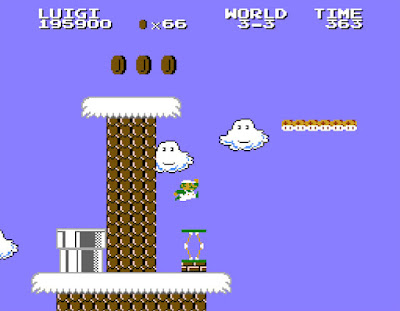
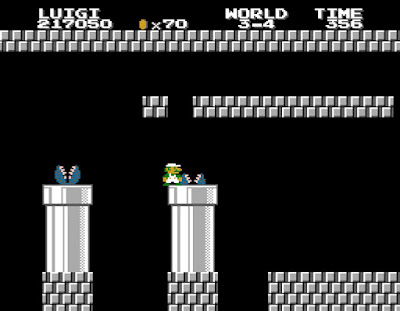
If you've ever wondered what a "proper" Super Mario Bros. sequel might look like (one thoroughly scrubbed of its Doki Doki quirkiness) then behold—your monkey's paw wish has been granted! Released less than a year after the original, Super Mario Bros. 2 on Famicom Disk System was the true successor to the platforming classic, the sequel the West was sadly robbed of. Or at least, that's what die-hard fans would grouse, before finally getting their mitts on the Lost Levels version of the game in the All-Stars collection. Nowadays you won't find too many folks urging others to play—let alone purchase—Super Mario Bros. 2 in order to complete their Super Mario adventure. And with good reason too: Super Mario Bros. 2 is a lackluster expansion pack of levels designed to be as rude as possible.


Before the proliferation of romhacks, Super Mario Bros. 2 carried an intriguing promise: it quite literally offered more Super Mario Bros. There are more levels, more hazards, more secrets, more enemy types, and even more characters—well, one more character. Luigi finally differentiates himself beyond his white painter overalls, leaping higher and further than Mario at the cost of his brake speed. He's a cool addition that transforms the Mushroom Kingdom into a low gravity ice rink, making the game a tad easier due to his ability to reach numerous ledges Mario otherwise struggles with. However, his inclusion oddly replaces the 2P option—which isn't that big of a deal, as I can hardly imagine more than one person per household actually wanting to play this game.

Early on (ie the third item box of 1-1), you'll be clued into Super Mario Bros. 2's new tenet: trolling. Poison mushrooms are a "power-down", bottomless pits are now ubiquitous, and there are hidden warp zones that can send you backwards through the game. Expect frequently tight gauntlets of piranha plants and fire bars to test your reaction time, as well as the occasionally hammer bro you can only bypass with a risky leap. But the worst offenders have to be the hidden blocks and repeating mazes, which will terrorize you as early as 2-2 and 3-4 respectively. It's funny that two decades before amateurs could flood Mario Maker with belligerent kusoge, Nintendo was playing the original offender, gleefully toying with its audience.

Super Mario Bros. 2 may be billed as a game "for super players" but that's a touch misleading; 2 isn't a challenging game insofar as it's a rude one. That doesn't mean it's not difficult—it most certainly is—but like Battletoads, the largest hurdle is the amount of rote memorization required to beat it. Power-ups are not only few and far between but are commonly hidden, making the game's trickiest stages (primarily World 8) feel impossible until you sniff them out. Likewise, the game isn't shy about throwing blind jumps at you—especially whenever the super spring is involved, meaning you'll have to intuit where you are offscreen. Perhaps what clinches Super Mario Bros. 2 as more "rude" than "challenging" is the paltry amount of lives you have to beat it with... unless you know of the (intentional!) 1-up trick at the start of the game.


Despite Super Mario Bros. 2's obsession with screwing you over, the level design actually ranges from "okay" to "pretty good." Stylistically, the stages are hewn straight from the first game: you have underground levels (with more pits), tree top levels (with more pits), castles (with more pits) and annoying underwater sections (with more pits and now koopas!) Because of this, I don't remember entire stages as well as their troublesome sections, like the brutal koopa hops of 4-3/8-1, the fake dead end of 5-1, the Groundhog's Day loop of 5-3/7-2, the stratospheric leaps of faith of 7-3, and the insidious secret exit to 8-2. Ironically, the common element between these sections is that they contain one of more of the aforementioned trolling devices—repeating mazes, hidden blocks, and blind jumps.

That's why I don't think Super Mario Bros. 2 is necessarily bad for including anti-player gimmicks—it's just that they'll chip away at your patience with a diamond pickax every time they're used. If you're more resistant to tilt and enjoy repeatedly running levels in the pursuit of perfection, then great! There's a good chance you'll like Super Mario Bros. 2 more than its admittedly tame predecessor. But my problem is that "trolling" is all 2 really brings to the table. Sure, there's Luigi and super springs and wind and more aggressive piranha plants... but none of those dynamically change the way you play (well, besides Luigi). Audibly, visually, and mechanically, you're essentially playing the first Super Mario Bros again, but this time with a pitiful "new" coat of paint and a penchant for cruelty. As an adolescent I dragged the American 2 for being too different, but now near my mid-30s I find the sameness to be the most disappointing thing about this sequel.

To its credit, Super Mario Bros. 2 does add in a couple of bonuses for skillful players: namely, World 9 and Worlds A-D. I like World 9 as a hyper-difficult achievement, granting folks that beat the game on a single continue only one life to make it through a surreal, underwater-only series of stages. What makes it work for me isn't just the inverted palette but that it feels like a goofy victory lap rather than a punishing final challenge. Worlds A-D on the other hand, are a fine inclusion (they're a smidge harder than the regular stages) but they unfortunately hinge on the player completing the game eight times. I could understand maybe beating it as both Mario and Luigi once, but requiring quadruple that amount is just tedious busywork. One could argue it offers good practice for making it to World 9, but I was able to get there on my third attempt as Mario—all the other five runs did was solidify my opinion on Super Mario Bros. 2 even further.

On one hand, I admit that it is pretty cool playing what is essentially the earliest Mario romhacks ever made, especially by the "casual-friendly" Nintendo. But on the other, I judge Super Mario Bros. 2 so harshly because players nowadays are spoiled for choice. There are plenty of good hacks for purists that want something similar but more creative (Super Mario Unlimited, New Mario Bros) as well as hacks that allow you to better show off your Mario mastery (Super Mario Forever/Frustration, Rohrleitung Gate). The best reason to play Super Mario Bros. 2 over anything else is to learn about a forgotten relic in history, a kind of "what if Nintendo turned nasty?" And even then, I'd suggest playing the (improved) All-Stars first, whereupon you'll quickly realize Howard Philips was right—not having fun is indeed, bad.


When I claimed that Super Mario Bros. 2 was literally "more" Super Mario Bros., I neglected to add that it's more obnoxious, more difficult, and way more tedious. The game plays with physics in interesting ways via Luigi and the wind mechanic, but all that really amounts to is needing a finer degree of precision—and a lot more memorization—to master it. Super Mario Bros. 2 doesn't offer a new dimension of freedom like 3 does, nor a compelling new playstyle like with the American 2. Its strength lies solely in its mischievous level design, and even then you have to have a high tolerance for stupid deaths if you wish to see the end. When viewing the Super Mario Bros. franchise as a whole, I don't think you can argue that 2 deserves any spot other than the rock bottom.

Monday, February 7, 2022

Paper Mario: Color Splash - Thoughts


Never have I played a game so irresistibly charming that tries its damnedest to be mediocre. Paper Mario: Color Splash may be a better game than Sticker Star but it fails to learn nearly half of the lessons it should have. Every step forwards is proceeded by a baffling stumble backwards, punishing you every time you start to have fun. I don't fault anyone for being lured in by Color Splash's gorgeous visuals and toe-tappingly phenomenal music, but player beware: beneath the captivating aesthetic is the same exact crummy design document that sunk Sticker Star like a stone lobbed into a lake.

Or rather—a rock, eh? Eh?!!! Get it?!!!!!! 


Lord almighty do I loathe Paper Mario: Color Splash's obsession with rock paper scissors. Anyone that's played the game knows what I'm talking about—and likely feels the same. The best way to earn coins in Color Splash is to enter into one of the eight (!!!) rock paper scissors tournaments that pop up on the world map. Blatant hints are provided to assist you in the first two battles, but you're on your own for the third—and as the game progresses, the hints grow vaguer, culminating in a tournament that's entirely dependent on chance. Gone is any semblance of strategy; you either know the outcome of a match before it starts, or are helplessly beholden to a random roll. Does that sound fun?

Because it's not. The first tournament is entertaining in a kitschy way (given how seriously it's presented), but the novelty wears off quickly. I avoided the Roshambo temples after conquering the first two, but restocking my arsenal later on got so expensive that I'd be a fool not to do them—a single tournament can shower you in thousands of coins. Plus, seeing as a goddamn minigame quiz show was mandatory for progression, I assumed the Roshambo temples were as well. Only at the gates of final level did I say "screw it", ready to incur the wrath of an impossible boss fight as long as it meant I could maybe skip playing rock paper scissors for the 50th time.

For those familiar with Sticker Star, you're likely to notice two big red flags from that last paragraph: the need to restock and being unaware of what's mandatory for progression. Color Splash thankfully improves on its predecessor in both categories... but I wouldn't call either of those problems "fixed." Attacks continue to be consumable resources but they're cards now instead of stickers, meaning you won't have to deal with gigantic adhesives clogging up your inventory space. And in the main hub is a handy toad that'll clue you into what Thing you need next, avoiding the urge to keep a walkthrough open at all times. Buuut you'll continue to fiddle with deck management more than you should (largely from wanting to retain stronger cards for boss fights), as well as repeatedly backtracking to Port Prisma to check if you have the right Thing or not. Intelligent Systems keenly demonstrates that acknowledging a problem is not quite the same as addressing it.


In regard to boss fights, Color Splash likewise makes a minor improvement. What were once one-note fights (er, one-sticker fights) have transformed into actual battles that require proper healing and paint management. That is, until a specific event happens and you're forced to use the Thing that beats the boss—or face annihilation. Again the root problem is sidestepped, transforming "fights where a Thing trivializes a battle" into "fights where a Thing is mandatory for victory." And I mean mandatory—bosses are literally impossible to beat without their weakness! I would've readily taken reduced damage, or a penalizing status effect, or a difficult-to-dodge mega-attack over the brick wall that is invulnerability. It's a shame too because besides that prickly point, most of the boss fights are clever and fun (Wendy, Roy); the final boss in particular is a great duel, solely because no one particular card is required to beat it.

Another aspect Color Splash aims to improve but eventually bungles is its world map. Zones in Sticker Star were quarantined off like blobs of paint on a palette, locking you into exploring them one at a time. Color Splash mixes this up, adding multiple exits to every stage so that paths encircle the entire island. It starts off promising enough, feeling like a nonlinear adventure where you can solve things out of order, but the freedom is fleeting—you'll soon noticed that zones are still quarantined off, blocking you from making progress unless you tackle stages in the right order. This is especially apparently halfway through the game, where you're yet again traversing through stages in a boring linear fashion, with any secret exits tacked on in the most half-assed, shiftless way (Mossrock Theater).

Yet another problem Color Splash kicks further down the road is its random encounters—more specifically, making them meaningful. In Sticker Star, there's really no reason to fight enemies when you're armed with full health and stickers. However in Color Splash, battling will occasionally increase the maximum amount of paint you can hold, which is (sadly) as close to the concept of "levelling up" as the game gets. But after the first handful of expansions, upgrading your paint bucket hardly provides a benefit—the last few increases I got were a paltry 3% each. While paint is valuable early on, helping transform blank cards into better cards, powerful attacks eventually require so much paint that a single turn can deplete most of your chromatic stock. Therefore it's often better to stock up on paint-refilling green mushrooms and simply avoid battles—rendering the fights as superfluous as they were in Sticker Star.

But hey—at least Sticker Star gave numerical feedback for its battles!


Whoever thought it was a good idea to nix the damage numbers in Color Splash is a categorical fool. Depriving an RPG of such key information sends the player spiraling into an abyss of increasing uncertainty: does a hammer do as much damage as a jump? Does a fully painted jump do as much damage as an unpainted big jump? What about three half-painted hammers compared to a quarter-painted huge hurlhammer? A fire flower to an ice flower? A fire extinguisher to a lemon? Even when you manage to grasp one card's strength relative to another, you're still holding on to a formless adjudication that can never be tallied. Without a baseline of data to help determine the proper card for the situation, you'll just choose whatever card feels right.

But it's not like Color Splash requires a serious level of planning anyway. The gameplay here doesn't fare any better or worse than Sticker Star, as both suffer deeply from a simplified and recycled bestiary. Most of the fights boil down to "what attacks don't I want to waste," given that most of the enemies are a droll variation of one another. Maybe the shy guy will have a straw sticking out of his gob, or a crease across his middle, or a cardboard shield—all you really have to pay attention to is whether you should jump or hammer them. If that doesn't sound all that exciting, it's because it's not; the enemy gimmicks are mildly entertaining for the first encounter, but fail to distract from the fact that you're fighting the same overused archetypes over and over, attacks and health pools all vaguely blending together.

Color Splash's pathetic bestiary unfortunately extends over to its NPCs as well, seeing how Prism Island is home to a cabal of low-effort NFT Toads. Occasionally they'll wear a little hat, or a different colored vest, or maybe even some sunglasses—but they're all the same, bland, neutered creature in the end. Ironically a good chunk of them possess distinct personalities (the captain, the foreman, the bridge-loving toads), showing that Intelligent Systems (or at least the translation team) still yearn to tell stories. It's just a shame that the game has sterilized of any sort of visual whimsy—a problem which similarly plagued Sticker Star. But hey, at least the Koopa Kids are back this time!... again! A first for a Mario RPG Paper Mario game!

I do apologize for the unending comparisons to Sticker Star, but it's honestly hard to analyze Color Splash independent of the flawed ancestor it shares so much DNA with. I honestly feel that Color Splash is the better of the two, largely thanks to its crisp visuals, witty writing, and alarming creativity. Jokes land successfully more often than they don't, and there's a lot of fantastic paper-craft gags that reveal a stunning attention to detail. Plus I could gush about the music all day, about how it majestically evokes the chromatic tone of each colored star's episode perfectly, culminating in an energized boss theme which utilizes each episode's motif. I'd even go as far as to say that Color Splash is an aesthetic masterpiece, blowing the first three Paper Mario games out of the water...

... It's just that when it comes to the gameplay, everything comes tumbling down like a house of cards.

Just like Sticker Star.


Diehard Wii U fans may rightfully gush over Paper Mario: Color Splash's vibrant art style and charming script—but I'm unable to call it a good game, given the encyclopedic tome of annoyances and missteps. Every controllable aspect of the game is glaringly flawed—and I didn't even touch on how pointless the shy bandit is, or how annoying Kamek is, or the unforgivably stupid decision to make ally cards flee in boss fights! Those are the encounters where you need allies the most! If this blog post comes off as more negative than the one I wrote for Sticker Star, chalk it up to growing older, writing more honestly, or just a bur in my boot; the important takeaway is that neither game holds a candle to the Paper Marios of old. I mean, is there anyone that even prefers the rudderless direction the series is taking?

Worst of all is that Color Splash isn't just bad—it's bad in spite of its good parts, smothering whatever redeeming qualities it had in boneheaded decisions. It's a meticulously-crafted still life caked in dirt, a twinkling star strangled by needless smog.

---------------------

Images obtained from: nintendo.com, geekdad.com, theyoungfolks.com, expertreviews.co.uk, mariowiki.com

Wednesday, January 19, 2022

Super Mario Bros. 2 (US) - Thoughts


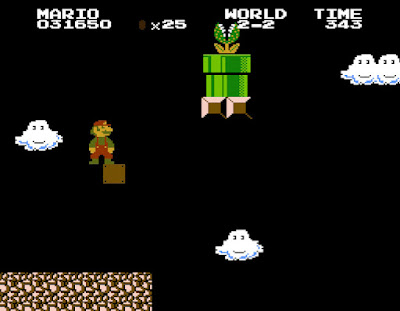
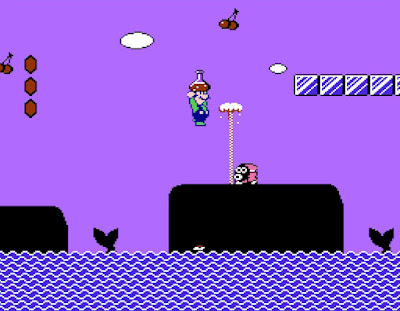
When it comes to Super Mario Bros. 2, opinions are usually split in one of two directions: either it's the black sheep of the series, or it's one of the most innovative titles in the 2D franchise. For me, I've always drifted towards the former—the Mario series is rooted in momentum based platforming, so why include all this turnip tossing? Doki Doki Panic's fingerprints were too large, too extraneous; the once-pristine waters of platforming had been muddied by root vegetables, key escorts, and dimensional doorways. As a sequel, Super Mario Bros. 2 may not have strayed as far as Link's Adventure, but it was similarly fated to live in the shadow of its younger siblings. Charitably, Super Mario Bros. 2 was an ambitious anomaly. Critically, it was a bizarre offshoot.

However, that kind of puritanical thinking is woefully outdated, especially given the smorgasbord of entries found across the (nearly) forty-year-old franchise. Super Mario Bros. 2 is actually more of a "loyal platformer" than Donkey Kong '94, Yoshi's IslandSuper Mario RPG, or even Super Mario Sunshine—hell, it's more like Super Mario Bros. than the arcade progenitor is! The eccentricity that made Super Mario Bros. 2 an outlier ironically works to its advantage, giving it a more colorful, charming, and memorable identity than that of its Japanese counterpart—or even the entirety of the New series! Super Mario Bros. 2 may not be the ideal sequel that 3 ended up being, but nor is it a mediocre outlier as I once narrowly thought in my youth.

It's simply a good game, all things considered.


As an adolescent, what I disliked the most about Super Mario Bros. 2 is that you no longer defeat enemies by stomping on their heads. This creates a noticeable change in rhythm, where the accuracy of your throw now takes priority over the momentum of your jump. The game feels less speedy, less urgent—and the lack of a time limit means you can scrounge for mushrooms or farm hearts at your leisure. While I no longer defensively correlate "different" with "bad", I still feel that Doki Doki Panic's framework makes for a poor Mario game.

That's not to discount everything Super Mario Bros. 2 brings to the table, however. Besides the vegetable pitching, there's distinct themes to each world, plenty of secrets to scavenge for, the aforementioned key caretaking, and a versatile bestiary that's sprinkled throughout the adventure. No longer must you wade through repetitive castles and topple marginally different psuedo-Bowsers—Super Mario Bros. 2 boasts a wide variety of bosses that require different approaches, an achievement the series wouldn't top until Yoshi's Island. Even the multitudinous Birdo duels are always exciting, thanks in no small part to the alterations made to her arena each fight.

But by far the best thing Super Mario Bros. 2 brings to the table—which the franchise foolishly leaves behind—is its quad of playable characters. I didn't find much value in the choice as a kid (Luigi was the only one I played), but bouncing between the protagonists really livens up the gameplay. They're a well-rounded cast that's distinct from one another without requiring that you learn a completely new playstyle. Plus you can tailor your choice on a per stage basis, effectively nullifying tricky sections. Can't quite jump on the fish in 5-1? Zoom across with the Princess! Want to easily reach the secret mushroom in 2-3? Jump sky-high with Luigi! Need to dispatch a boss quickly? Switch to Toad! Unsure what's ahead of you? Well-rounded Mario to the rescue! My only complaint is that I wish you could change characters after losing a life—something the All-Stars version wisely remedies.


Despite the vast number of changes Super Mario Bros. 2 introduces, one thing it maintains is its predecessor's knack for exploration. You won't be jumping down pipes and headbutting blocks for goodies however—instead you'll peek into jars and slip through doorways into the ephemeral Sub-space. There's not much to talk about with the former—most of the jars are copy-pasted bore-fests—but the door-conjuring potion is an excellent addition, letting you manually choose where to explore. Sniffing out mushrooms is an entertaining diversion, as even when you fail to unearth one, you can still harvest the nearby coins.

... Except the coins kind of suck this time around. In Super Mario Bros. they're the promise of a reward, scattered throughout stages to incentivize jumping while simultaneously building towards a 1-up. In Super Mario Bros. 2, they're the chance of a reward, easily farmed in Sub-space for the sole purpose of feeding them to a capricious slot machine. And unless you're rolling cherries, expect to walk away empty handed most of the time. I concede that gambling is a more... exciting alternative to fractionally collecting 1-ups, but I prefer the dependability of the old system—especially when you're in dire need of an extra guy.

Likewise, stars and hearts are useful powerups that have been rendered unfortunately unreliable. With no way to track when the next one will appear, you either have to make an educated guess or hope one will pop up when you need it. Similar to the slot machine, this isn't a massive foible; I just prefer openly predictable systems to (seemingly) random ones. In fact, there's not really anything I'd categorically claim as "bad" in Super Mario Bros. 2—the game just makes a lot of strange decisions is all. The level design is occasionally strange as well: 6-2 is so short that it feels unfinished, one path in 7-2 is notably harder than the other, and the precision required for 5-1 could make the Lost Levels blush.

Note that the worlds in Super Mario Bros. 2 still blow the first game out of the water. Whereas I had to rummage to find notable stages in Super Mario Bros., its successor won't leave you wanting. There's climbing sections, bomb puzzles, sandy excavations, magic carpet rides, ice rink races, and more platforming than you can shake a carrot at. While I find the base gameplay of the original more entertaining moment-to-moment—controlling classic Mario is like wrangling a wild beast—Super Mario Bros. 2 offers a hell of a lot more to the player on their first playthrough. Subsequent playthroughs are... less compelling, even with alternating characters, but not every game needs to endure a dozen replays to be considered worthwhile.


One of the few upsides of growing older is learning to appreciate the things you've previously dismissed. Although Super Mario Bros. 2 remains one of my least favorite Super Mario games, it's a lot better than I previously thought. I've learned to accept the change in gears, appreciating how it trades the frantic momentum of the first for a more relaxed, varied, and lob-heavy playstyle. Plus its four playable characters give it a depth that I can only hope the 2D series embraces again some day. I may not always be in the mood to return to Super Mario Bros. 2, but whenever I do, I never have a bad time.

Saturday, November 28, 2020

Super Mario Bros. - Thoughts


Playing a lot of Super Mario Bros. 35 has given me a newfound appreciation for the original Super Mario Bros. Or rather, a light-appreciation, as I've always been fond of the plumber's momentum-focused platformer. While there's plenty of other games in Mario's rich history that I'd rank over it, the original possesses a crude strength that no other game (besides Land) has: blunt simplicity. There's no in-game story, no overworld, no minigames, no saving, no hidden collectibles; Super Mario Bros. is about running and jumping. And this paucity of systems works because running and jumping as Mario feels very good.


... But this isn't an irrefutable conclusion, unless one spends plenty of time playing and adapting to Super Mario Bros's physics. Compared to Mega Man or Contra, Mario is as stiff and unwieldy as a mustachio'd van, taking too long to accelerate and dangerously too long to stop. To complicate this, certain jumps in the game are downright malicious, requiring a full sprint to cross safely or sporting a single block to land on—and in one instance in 8-2, both at once. The potbelly plumber might not feel natural to control, but mastery lurks within your fingertips—so long as you learn where and when to pump the brakes.

I've never thought of the original Super Mario Bros. as a difficult game (especially compared to the rest of the NES library), but it can definitely be challenging at times. Later stages not only demand precision from your leaps but will also starve the player of resources, reinforcing the importance—and advantage—of a strong start. Sniffing out fire flowers and preserving your 1-ups will help get you to the end faster than having sharp reflexes will... though those don't hurt either. And even when you lose to the likes of World 7 & 8 (the game's real run-enders), you're only ~30 minutes away from reaching your last checkpoint. Throw in some super obvious-to-find warp-pipes and the game can be conquered in 10 minutes by even the most lax speedrunner.


There's a lot to love about Super Mario Bros.'s demure design, though I didn't truly appreciate it as a kid. I always thought Super Mario Bros. was disappointingly "samey", reusing stages, themes, and gimmicks more than I would've liked. And... I wasn't really wrong about that: several levels are repeated with the only identifiable difference being the enemy quantity. But the other stages have a distinct flavor that I hadn't really noticed until now, shaking up the generic "1-1" feel one might have when they think of the game.

For instance, foes in underground sections have darker colors, several stages see Mario running across treetop canopies, 2-3 and 7-3 are dominated by catapulting cheep cheeps, 3-1's black background gives the impression of starless night, 4-3 uses mushrooms instead of trees, and my favorite level 6-3 is drained of color, awash in a lifeless grayscale as if time has stopped. The only stages that radically shake up the gameplay are the underwater sections, though the gravitational pull of the pits combined with the nettlesome bloopers will make you wish every stage was a sprint-fest. Plus there's no power-up blocks deep beneath the waves, making the swimming levels particularly grueling.

Speaking of, I came to appreciate was the elegant nature of the power-up system. Health bars can be a finicky mechanic to design around; they can make enemies feel unthreatening while pits & spikes feel too cruel. But the mushroom acts as a devious bit of insurance: at the cost of expanding your hitbox, it'll protect you from a single attack. The fire flower provides an added reward for playing well, giving you the firepower to deal with some of the worst enemies in the game (like the RNG-nightmare hammer bros), but you'll still get reduced to tiny (regular?) sized Mario should you take a hit. Always being two hits from death makes accidentally speeding off the edge of a cliff a mild aggravation, unlike when you fall to your doom in Sonic with 100 rings in tow.


Prototypical of many of the NES games to come, Super Mario Bros.'s challenge is offset by the speed at which you can blaze through it. In a way it feels like the perfect blend between a platformer and racer, giving you opportunities to find secret coins, stars, and 1-ups should you need assistance, and letting you run full-throttle to the end if you don't. I won't deny that it looks visually plain and lacks dynamic gameplay mechanics, but there's little details sprinkled around that really make the game shine when you ruminate on it in retrospect. In the wide venue of NES platformers, Super Mario Bros. is a meal of unsalted steak and potatoes. It's able to satiate your hunger without stuffing you so full you can barely walk. And sometimes that can really hit the spot.

Saturday, October 31, 2020

Super Mario Bros. 35 - Thoughts

 
Super Mario Bros. 35 is a fantastic game that stumbles over its own short legs. Its premise is my dream battle royale: make 35 players compete in randomly selected Super Mario Bros. levels, where defeated foes from bowser's army are sent to other players' games to hassle them. This keeps the single player experience intact while offering a competitive twist that makes the game feel tense but never mean-spirited. However—like with any multiplayer game—an optimal way to play bubbles to the surface, and boy howdy is it boring.


Super Mario Bros. 35 suffers from a fatal flaw, one I assume could be easily fixed: too many damn World 1 levels. Before each session, each player picks a course from Super Mario Bros. they want added to the play pool—and most seem to either pick 1-1 or 1-2. That, or they're added to the pool as filler levels, because their prevalence is maddening. I have over 200 clears of 1-1 and nearly half that for 1-2, meanwhile everything beyond world 5 has been played once or twice at most. While the early stages provide a nice reprieve to collect fire flowers and hidden 1-ups, this comes at the cost of your adrenaline and excitement, as it's a fairly safe, uneventful and thoughtless run (unless a squad of lakitus is being sent your way.)

The abundance of early levels vastly extends Super Mario Bros. 35's optimal play time, turning what should be a rapid-fire adventure through oldschool courses into a sloggy, amateurish affair, every World 1 stage a boring pitstop you're rarely in need of. This issue isn't so terrible as to turn me off from the game, but I'm only reminded of how invigorating the game can be when a random gauntlet of tricky stages comes at me back to back (like 3-4 -> 2-2 -> 5-3). Not only does this wake me up from the rote stupor 1-1 lulls me into, but it provides a decent challenge that's likely to knock out a few players, even when it's down to the final five left.


And getting to the final five is another source of my frustration, since this is where you'll be spending most of your time. When you first reach this threshold it's a thrilling, nerve-wracking experience that'll have you crossing your fingers over even the smallest jumps, but the excitement fades when you learn what a long road you have ahead of you. After the initial 15 or so players are culled thanks to the first two stages, Super Mario Bros. 35 becomes about keeping your timer high and collecting a lot of coins. You extend your timer in a number of different ways, most noticeably by repeated kills via stomping heads and kicking shells. The coins on the other hand feed into the game's roulette power-up system, which can provide you with an instantaneous—albeit random—goodie at the cost of twenty coins.

On paper, both of these are excellent ideas. They give you a reason to explore the level as well and not skip over enemies, instead of turning success into a speedrunning competition. But conversely, it means that speed is downright useless—as long as you're receiving a steady trickle of foes from other players, you can keep your clock fed by slowly inching forward, hopping from one noggin to the next. This, combined with the ever-present 1-1 (as well as 1-2's warp pipes to skip problematic stages,) turns the game into a resource management of sorts. As boring as the World 1 stages are, you're better off spending as much time as possible in them collecting goodies to prepare for the endgame. After about seven minutes (which is quite long in game about reflexes) the timer in the corner will rapidly tick down, making whoever stays in the game the longest the winner—and this is usually the person with the most coins.

The issue of the slow, grindy gameplay preceding the frantic endgame isn't something that has an easy fix. The best I can come up with is that there should be some kind of speed incentive, like the flag at the end adding 60 seconds to your timer instead of a measly 15. Or maybe introducing a certain amount of stages to beat in order to claim the crown. As it stands I'm too easily bored by the monotony of the early game but find myself entering the endgame at a disadvantage. That's not to say that I'm unable to eke out a win by simply playing well, but when I lose to time it feels like there was very little I could've done, especially when my reserve of coins is wasted rolling POW blocks over and over again. For what it's worth, the endgame with the red clock is at least exhilarating every time you reach it, which is a lot more than I can say about starting on 1-1 for the umpteenth time.


Super Mario Bros. 35 is an clever competitive-platformer, but it'd be massively improved if latter levels were shuffled into the mix more often, or was quicker to reach the endgame. And hey, for all I know, this is an issue that'll fix itself as newer players drop out and the hardened vets that love running 8-1 are the only ones that remain. But like with No Man's Sky, I can only form my opinion and what the game currently is, not what it'll become some time down the road (speaking of, what reason is there to pull the game on April 1st Nintendo?) I have no plans to stop playing Super Mario Bros. 35 any time soon, but I've spent enough time with it to see that—while it's loads of fun—it's not quite the ideal Mario battle royale I had hoped for.

Wednesday, January 17, 2018

Super Mario Odyssey - Thoughts


Ya know, it was about time Super Mario 64 got another sequel. After the initial foray beyond flatland, the 3D Mario titles have found themselves torn in two directions: do they toss you into large, sandboxy playgrounds, or more linear, meticulously crafted environments? From Galaxy onwards, Mario has always answered with the latter, where mostly every stage is designed for going from point A to point B, and straying off the beaten path is occasionally rewarded with small goodies. But now in Super Mario Odyssey, the beaten path is the main course! So let your penchant for goofing off take hold, because Odyssey is one hell of an enjoyable (and relaxing) collectathon.


I have to give props first to the programmers that tweaked the way Mario moves and jumps in Odyssey. Like with UI, the controls of a game are supposed to be so second nature that the player isn't supposed to think about them most of the time—a designer needs them to be unobtrusive so as not to distract from the more prominent aspects like art and story. But sometimes the smaller touches can be so profound that they deserve recognition, like in the buttery smooth response of Mario's turning, flipping, and diving. If there was one word to describe how it feels to pilot the stout Italian plumber, it'd be comfortable.

This is important to note because you're going to spend a lot of the game wandering around. A good portion of the levels in Odyssey are fairly open and require a lot of snooping and scrounging to find every moon, which means you'll spend minutes on end jogging from one corner to the other, all while wrangling the camera to spot secrets. It can feel tiresome at times—the first post-game kingdom is a dull snoozefest—but since Mario remains fun to pilot it takes the edge off of the tediousness. Plus looking for where to go next only becomes a problem when you're a good chunk of the way through the experience; from the start to the credits, Super Mario Odyssey is jam-packed full of awesome visuals and nifty ideas.

The level of imagination present in each of Odyssey's exotic kingdoms is downright intoxicating. It's hard not to act like some slack-jawed tourist at times, panning the camera around to catch every detail, whether it be reading all the billboards in the Metro Kingdom or doing inventory of all the food present in the Luncheon Kingdom. The art style between worlds aggressively clashes, but this is done purposefully: Odyssey's message is one of unity and of appreciating cultural differences. I'm usually very pro-art cohesion, but this game is just so wacky and amiable that it doesn't bother me to see Mario interacting with gardening robots, dapper men, and poncho-clad chibi skeletons, all within hopping distance of one another. Plus Odyssey remembers to never take itself too seriously—the dialogue, outfits, and quests are all quietly charming, routinely eking small grins the player.


Perhaps the only aspect I take umbrage with is the game's difficulty. About 95% of Odyssey is a cakewalk—moons are fairly easy to get your hands on when you know where they are, and the majority of the "linear platforming level" zones barely do anything to jeopardize your life. It's only at the veeeery end that Super Mario Odyssey ratchets up the intensity to 11, which can feel somewhat out of place in relation to how carefree the rest of the game is. I would've preferred a lot more "highly tricky but not punishing if you lose" challenges sprinkled throughout the adventure. Odyssey has so many low-effort moons that I needed something more to tantalize my masochism.

But the sundry of easily snag-able moons are part of the appeal of the game. Super Mario Odyssey rewards you for being curious as well as aimless, ensuring that you'll walk away from each play session with scores of moons bursting from your pockets. It might feel a bit condescending at times, sure ("you got a moon for looking under the bed!"), but it's a great game to unwind to, letting you play however you see fit. Think you'll get something for stacking nearby goombas? You're right! What about going fishing in the sand? That too! How about jumping down this suspicious-looking hole that's probably a pit? Well, more often than not it is a pit, but sometimes it's not!!! For some, Odyssey's moons felt like artificial validation, but for me they were a neat checklist to kick back and complete, bit by bit.

The big gimmick of Odyssey—invading another creature's body with your soul & mustache—is thankfully one that doesn't dominate the gameplay. I really like that each world has its own particular enemy to inhabit, but the game is at its most pleasant when you're steering Mario around the obstacle course-like nature of the geography. That said, a lot of the transformations are clever and wholly different from one another; my favorites were the uproot, tropical wiggler, and pokio, all for their unique traversal mechanics. The body invasion animation lasts like a third of a second too, which makes alternating between Mario and your target a breeze. Before I played the game I was dreading the use of Odyssey's manipulative Mariohood mechanic, but I walk away humbled and impressed; as arrogant as this sounds, Nintendo rarely disappoints.


Super Mario Odyssey serves as an amazing introduction to the core principles of a Mario title: namely jumping, exploring, and having fun. The gentle difficulty curve of the game isn't to my liking, but I still respect the hell out of it, and every time I sat down to play I found myself enthused to scour yet another land for moons. From the colorful worlds you'll visit to the outlandish outfits you'll don (the wedding dress and pirate garb are smokin' on Mario), the sojourn to Odyssey's quirky universe is one that's well worth it. You'll see a lot of gnarly sights, long jump headfirst into a lot of walls, and find your heart warmed by the good vibes emanating from this lovely, lovely game.
---------------------

Title screen obtained from: youtube.com