Thursday, March 9, 2017

Silent Hill: Downpour - Thoughts


[contains minor spoilers]

After playing Silent Hill: Downpour, I'm kind of glad the franchise is dead. The quality of the Silent Hill series has been on a downwards trajectory since Origins (some will erroneously claim 4 but that's a different argument for another day), however Downpour is the first title to truly sully the brand. At least with Homecoming you can see that they were earnestly attempting to mimic the greatness of prior entries; Downpour takes the good will of Silent Hill fans and thoroughly crushes it. The momentary glimmers of intrigue fail to outweigh the boorish visuals, thematic bluntness, and despicable combat that await you inside Silent Hill's pitchy swan song.


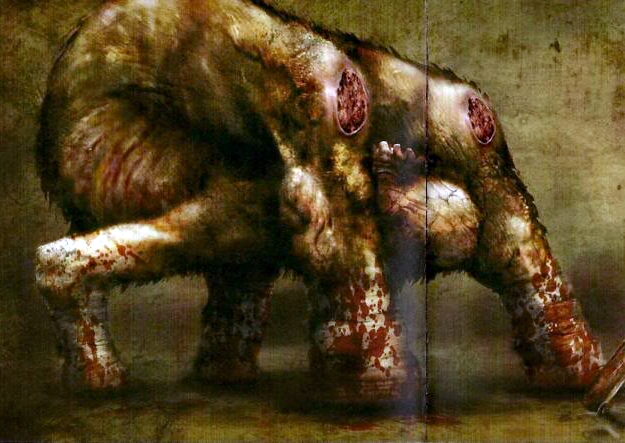
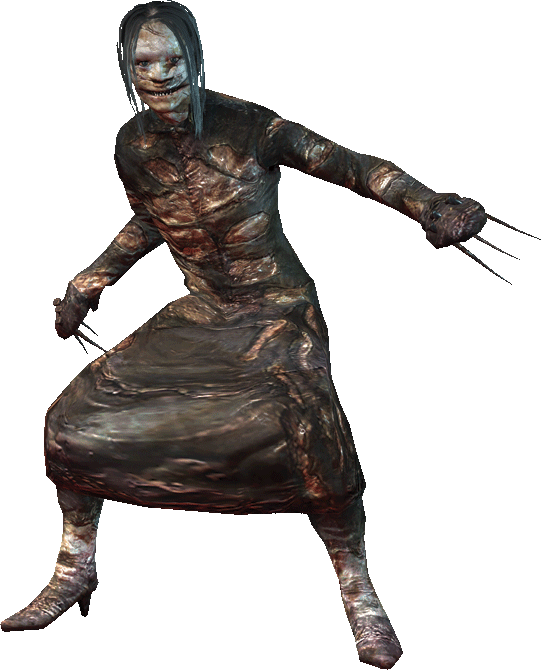
I'm going to start with the subject that riles me up the most—the monsters. In Silent Hill: Downpour, there's a scant four enemy variants! Only four! Not only that, but three of them are simple humanoids that lack any deformities, gigantism, or grotesqueness that the series is infamous for. I cannot emphasize just how upsetting this is to me; in a franchise full of extremely unnervingfleshy abominations, why is it that Downpour is content to assault the player with this? The final boss of the game is somewhat disturbing but that's the lone exception; Silent Hill Downpour has paradoxically the most boring yet goofiest ensemble of enemies to ever grace a Silent Hill title. Gone are all attempts at subtlety or intricate design made to disgust the player. Scared of mines? Here are some gaunt, hairless trolls! Scared of jail? Here are shirtless prisoners with steel helmets à la Clockwork Orange! Scared of the police? Here is a cop car with barbed wire wrapped around its bumper!

The deliciously rotten mania that pervaded the series is painfully absent here, as Downpour's main character Murphy is as deep as a puddle. The game wants to evoke psychological horror but there's no contextual evidence that Murphy loathed prison or even regretted his jail time. Hell, we're not even given any evidence that his fellow inmates assaulted or scarred him; the only thing they're keen on doing is making dumb remarks before the game even begins. The story attempts to center itself around guilt and regret, two themes which seem apt given Murphy's incarceration, but these topics practically go nowhere outside of a handful of cutscenes. You'll collect scores of documents and complete half a dozen side quests, yet none of these will provide any sort of depth or character to an already paper-thin plot. Most of the notes you collect are rather boring and mundane, failing to color the town of Silent Hill in perverse, weird ways like the other games (they were actually so dull and listless that I couldn't help but think of Extermination as I read them).


The town of Silent Hill itself feels completely abandoned this time around—not eerily abandoned in a way that precisely conveys the unbearable woe at living there, but just... abandoned. Long stretches of silence await you as Murphy ambles through alleyways and treads down vacant streets, momentarily interrupted by enemies that are a cinch to outrun. It may not sound entirely dissimilar from the other games, but I promise that it's a significantly different experience when you play it, one that has left the Silent Hill of yore lame and neutered, now a former shell of its once haunting self. But hey, at least there's sidequests and puzzles to solve around the town!

The handful of houses you can explore for some light puzzle solving is arguably when Downpour is at its best. This isn't because the puzzles are brilliant or novel—I think what's here is pretty good, albeit largely unremarkable—but because any time you have to grapple with the game's terrible combat is when you realize what a mess the gameplay really is. The Silent Hill series has never had good combat, but it was at least tolerable while waiting for the next nightmarish story beat. Downpour on the other hand is too eager to throw the player into gladiatorial scenarios, especially in the game's latter half. Enemies take a pretty hefty beating to put down, your weapons quick to snap against their durable hides whenever they're not constantly blocking, dodging, or scrambling across the ceiling. There's no ebb or flow to the combat; fights are nonsensical and disorganized, highly reminiscent of the worst 2D arcade brawlers.

Outside of the serviceable puzzles and atrocious combat, there's not much left that's able to hold Downpour together. Nearly every item in the world that you come across is a weapon of some kind, and since you can only hold one you rarely feel the need to explore once you settle on something better than a stick. The design of the otherworld has its moments at times, but feels less like the rusted bowels of Hell and more like an Alice in Wonderland spinoff, complete with sideways stairs and kooky clock dials to cross. There's a strange, unexplained void that shows up every now and then to prompt chase sequences, which don't feel like they follow any kind of logic since the void can maneuver through physical barriers (for instance, if you head up a U-shaped flight of stairs it's likely to start sapping your health through the floor below). These sequences feel phenomenally dumb to play, as if an executive from Konami complained that Silent Hill wasn't cinematic enough and needed more scripted sequences and QTEs (which I forgot to mention—there's QTEs!) I found myself murmuring "well at least there are otherworld sections" in defense of this game, which is about the time I realized how low the bar had fallen for the franchise.


Silent Hill: Downpour is what I would best describe as "amateur fan fiction come to life". It tries to tick all of the boxes of what one might imagine Silent Hill to be: a tortured main character, spooky monsters, foggy town, multiple endings—but it lacks the nuance and craft the prior entries had mastered. It doesn't seek to carve its own path but merely vaguely imitate its predecessors, misunderstanding how important the concepts of unease and dread are to the franchise. Downpour is not a disgrace the same way Duke Nukem Forever is, but it's a soulless step down from greatness, a Korn to Silent Hill 2's Nirvana (speaking of, Korn composed the theme song to this game—a fitting union in retrospect!) The best way to describe how abysmal the game is is to walk you through how it squandered a good scare:

Inside of the Silent Hill monastery, there's a theater stage that has a witch's house prop from a Hansel & Gretel play. Inside of the house, there's an old chest that's locked by a puzzle, wherein you're trying to rotate the cubes on a grid until they form the portrait of a young girl sitting on a beach. In the center of the frame is the girl's doll, its smiling grimace squarely positioned on its own cube. After completing the picture I found that the chest still wasn't unlocking, and that's when I realized I had to rotate the head of the girl's doll to its true face. With a trepidatious hand I selected the cube with the doll and slowly spun it... to reveal a part of the girl's body I had placed elsewhere. Turns out what I had actually mistaken was a cube on the girl's left foot for her right foot, and simply needed to rotate that to complete the picture. After grabbing what I needed and leaving, the real "surprise" I received was when the house prop collapsed behind me, revealing that the structure had been two-dimensional the entire time! I couldn't help but chuckle, musing how this revelation was the perfect analogy for this game.
---------------------

Images obtained from: silenthillmemories.net, gamester81.com, rocketchainsaw.com, silenthill.wikia.com

Sunday, February 26, 2017

The Last Guardian - Thoughts


There aren't a lot of games that have animal companions. It's kind of a strange fact if you think about it—a huge number of people have experience with rearing or at least taking care of a pet, but our nonhuman buddies are often neglected, sidelined, or forgotten in video games. I mean, quantifiably there's Dogmeat, Epona, and... various pokemon? Hell I'm almost tempted to say I can name more pivotal robot characters than animal ones! I don't bring this up to specifically disparage the state of pets in the video game industry, but rather as a way to emphasize just how utterly unique The Last Guardian feels. Gone are waypoints, HUD elements, skill trees, and upgrades; The Last Guardian is a subdued journey about you and your feathered friend seeking freedom together, learning to rely on one another in order to escape the confines of a beautiful—and unbelievably cruel—stone sanctuary.


There is a slight addendum to my claim about The Last Guardian's uniqueness—the game alarmingly resembles Team Ico's debut, Ico. Both games share similar tribal worlds, earthen fortress settings, restrained soundtracks, and muted stories. This isn't even taking the gameplay into account, which, in spite of the size disparity of Trico and Yorda, is heavily dependent on environmental puzzles and finding ways to safely scale gargantuan buildings. From mood alone I would argue that The Last Guardian is as much as a spiritual successor to Ico as Demon's Souls is to Dark Souls. In case you're wondering why I'm harping on their similarities so much, it's predominantly because your feelings on one game will likely predict your feelings on the other.

For instance, I greatly appreciate Ico, but man, do I not enjoy playing it. The same is true here; controlling the boy in The Last Guardian is like piloting a drunken, magnetized child at times, especially when the action gets frantic. In some ways it can aid the authenticity of the gameplay—the "scripted" sequences that would feel safe in something like Uncharted are far more real and prone to error here, every jump resulting in an unknown outcome (more than once the game went into epic slow motion during a leap that nevertheless lead to my death). But whenever you miscalculate your fiddly jump trajectory or inexplicably find yourself glued to Trico despite hammering the cross button, frustration will start to build and your tolerance for the game's wonkiness can quickly drop. I still firmly believe The Last Guardian is worth experiencing in spite of its faults, it's just that as a video game it's a pretty rough product (the framerate goes on a pretty wild roller coaster ride). I liken it best to an art film like A Girl Walks Home Alone at Night, where I'm left breathless by its brilliant style, but find it hard to claim that my overall experience resembled anything "fun".


But The Last Guardian doesn't need to be fun to be good—in fact, the tone throughout the majority of the game is decidedly un-fun; in spite of the bright, friendly mood the game projects, The Last Guardian is actually one of the darkest, most melancholy games I think I've ever played. It may not be immediately apparent during its introduction, but a huge amount of the game is spent helplessly watching your innocent companion get stabbed with spears, fall off of buildings, and fight against its bestial instincts. Rather than being placed in the shoes of the muscle-bound hero that's determined to save his (typically female) partner, The Last Guardian's child is a feeble bystander to many of the horrific events that play out, only able to console the beleaguered beast with soft words and gentle rubs after the action has subsided. And in typical Team Ico fashion, the game gets resoundingly brutal at the end; expect to clutch your pet close after the credits roll.

The big reason the game is so proficient at evoking pathos is due to how realistic the mythical monster feels. The animations string together to form a very smooth and very lifelike creature; Trico hops like a bird, moans like a dog, and is often obstinate like a cat. It's kind of a stroke of genius to portray your ally as a clueless pet, because it narratively masks any AI pathing discrepancies you'll notice when trying to lure Trico from one place to the next. Frustrated that your pal refuses to stand on its hind legs to  boost you up to a nearby window? Well you shouldn't expect a wild animal to follow all your orders on the first day it meets you! Don't get me wrong—you'll still get vexed when Trico doesn't do what you want it to do—but this explanation is a useful way to get you to treat your companion less like a faulty string of algorithms and more like a clumsy, silly, gentle friend.

Spending time in the more quiet moments of the game with Trico is where the The Last Guardian really shines, especially when you're in one of the game's many stunning outdoor environments. Coincidentally though, this is typically when you're interacting with it the least. Besides the mechanical problems with your player character, I don't really have a lot of love or appreciation for the puzzles here either—nearly every challenge exists to obfuscate your progression. Puzzles by definition serve that very purpose, but the quandaries here are more naked and blunt, like looking for a ladder out of reach or finding a ledge for Trico to jump to. There are definitely some inventive solutions to uncover along the way, as well as some pretty wild predicaments you'll find yourself uncomfortably thrust into, but the game isn't quite as mentally stimulating as I was hoping it would be (which I admit can be a tall order—hell, I managed to find Portal 2 disappointing).


There's a lot of clunkiness to The Last Guardian that clearly distinguishes it as a game caught between generations. It's a title I wouldn't advise to anyone that looks down upon "walking sims" or "video game stories" with scorn, as I would hesitate to call any of its gameplay engaging in and of itself. But The Last Guardian isn't (and needn't be) entirely concerned with the moment-to-moment details of its mechanics; Team Ico's laconic masterpiece knows precisely what it wants to do and executes on its premise flawlessly. It's a game with tremendous heart, passion, and vision; The Last Guardian might not be an enthralling video game, but it stands tall as a gorgeously crafted piece of art that will rend your heart to ribbons.
---------------------

Images obtained from: wikipedia.org, segmentnext.com, gametransfers.com, playstationlifestyle.net

Saturday, February 18, 2017

Ultimate Ghosts 'n Goblins - Thoughts


[contains minor spoilers]

Exceedingly rare is it for the newest entry in a franchise to not only properly honor its inspirations, but to also outclass them with such finesse that it practically stands in a league of its own. There are very few games capable of this feat—I think Mega Man 9/10 and Gradius V arguably achieve this—but there is no greater disparity between the quality of the old entries and the new as there is with Ultimate Ghosts 'n Goblins and its ancestors. Ultimate G'nG is the game that I always wanted the series to be: quick, bright, fun, with the right amount of challenge...

... At least, that's what I thought after I had finished the first stage. Having finally reached the true ending, I must confess that I was utterly incorrect; Ultimate Ghosts 'n Goblins is the most bloodthirsty, cruel, and violently unfun game of the bunch.


The weird thing is that it's not the hardest entry in the series—that honor still belongs Super Ghouls 'n Ghosts, mainly due to its monstrous final stage. However what makes Ultimate G'nG so much more horrifying is that instead of having to resume from a checkpoint after you die, you restart right where you were slain, provided you have the extra lives to do so. "How does this make the game bad then?" I can hear you naively cluck, not realizing that the designers account for this new checkpoint system and absolutely flood the stages with enemies and hazards, every single screen a multi-pronged attack on poor Arthur. Prepare to be bombarded by nimble foes from several directions while you wait for slow moving platforms to ferry you across bottomless chasms, death a more likely outcome than any other game in the franchise. It's less of a test of endurance like the previous games were and more a cavalcade of bullshit you're forced to wade through, eating loss after loss as you struggle to reach the next stage. Most levels aren't too grueling to survive, but the back-to-back brutality of Stage 2-2 and 3-1 will most assuredly have you empathizing with my plight.

Oh but this isn't the worst part of Ultimate G'nG—oh no, not by a long shot. That only comes after you finish the game and are forced to go back to the beginning to replay it again. "Oh but that's what the other games did!" You brazenly bleat, without understanding that you have to pick up 22 rings randomly scattered throughout the game to reach the last boss. And when I say "random" I mean random: the rings are not hinted at, they're not shown on the map, and the game refuses to tell you anything other than the total amount you have. Did you acquire 21 rings but don't know what stage to visit for that final elusive one? Tough luck, you'll just have keep exploring until you spot it near some bottomless pit or free it from one of the game's many tombstones!

And yet, somehow, it gets worse—after crushing the faux-final boss, you're sent back again to pick up 11 more rings, 5 of which are obtainable only after collecting all of the red chests in every stage. "That does sound pretty bad..." I catch you murmuring, despite that you cannot truly grasp the overwhelming amount of misery this task burdens you with. To open a red chest, you have to touch a minuscule, invisible tag somewhere on the level that will then cause the red chest to appear so you can open it. With the rings you could at least see where they are; to activate the chests you'll have to dive into pits, enemies, and traps, and I assure you I'm not exaggerating—the tags actually are located near the bottom of pits and inside enemy spawn points! It's just such an insane, dolorous, time-wasting requirement that it drains any and all enjoyment you'll feel for the game. I've had to put up with a lot of odious design in plenty of video games before (triforce hunting anyone?), but this might just take the cake.

(EDIT: Just kidding I forgot La Mulana exists)


What frustrates me to no end is that Ultimate G'nG is, at its core, the best Ghosts 'n Goblins game in the series. The introduction I wrote above was not a red herring; Ultimate G'nG feels phenomenal to play, bringing back the fiery arcade action that was present in the Genesis title. It looks great in motion on the PSP (with fairly stable frame rate to boot!), and despite the stupidly high frequency and durability of some of its enemies, the stages are cleverly crafted and contain some neat tricks. The ghostly hay castle at the end of Stage 2-2 is both terrifying and alluring, an other-worldly setting that's exactly what I want out of a G'nG game. The bosses are all excellently designed as well, once again following in Ghouls 'n Ghosts' footsteps of prioritizing sharp reactions over mashing the attack button as fast as you can. I cannot stress enough how promising this game starts, before it begins to vindictively claw at your good will and drag you into hell with its obnoxious ring collecting.

This vile little title gets me so fired up that I forgot to mention that it shifts genres from action platformer to a metroidvania, now allowing you to revisit older stages to pick up spells and abilities you may have missed. While it's an interesting addition (it's pretty nice to be able to choose which spells to use for a particularly tough sections of a stage), the game absolutely stumbles with this, making poor decision after poor decision. For instance, you can only save the game after you finish a stage, meaning that any goodies you find in a level will require you to reach the end to keep them. That, or you can simply use a warp staff to go to the Red Witch's Lair and finish Stage 1-1 in a matter of seconds, which is something you're going to be doing constantly, especially when you're on the hunt for the red chests. Oh, but if you accidentally pick up a terrible weapon you get to hold onto that even if you restart a stage! Speaking of, why can't you collect weapons and swap them on the fly? And why in god's name do the warp staffs disappear in the second playthrough? You're already forcing me to replay through the game to collect all the rings, you don't need to make me jump into a pit again to pick up the Stage 4 warp staff!

I have so many minor grievances that I don't even know when to stop complaining. An interesting addition to the overall game is the dragon shield, a tool that effectively lets you fly for a limited time. I both love it and hate it: love it because it lets the player skip so many awful parts in the levels (like the ghost platforms in Stage 2-2 [why does dying reset your position and force you to ride them all over again?! Why?!]), but I hate it because it outright kills the "platforming" part of the game the series is known for. You never have to double jump again as long as you have the ability to fly over all obstacles, but try and use the dragon shield like a shield and it'll likely shatter, forcing you to find another one somewhere in the world. Shield durability is another absurd inclusion because you always use it when you duck, which means you're always putting your dragon shield at risk every time you try to avoid an enemy overhead. And it's not that hard to find a new one either—it's just extremely inconvenient.

You know, that's actually a good way to sum up a lot of design decisions in Ultimate G'nG—arbitrarily inconvenient. Like, why do the loading screens of secret areas double as stage checkpoints? Where is the challenge in the final boss rush if the game checkpoints you after every boss? Why do I have to mash the d-pad every time one of those accursed flying fish latch onto me? Why can't I use magic without my armor? Why do the transformations last so goddamn long?! It's like there was no rhyme or reason to the myriad of bad ideas here—the developers simply threw everything they could into the game and hoped it all worked out for the best. The one—one—thing I will acknowledge that could reverse my low opinion of this game is a playthrough of Ultimate Ghosts 'n Goblins Kai, a Japan-only release that rebalanced the game to be more like the traditional titles... but seeing as I only have the vanilla version in my library, that will have to wait for another day.


The Ghosts 'n Goblins titles are exemplary at showcasing why awful game design can ruin excellent gameplay systems. Each of them have their own strengths and weaknesses, by and large being decent platformers that can be fun to overcome depending on your tolerance for pain. Oddly it's the newest entry that's the most sadistic, Ultimate Ghosts 'n Goblins' stupendous controls and presentation strangled by a legion of incomprehensible (and downright spiteful) design decisions. Ultimate Ghosts 'n Goblins is—as corny as it sounds—the ultimate disappointment.
---------------------

Images obtained from: gamefaqs.com, playstation.com, gearlive.com

Tuesday, February 7, 2017

Star Fox Zero - Thoughts


Just like Metroid, Star Fox is a franchise where the one thing the fans desire most is a sequel with classic design sensibilities: no cutscene-laden story, no gimmicks, no slew of bonus modes—just basic but engaging arcadey corridor shooting. And similar to Metroid, Star Fox is a franchise that is overtly content to ignore these pleas, instead focusing on brainstorming new ideas that might reinvigorate the series. Star Fox Zero is the newest game in a franchise now synonymous with disappointment, the sleek on-rails sections weighed down by motion controls, plodding vehicles, and a universe too familiar to feel remarkable. I understand wanting to reach a broader audience with a storied, established Nintendo IP, but uhhh...

... how hard is it to make another good Star Fox game?


Star Fox Zero isn't without its merits of course, but it boggles my mind how Nintendo simply won't return to the series' roots. The first two games were great because they were solid on-rails shooters that took you across the galaxy, each planet and space sector a new, colorful challenge to survive. And then came Star Fox Adventures... and Star Fox Assault... and Star Fox Command... all of which tried to take a different approach on the Star Fox framework, but ultimately couldn't rise above mediocrity. Each game peaks with the Arwing sections, where you're flying around with Fox & co., gunning down pompous critters that jeer at you with cartoonish temerity—but miscellaneous design decisions overshadow these high times, ultimately burying it beneath a sea of half-baked debris.

Star Fox Zero fares no differently in this regard.

I definitely admire Nintendo's attempt to go back to their roots and recreate Star Fox 64, but this game paradoxically stays too close to it yet at the same time veers too far. Most of the planets, characters, chatter, music, enemies, bosses, and structure is directly modeled after 64, the space-time portals being perhaps the only twist added to the campaign (and they're not even utilized all that much). It can be fun to explore the HD renditions of Corneria and Titania, but there's a prevailing sense of "been here, done that" throughout the entire game. As I stated before, part of the appeal of Star Fox was that every planet was a new horizon you got to zoom through at high speed; Star Fox Zero's lone contribution to the anthropomorphic galaxy is a Halo-esque ring you don't even get to explore properly.


However unfortunate it is that Star Fox Zero opts to copy so much from Star Fox 64's blueprints, nearly everything new Zero brings to the table is categorically worse. The control scheme has been clumsily fitted around gyroscopic aiming which makes no sense—both hands are already going to be busy maneuvering the Arwing so taking time to physically look down at the Wii U pad and pivot your wrists for more precise aiming just flat-out does not work well. I would be perfectly happy to ignore it for most of the game except that camera control is constantly wrestled away from the player on the TV screen, and certain battles are an arduous waste of time if you ignore the manual aiming. During my four hours with the title I kinda got used to it, but I would've been far more satisfied with a traditional control scheme, delegating the Wii U pad to a minimap that I could've ordered my allies on or denoted spots for Great Fox to drop supplies or something (I suspect it would've saved the game some frames it desperately needed too, as Zero runs worse than 64).

Star Fox Zero's worst addition is undoubtedly the Gyrowing, a slow moving copter that drops down a dinky, tethered robot that can hack into terminals—does any of that scream Star Fox to you? I felt like I was losing my mind in Zonness as I was pausing for searchlights to pass, carefully dropping explosive boxes on robots, and hacking into reactor cores. Hacking!! I kept asking myself, "is this really what Star Fox has become? Did anyone actually want this?" It was like playing Call's mission from Mighty No. 9 all over again, except Comcept's slip-up can be explained by their amateur incompetence, whereas Nintendo should've straight-up known better. The Gyrowing is only present in two missions, but its mere inclusion remains a thing of bewilderment. I don't think the walker mode for the Arwing fares significantly better, but at least it resembles Star Fox to a degree.

As if I haven't berated this game enough, the focus on all-range mode segments is another topic of contention. There's literally 0 on-rails bosses! Most of the all-range bosses are a pain in the ass to battle as well, since they're too easy to fly into (Dodora, Attack Carrier), or they have profoundly frustrating attacks (Aquarosa, the final boss), or their weak points are revealed too infrequently (Scrapworm, ATTACK CARRIER). Star Wolf is thankfully always a thrill to dogfight with, but they make up only a handful of encounters out of the entire game. Besides that, I also think there are too few unique stages in the game, and having every path end with the same final three worlds & bosses is a huge bummer. There's a myriad of other small things that bothered me—like why don't I keep laser power-ups between stages, even in Arcade mode?—but I suppose I've spent enough time ragging on this entry; I spew this aggressive vitriol not out of hate, but out of sheer frustration for a series that I dearly wish to love once more.


Star Fox Zero attempts to be some kind of spiritual remake of Star Fox 64, but there's too much residual DNA from the other games for it to remain a pure breed of space shooter. It's a shame too, because as misdirected as Zero is, I think Nintendo gave it their best shot, and due to the way it sold there's not likely to be another Star Fox game with this much commitment and polish for a long while. Perhaps it's for the best though; the premise of Star Fox is perfectly suited for a downloadable title, and should Nintendo remember that on-rails games can be fun without the need for filler or padding, then maybe there's hope for it in the future yet...

... but it's not something I'm going to hold my breath for—I've learned that lesson years ago.
---------------------

Images obtained from: nintendo.com,  meristation.com, VentureBeat.com, metro.co.uk

Sunday, January 29, 2017

Titan Souls - Thoughts


[contains minor spoilers]

A game like Acid Nerve's Titan Souls sounds like something that's right up my alley: a pixelated boss rush hugely influenced by Shadow of the Colossus, but with a Dark Souls approach to difficulty. So what's not to like about all of that? Well, as ironic as it sounds, it's that the game lacks a bit of an identity. Taking its laurels so directly from Team Ico's laconic masterpiece has the game feeling like a love letter more than its own ambitious attempt at the formula. And while the bosses play significantly faster than Shadow's slow and ominous encounters, they come with their own set of problems due to the game's most unique mechanic—one arrow, one hit, one kill.


To clarify, I really do like the design choice that Acid Nerve took with their combat: your diminutive archer can only fire a single purple-tipped arrow at his gargantuan foes, and if he misses he has to either pick it up or mystically recall it (by holding the attack button). One direct hit to the weak point of your foe is all it takes to slay them, but likewise the same applies to you, and its a task you'll find is far easier for your enemies than you. At first I felt indifferent on the archery mechanic (the thing I disliked the most was how disorienting the camera zoom-in/zoom-out was whenever you aimed or recalled the arrow), but in time I learned to appreciate the dynamism it added to battles, especially since summoning the arrow back to you doubles as a surprise attack. One moment I'd be clenching my fist in victory as I line up the killing blow, the next I'd be anxiously scrambling towards my arrow, rolling past projectiles like a tumbleweed caught in a tornado.

Though the combat system intrigues me plenty, answering whether or not it works well can be... difficult. Seeing as an Ironman mode is included in the game (and that people have no doubt completed it), I admit there's a lot more nuance to the Titan Souls than I'm likely to give it credit for. With that said, my first playthrough was littered with plenty of lopsided victories and losses. As per the "one hit, one kill" rules, encounters will play out pretty quickly, with either you or your enemy subdued in a dozen seconds or less. Most of the encounters will thankfully take longer than that as you die, run back to the boss arena, and then die again, but herein this cycle you'll learn that it's best to immediately strike as soon as you spot an opening. Since many of the battles open with the same gambit of attacks, you'll slowly grow wise to the shortest route to victory, firing your arrow in the face of oncoming danger in the hope of ending the battle before it ends you. On a couple of occasions the risk is absolutely worth it too, as waiting patiently for a "safe" opening doesn't bode well for your survivability—the mimic, yeti, and stone skull bosses in particular are best killed as soon as possible.


What's even more unfortunate than the encounters feeling so sharp and brief is that many of your victories may be aided massively by luck. In order to keep the bosses from falling prey to your first arrow, most of them hide their weak points or require you to do some fancy maneuvering so they'll reveal it to you. While the bosses that feel more like "puzzles" end up playing more fair, the ones that flash their weak point for only a fraction of a second are those that'll require such insane dexterity and precision that luck will inevitably play a role. Nowhere is this more evident than in the last boss, whom I could not figure out how to hit for the life of me—after a score of deaths the battle ended abruptly, with no discernible tactic employed other than "I hope he doesn't dodge my arrow this time." This particular fight is made especially disappointing in comparison to the secret final boss—which is by far the best and coolest fight in the game—but doesn't detract from the fact that Titan Souls opts to close on the most frustrating battle it can.

As you run to encounters over and over, there's a sinking feeling that will set in that this is all the game has to offer. Granted, you have some great pixel scenery to gaze upon as you trek back to a boss arena (with some cool music too), but there's something about the world that doesn't make it as mysterious or forlorn as the forbidden lands of Shadow of the Colossus. With such a simple control scheme and such itty-bitty animations its not really that fun to travel from setting to setting, and the story is so sparse and subtle that you don't really have anything to ponder during boss interludes. None of this is bad or boring, mind you—Titan Souls does its job admirably well—its just that it fails to stir emotions or demand any attention out of you other than "GO KILL BOSS". If the gameplay pleases you then this will only come across as a minor quibble, but if the combat isn't your cup of tea then it's best if you order another beverage.


Ultimately, I can't help but feel Titan Souls is somewhat unremarkable. There's undoubtedly talent behind its code and I don't regret the time I spent with it, but part of me feels really confounded by the whole experience. Outside of the secret final boss I'm not sure which encounters I thought were well designed or which ones I really enjoyed—some monstrosities looked more interesting than others (and the 3D models fit with the 2D aesthetic) but they by and large felt like an indecipherable mixed bag by the end. I wasn't turned off by the game, but I'm clearly not enthusiastic about it; Titan Souls is a solid effort by Acid Nerve that, like me controlling the small archer boy, arguably missed its mark.

Sunday, January 15, 2017

Earth Defense Force 4.1: The Shadow of New Despair - Thoughts


[contains spoilers]

I don't think Sandlot understands what makes Earth Defense Force so special. Mind you, this is not an easy claim to make: Earth Defense Force 4.1: The Shadow of New Despair is the biggest, craziest, most action-packed bug-blasting game they've made yet. It has four different classes with hundreds of weapons each, over twenty enemy variants, 4-player online co-op, and a staggering 80+ missions to complete across five difficulties—but quantity is not a good indicator of quality. The EDF series treads a thin line between being arcadey fun and mindless monotony, and the more time you spend with it the more you're likely to realize the games belongs to the latter category. There's nothing wrong with that per se, but the design decisions of EDF 4.1 serve only to bring its worst qualities to the surface.


This is a huge disappointment for me considering that I love Earth Defense Force 2017: it had the honor of being one of my first Xbox 360 titles and my virgin experience with EDF. I adored its bald-faced silliness and schlocky presentation, the game blatantly mimicking the melodramatic (and secretly patriotic) tone of the kaiju genre. I played it in those cherished years where I could blissfully waste afternoons farming for a single weapon drop on the couch with my brother, before hundreds of miles separated us and time became a rapidly diminishing resource. Earth Defense Force 2017 is a game that I admit is fully submerged in rosy nostalgia for me, but I had anticipated that my avidity for the series would carry me through Earth Defense Force 4.1 unmarred.

The first warning sign that EDF4.1 gave me was that nearly half of the game was an uncanny retread of the previous one. And I don't just mean EDF4.1 was following its themes or anything—enemies, locales, and mission structure were basically lifted straight out of the old game, the story eventually culminating in the same final fight against EDF2017's mothership orb. I understand that the entire series has always followed a similar story arc ("We're being invaded" -> "We can't beat them!" -> "We beat them!" [with a Godzilla knockoff somewhere in there]), but I expected a little more from EDF4.1 outside of fighting a couple of new enemy types. Instead of continuing what EDF2017 had built, EDF4.1 was content on regurgitating it ad verbatim, making me wonder what exactly I had spent my money on.


But thankfully, after Mission 40, a new menace had appeared! Covering the skies was a mighty iron curtain that dropped terrifying new enemies accompanied by a new type of dropship too! This is where the EDF4.1 gets considerably more exciting!... except that the game had been going on for so long that fatigue began to set in. Not only that, but the beats of the previous story arc were repeating once again here, the various "new" enemies replacing the role of the old ones (voidships instead of dropships, blue Hectors instead of regular ones, giant wasp queen instead of giant ant queen). The Deroys and Argo are super cool foes that are fun to fight, but I still feel the pacing of the game would've been improved had EDF4.1 started at the reign of the Earth Eaters, instead of piggybacking off of an experience I had already played to death.

Plus, the Earth Eaters are super lame. EDF 2017's mothership intimidated players with its screen-filling presence, the absurdly-named "Genocide Gun" on its underbelly able to destroy the player in a single hit if they got caught in its sweeping laser wave of death. The Earth Eaters on the other hand do... what exactly? They fill the sky above you, fire a handful of stationary beams, and release flying vehicles from a hatch... none of which capture "despair" as the game's title so readily implies (plus the latter two cells are easily destroyed). Only in two stages do the Earth Eaters come equipped with any sort of useful weapons, the second of which is the final battle of the entire game! It may seem silly to criticize a single enemy type so harshly, but part of what makes EDF great is that it captures the desperation of fighting off a purely malevolent alien army—so when you hear something like "the Earth Eaters have destroyed over half of the world!" and they're lazily sitting there ineffectually shooting two green lasers at a hillside, it shatters the absurd plausibility the game is aiming for. And don't get me started on how disappointingly flaccid the final boss is—the only good thing about it is the eerie sound it makes whenever you inflict damage.

While I've bemoaned a lot about the structure of the game, there are two additions to EDF4.1 that are extremely welcome: multiple classes and online coop. Thanks to these features I was able to play online with my brother as a Wingdiver, reliving the glory days of squashing giant insects together this time from high above in the sky. It's really neat that each of the classes significantly changes how you approach the game and its enemies (when you can fly dragons become harmless critters while Deroys can now melt you like butter), the Air Raider perhaps being the only class that's at an obvious disadvantage (air strikes still look rad, however). Unfortunately Sandlot even finds a way to pad the multiplayer out, separating the levels you complete in single player from the multiplayer campaign and restricting you from sharing your weapon & armor upgrades across classes. To 100% EDF2017, you need to play through the game 5 times in either single player and/or multiplayer, a task that took me 47 hours to complete; to 100% EDF4.1, you need to finish the game 20 times in both single player and multiplayer, of which a scant 2 playthroughs had already brought me to 37 hours. Couple this with the fact that the multiplayer feels skewed for four players instead of two (the final mission is a monster) and I could not clean my hands of this game fast enough.


It saddens me that I spent so much time airing my grievances for Earth Defense Force 4.1: The Shadow of New Despair rather than singing its praises. There's merit in EDF that's akin to the Dynasty Warriors series, offering the player a chance to turn off their brain and fight legions of baddies to their heart's content, with the game's self-serious attitude as another huge selling point. And to its credit EDF4.1 offers quite a bang for your buck, and at a stable framerate to boot (a first for the series!) It's just a damn shame that so much potential here is worn thin due to an excessive run time and retracing of old steps. Had half the levels been lopped off and a few tweaks made to the multiplayer, I probably would've been singing a different tune. As foolish as it may be, I earnestly hope that EDF5 takes a fresh approach to the series.

Monday, January 9, 2017

Super Mario Run - Thoughts


Mario is great! Ever since I was a kid I've loved the Bros. series, hailing the NES classics as the console's premier platformers. Few games truly capture the inventive, high-energy spirit of a pure platformer like Mario does (Rayman and Donkey Kong Country are the only other franchises that immediately spring to mind), and I think it's because the 2D Mario series grounds itself in two complementary mechanics: exploration and momentum. The Mario games are chock-full of small secrets to uncover, and the emphasis on mastering your momentum for accurate landings is a simple yet constantly engaging way to control the plucky plumber. A game like Mega Man isn't engaging to play in a vacuum because there's no complexity tied to its movement; Mario requires an awareness of your running speed at all times if you want to rescue Princess Peach and earn that coveted kiss.

And this is precisely why Super Mario Run works so well.


To specify, what I actually mean is "this is precisely why Super Mario Run works so well on paper". I think the platforming part of the game is great and fully justifies its $10 asking price, but the overall package is a strange fit for the mobile scene. On one hand you have this pretty simple but entertaining game that works great as a downloadable title on the Wii U or 3DS, but attached to it are these needless Toad Tickets and community building features that try to imitate the more successful products on the market—who exactly is this app designed for? The shallow town construction isn't going to satiate those addicted to Clash of Clans or Mobile Strike, and Toad Tickets serve no practical purpose since they're not monetized; it's like Nintendo wanted to make a half-step between "typical downloadable title" and "typical mobile game" but ultimately made something that's difficult to pitch to either crowd.

Even for as clever as the multiplayer component is, it's another aspect that's ambivalent on its target audience. Racing against another player's ghost through a stage and trying to snatch more coins than they can is fine in and of itself, but the addition of item boxes and layout rearrangements prioritizes randomization over memorization, something that's far better suited for real-time, head-to-head matches. On top of this, there's no way to see a player's high score or how skilled they are before you pick an opponent, only being able to "guess" their proficiency based on the amount of toads they've collected. Since you need to pay ten dollars straight-up in order to access the remaining levels, why not try and cater to the hardcore and institute leaderboards? If I feel like I'm the best 2-4 player around, why do I have to add friends from online message boards to see how I stack up? And why can't you let me race their ghosts in the multiplayer, or let me bet my toads in a one-on-one race, or practice the multiplayer stages before hand, or "favorite" players that I face in Rally Mode, or... anything?

Since toads are commodity tied solely to the town building aspect, it was easy to overlook that part of the game and simply sink my teeth into what Nintendo does best: make some damn good Mario levels.


Auto-runners are far from an untapped genre, so while Super Mario Run doesn't feel like a fresh take on the genre, it actually feels fresh for Mario fans. I was kinda unnerved by my foray into the title, finding it wholly unnatural that I couldn't turn around to pick up those few coins that I missed, but the more time I spent with Super Mario Run the more I adapted to this new style of play. And honestly, it's a lot of fun! Casual players get a taste of what speedrunning is like as they're pushed to complete levels with the fewest amount of mistakes possible, puzzling out ways to grab the most amount of coins while simultaneously having to execute perfect wall-jumps, aerial twirls, and koopa stomps. Those two key themes I mentioned before—exploration and momentum—are thankfully kept alive, as there are plenty of tricky ways you can nab a lot of coins by leaping off a foe's back or wall jumping to a secret location. Only a few stages feel dependent on enemy behavior and/or luck—the majority of the game plays well provided you play well, which is usually the mark of a tightly designed game.

If I am to gripe about the stages in Super Mario Run, it's that the game doesn't really have a difficulty curve, especially when going for a single type of special coin. The first world is basically as difficult as the last, which is to say that the whole game is a breeze to complete if you're only looking to topple Bowser. If you attempt to collect all the special coins, you'll unearth the real challenge this game provides, which is fairly no-nonsense for even the most hardened Mario vet. Collecting the black coins and surviving the black coin special stage takes the game to a whole 'nother plane of pain, something I relished greatly as a platforming masochist. I wouldn't say the game is worth your time if you're only interested in a single playthrough, but for those of us that have 100%ed all of the past titles, this is a game that absolutely cannot be missed.


I like Super Mario Run a whole lot, but the catch is that I would like it just as much had it been on any of my handhelds. There is no need for the game to be tied to the mobile market, and in some ways it's worse for attaching itself to mobile trends, unnecessary bloating the game with insidious monetization pitfalls that aren't even monetized to Nintendo's benefit! In spite of this, Super Mario Run is a great game to pick up and play for a bit should you find yourself needing to fiddle with something on your phone, the single player mode standing tall alongside its excellent New brethren. I would love to see a second stab at this somewhere down the road, because Mario and auto-running is a match made in heaven.

Now, if you'll excuse me, I still have to die a hundred more times to finish the black coin special stage (which has to be some sort of sadistic nod to Super Meat Boy, right?)

---------------------

Other images obtained from: engardget.con, rollingstone.com