Wednesday, February 4, 2015

Oniken - Thoughts


While I contend that Shovel Knight is the best 8-bit style game made in the post-NES era (that doesn't begin with "Rockman"), Oniken deserves an honorable mention. Whereas the cerulean crusader took his laurels from the likes of Mega Man and Ducktails, Oniken looks towards Ninja Gaiden and Shadow of the Ninja for its oldschool training, being more concerned with execution than flexibility. This means that game offers the player only a few methods to tackle its obstacles with, forcing them to hone their reflexes and learn pattern recognition on the fly.


The story is your usual fare of a violent loner taking down a tyrannical madman fueled by gasoline and a thirst for power. It's nothing to write home about but gets the job done; notable is the violence displayed in both the cutscenes and gameplay. It can be quite jarring at times as it's not often you see a little 8-bit head getting chopped in half. This minor detail adds a lot more "grit" to the world of Oniken, and I think it nails the hyperviolent anime aesthetic it aims to emulate despite the bright colors.

The color palette itself stays close to the limited selection the NES is privy to. I would hesitate to call Oniken a looker even by NES standards—some of the levels fare nicely on the visuals, while others (the boat, the forest) can look pretty silly. There is a solid amount of variety in the game as it takes you across eight (mostly different) stages, so I don't really hold the lack of better visuals against it. Plus the grotesque mechanical design of the final two levels reminds me of Sunsoft's Batman, which is always a great thing to strive for. The music is neither here nor there unfortunately.


But enough talk of the pleasantries—the action is what Oniken was made for! To get this off my chest, my biggest complaint is that I couldn't get any controllers I had to work properly with it. I had to fiddle around with some Joy2Key configurations, so at times I felt that my jumps were a little imprecise or that I wasn't attacking as fast as I should've been able to. Besides that though, the game plays as smooth as it needs to be—the Strider-esque blade is fast and has a good reach, though I found myself most indebted to the grenades in tricky situations. The randomized drops from item containers can be frustrating at times (especially if you don't get health before a boss) but it at least keeps you from completely memorizing the stages and treating them like an exercise in muscle memory.

I'm not one to achievement hunt anymore, but I confess that it was a lot of fun obtaining the "no-death" accolades for each of the stages (my first playthrough naturally netted me around half of them). Even while replaying stages I've already beaten before I found the gameplay exhilarating, certain aspects of the level design continuing to impress me. Sure, there's a lot of moments near the end that require a bit of foreknowledge, and a few of the bosses (I'm looking at you Hackan) were more about going all out rather than dodging, but the vast majority of the game is well-crafted, smart, and cool. I think it's a game I would've loved to design back in my adolescence, especially regarding the ominous-yet-rad final boss design.


Oniken's ride is a simple & short one, but it's a helluvalotta fun. It's one of those titles that after the credits began rolling, I knew I would return to at a later time. Oniken isn't as polished as the games that inspired it, but if you want some classic NES action on the PC, there's rarely better places to look... well, besides Shovel Knight.

Sunday, January 25, 2015

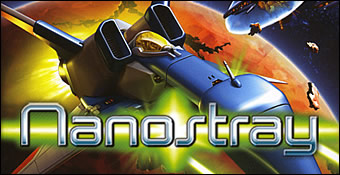
Nanostray - Thoughts


With the release of the Nintendo DS in 2004 came a new STG out of Shin'en's workshop to accompany it in 2005. Rather than reuse the Iridion license, we received Nanostray instead, a very similar shmup with a significant graphical overhaul. Gone are the rendered backgrounds and awkward sprite stretching; sleek polygonal ships strafing at high speeds now rule the battlefield. The action is faster and the enemies hit harder in Nanostray, making it a pretty irresistible package for shmup fans thirsting for a portable shooter, as long as you can get over some the eccentricities.


Out of its predecessors, Nanostray stays the closest to Iridion II (unsurprisingly). The camera angle, bombs, multiple power-ups and general difficulty adheres to the guidelines already printed out, though in some ways Nanostray is a bit more intense. More bullets are present on the screen at once, and your own arsenal has been heavily upgraded; each of the weapons & their respective energized shots are well balanced and have noticeable uses, whether it be the boss-crushing side shot or the handy undulating lightning emission. You'll find yourself switching up shot-types a lot more often, though the process of doing so has been made unfortunately complicated.

Since the Nintendo DS's primary feature is the duplicate touch screen, some awkward touch controls are thrown in for good measure. To view your remaining power or to change your weapons, you have to consult the bottom screen, which tends to split your focus in pivotal moments—the power-ups suffer the most from this, as their individual windows of opportunity can be very brief. I would've preferred L&R to be designated for this purpose (they serve no actual function in the game), though it's not entirely too terrible once you get nimble enough at tapping the colored icons between safe spots.


The new hardware makes itself known not only in the controls and crisp visuals, but also the speed of the game. Slowdown aside, the game moves quick and plays quick, being closer to an arcade-style shmup than the Iridion games ever felt. I'm a bit sad to see the rendered backgrounds gone, but the game is obviously better for ditching its wonky handling of sprites, and still looks quite nice even today. With that said about the graphics, I'm not entirely sure about how I feel on the music—despite Manfred Linzner's continued work on Shin'en's titles, the tracks here are less distinctive and catchy than the GBA games. Even sadder is that the option is missing to fiddle with audio levels, as the current mixing allows enemy explosions to tower over the tunes.

Nevertheless, the entire package still glitters at the end of the day. The levels and waves of enemies are varied, the challenges can be a thrill to tackle, the bosses provide a delightful (and dreadful) spectacle, and the game only has a few other kinks outside of what I've mentioned (like how the playing field is more limited than the player thinks it is). The energized shots are a great addition to the series, and the leniency of infinite continues in the Normal mode ensure that even the greenest of amateurs can see this journey through to its end. It's just fun stuff overall.


Nanostray feels very akin to Iridion II, but it's a lot less graceful—more wild and uncaring—than its predecessor. This makes the game personally more engaging, and even with its short length it provides a satiating experience. The Advanced difficulty hits the sweet spot between being punishing and too lenient, and the challenge mode adds a teensy bit of variation in case you ever get bored of the campaign. Nanostray won't find itself among the ranks of other elite STGs like Gradius or Mushihimesama, but it does a damn fine job at what it sets out to do.
---------------------

Images obtained from:  jeuxvideo.com, journaldugamer.com, archaic.fr

Thursday, January 15, 2015

Neverending Nightmares - Thoughts


[contains spoilers]

Neverending Nightmares is a neat game. It's not a very complex game, or thematically deep one for that matter, but it's an interesting ride while it lasts. It occupies the same "atmospheric walker" genre as Gone Home and Kairo, although it obviously differs from those by being a 2D title obsessed with doors. There are some things I think it does well, some things I think it does poorly, but overall I'm really glad it was made (and that I played it).


The very first thing (and the very best thing) about Neverending Nightmares is the grisly, unforgettable art style. The hand-drawn backgrounds mesh well with the elastic characters, and any time the color red is applied onscreen, it immediately grabs your attention. The most notable uses of blood are in the handful of zoomed portraits the game has, whether it be pieces of glass in a sink, an eviscerated animal, or unknown meat ground-up on a table. These are often shown at off-centered angles and it's a shame the game doesn't have more of them, as they were what I was looking forward to the most (the meat grinder remains the most disturbing part of the game to me). The deterioration of Thomas' house slowly over time is also a sinister implementation—the numerous arrangements of minor details makes every room feel uniquely crafted, despite how often the setting repeats.

And the game repeats plenty. Insanity isn't something that's high on my phobia list in games, and Neverending Nightmares leans into that particular fear pretty hard. There is a certain appeal in wandering similar hallways over and over (and over [and over]), although some sequences can go on for so long without an interruption that you'll forget you're playing a horror game. After the first hour or so into the game, a lot of my dread had dissipated and I was mainly marching on just to see what else was in store for me. And some of it was fantastic (like Gabby's corpse falling out of the sky), while other sections (the dolls) did nothing for me.


I've stated this before in the Lone Survivor summary—the narrative in horror games is of paramount importance, due to the seedy influence the story & lore can have on the player. A game like Silent Hill 2 thrives off of the grotesque symbolism of its monsters, and even without that, the desperate tale it weaves can upset the player tremendously. I struggle to say Neverending Nightmares has a story though, as it's too muddled behind interpretation and red herrings to allow decrypting; despite how hard the player can try to identify the relation of Gabby to Thomas, there's too many distractions and vague statements to know precisely what the author was aiming for. The ending you receive can drastically alter their relationship, and perhaps allowing for interpretation was the point, but I still find some factors to be misleading (for instance, if she is his wife in "Final Descent", why are the first few segments about Gabby being his sister?).

After completing Neverending Nightmares, I looked into its origins a bit more for some explanation. Being a kickstarter-funded title, there were reward tiers promising to incorporate different elements into the game depending on the pledge level. While some stuff like the tombstones and backer sound effects are unique additions that don't impede with the atmosphere, the nightmare creation and backer portraits were things that seemed to clash with the story. Granted, I can't tell which nightmares are specifically backer-made, but having a hodgepodge of ideas added to the lack of cohesion (the portraits could've contributed a lot to the narrative too!). It's a shame too, considering that there's such strong, disturbing imagery in the game that could've had some utterly terrifying explanations behind them.


Neverending Nightmares is worth a playing just for how maniacal it gets at times, but don't expect any kind of unsettling genius that will keep you up at night (outside of the monstrous things Thomas does to his limbs). The handful of brilliant moments become a bit buried by all the monotony, although you could argue that the directionless wandering and trepidation of the next big event are all a subversive part of the horror. The aesthetic is gorgeous and there's nothing really like it—I wish more games aimed to be this distinct. Though I gripe about the backer influence, I'm glad this twisted nightmare got to exist.

Saturday, January 3, 2015

Imagine Me - Thoughts


After buying the most recent Humble Weekly Bundle, I decided to check out what games came paired with it. I primarily nabbed the bundle for Ittle Dew, but wasn't quite prepared for how cool and sleek MURI was. Bardbarian was an interesting concept that got too grindy too quick (and fit the phone better than the PC), and so all that was left... was Imagine Me.

Imagine Me looks cute but is one of the worst playing games I've experienced in a long time.


While the pastel look screams "adorable" and the theme that plays over the solemn title screen is pleasing, everything else falls apart once you jump in. There's primarily two different modes in the game—Campaign, which features an infinite number of randomly generated levels with story segments spliced in-between, and the Challenge mode, which is a set of 36 single-room maps. I'll note here that even after obtaining all of the story vignettes, there really isn't much substance you can draw from its tangle of random imagery. Unless I missed the relevance of what a car crash, archery class, girl cousin, dead dog and teacher singing have to do with each other, the narrative seems to be wholly untied to the game.

The campaign mode serves as a great illustration for how randomly generated levels can be put together poorly. It has a similar four-floor layout like Spelunky but rather than stitching together distinct sections, it's more or less a hodgepodge of objects and enemies. While traversing the patchwork scenery, you'll soon realize how clunky the game is: the hitboxes on spikes are enormous, enemies and blocks take too long to disappear after getting hit, the single arrow pickups are pointless compared to the equally-distributed five arrow pickups, keys are overabundant, and crates serve no purpose other than to block your way. Outside of the monotone bosses, you will have experienced everything the game has to offer in the first level, so there's almost nothing of value past the first five minutes.


However, the greatest offender comes from the challenge mode. While the randomly generated levels are awkward and shallow, the challenge mode puts your patience to the test. Right off the bad level 1-2 is the hardest of the bunch, featuring an assortment of pointy spike-shooters strewn about the room, each of which fires projectiles independently of one another (so good luck looking for a pattern). Trying to make it to the exit in this one area is a massive battle, as even your arrows fail to kill the single enemy placed into the arena (arrows which use up those you've collected in the campaign for some bizarre reason). After this heinous struggle, you'll ride a roller coaster of difficulty—you can beat 2-12 by just holding right down the whole time, while 3-8...

In 3-8, all of the projectiles are set into the background (and is the only level that does this), only giving you a small window in which you can see them. There's a spike shooter above you at the start so you'll die pretty quickly before you have an idea of what's going on. To make matters worse, there's spike shooters above the exit, and since the fade out to death is quicker than the level-complete fade out, you can touch the exit but the LEVEL FAILED! sign will always pop up first. There's numerous examples of how the game is poorly designed embedded within the game itself: you don't actually pause when you go to the menu (meaning that you can die in the options menu), after quitting a challenge you're taken back to the main menu rather than the challenge menu, your character can move during the game over screen in the campaign, and the tutorial screen always pops up before levels. I can't believe all of these simple issues were overlooked.


I've played games with wonky physics like Defy Gravity before, but at least that game had an interesting mechanic to it. Imagine Me is something that feels like it was designed by an artist that didn't quite know how to make a good game, or didn't care by the time it was finished. Granted, there's much worse out there on Steam, but I was quite surprise to receive this in the same bundle that MURI and Ittle Dew came in; I really should've spent my time playing those instead.

Saturday, December 27, 2014

Five 2014 Games I Enjoyed in 2014 - Opinion

With 2014 on its way out the door and a variety of media outlets publishing what games they did & did not like in 2014, I figure I could loosely collate the games I found to be notable. Know that the order is relatively loose and are subject to change, and above all else, that numerical list-making is a largely fatuous pleasantry that shouldn't be the end-all-be-all of opinions. Besides that, here are my following top five 2014 games:


5 - MIDDLE-EARTH: SHADOW OF MORDOR
Shadow of Mordor adds yet another tally to the long list of licensed properties that have been surprisingly excellent. While the game treads ground thoroughly molded by the likes of Batman and Assassin's Creed, the Nemesis is the driving force here; as long as you're willing to use your imagination and play around with the orc captains, a lot of hilarious & crazy moments can pop up. It's one of the few instances where the organic experiences are native solely to the medium, and this is hopefully a sign for things to come. I wish that the combat was a little more invigorating towards the end, but that aspect doesn't mar just how entertaining the whole journey is. RIP Grublik.


4 - DARK SOULS II
It's hard living in the shadow of your more popular older siblings—Dark Souls II can well attest to this. At times it looks to rise above the legacy crafted by Demon's and Dark, but ultimately plays it too safe for its own good. Despite this, the Souls experiences are few and far between, and I walked away from Dark Souls II feeling like it was a worthy successor to Dark Souls—it's certainly the most consistent in quality out of the three games thus far. The only thing keeping me from placing it higher on the list is that I haven't touched the DLC yet, and I look forward to diving into those waters come Scholar of the First Sin in 2015.


3 - SHOVEL KNIGHT
Being a child of the 8-bit era, there were a lot of things that Shovel Knight could've done to upset me. Thankfully, Yacht Club's knew what made the NES classics click, and their kickstarter baby is a massively fun package from start to finish. From the music to the visuals, the powerups to the bosses, and the level design to the shockingly great story, Shovel Knight is a fantastic entry that earned itself several playthroughs from me. Shovel Knight is the best oldschool throwback fans of the NES have gotten in a long time.


2 - WOLFENSTEIN: THE NEW ORDER
The New Order delivers a solid one-two punch of both action and masterful writing. Not since The Last of Us have the two been married so thoughtfully together—and from a Wolfenstein game, no less! The bulky BJ Blaszkowicz may be out of his era but the dystopian narrative is stronger than it's ever been, and the gunplay is immensely satisfying too. It may be a game that doesn't do one particular thing exceptionally well, but the entire package is just so polished and riveting that I had to place it high on my personal list. It's one of the few games this year that, as soon as the credits started rolling, I thought "there's absolutely nothing they could have done better".


1 - FAR CRY 4
Far Cry 4 earns its place at the top of the heap a bit undeservedly—much of my adoration for the game stems from my time with Far Cry 3, which was my true (non-2014) game this year. However, that still doesn't take away from the fact that Far Cry 4 does what it knows best; the freedom offered to the player in the combat and the world are still greatly unmatched in FPSs today. There's multiple instances of fast-and-loose combat combined with spontaneous hilarity (like when you're sneaking into a base and a random boar has you [and only you] on its hitlist for some unknowable reason), which solidified it as my favorite game this year. On top of that, the gunplay, story, fan-made content and general moment-to-moment fun of this title is something that many games strive for and few achieve, and I have to bow painfully low just to express just how much gratitude I've had for a series that has given me some amazing, spontaneous memories. And it has an ending that, just like with Wolfenstein, is pitch-perfect.

HONORABLE MENTIONS


GREAT GAME I PLAYED THIS YEAR - FIRE 'N ICE
Fire 'n Ice is a great, great puzzler. There's really not much to add behind what I already said in my "Thoughts" entry—the mechanics are simple but wise, the puzzles are numerous and challenging, and the presentation is charming and cheerful. I honestly got very excited every time I turned on the NES to dive back into this title, and even with its +100 levels, I still hunger for more. Plus the game continues to teach you new mechanics even after you've finished it!


WORST GAME I COMPLETED THIS YEAR - FAHRENHEIT
I railed against this title last week but I have to say it again—Fahrenheit is not good. If you have to pause the game and ask yourself "why would a human being write this?", then it's likely that there's little the game can do to turn itself around. Fahrenheit goes so far beyond the pale that whatever strengths it had going for it are etched away, and all that remains is the baffling, puerile nonsense that's left bubbling beneath. Heavy Rain's silly plotholes ain't got nothin' on this behemoth.


GAME I WISH I PLAYED THIS YEAR - DESTINY
So much controversy! I'm a sucker for anything that can get people gossiping and bickering loudly, so I'm a little sad to miss the Destiny train this year (though I know it'll be around for quite some time). I've listened to a lot of discussions regarding its grindiness and lack of depth, but experiencing the gameplay first hand and knowing just how Strange Coins and Helium work within its currency is still something I wish I had knowledge of. Perhaps I'll get around to it eventually, or just cut my losses and jump in on the series whenever the inevitable sequel launches.


WHAT'S MISSING? - BAYONETTA 2
Bayonetta 2 deserves to be on the top 5 list, but unfortunately isn't—yet. I've split time between the first and second titles messing around with the combat and trying to get a good feel for Dodge Offset, which is taking a while. Seeing as I have yet to tackle anything above normal, or complete all the optional side arenas, it feels improper to try and place Bayonetta 2 on the list above with so much left to understand. I thoroughly enjoyed the Umbran Witch's return to form, but this is something I have to invest a bit more in before I can properly come up with a summary on what my thoughts are. Safe to say, it's definitely the best action game I've played since Ninja Gaiden 2.
---------------------

Other images obtained from: kekkai.org, gamesradar.com, joystiq.com

Wednesday, December 17, 2014

Fahrenheit - Thoughts


[contains spoilers]

I like Heavy Rain. I like Beyond: Two Souls. Both of these games have glaring flaws, but they allow the player to live out scenarios of both the mundane and extraordinary. The intense decisions you have to make as a father in Heavy Rain can lead you to question your own morality, and the day-to-day tribulations of a girl forced to endure the malevolent whims of her ghostly companion in Beyond are intensely compelling (well, before it delved into the whole military thing). Say what you will about the "gamey" aspect of these titles; it's a rare occurrence in video games when you're placed into a girls' shoes and are forced to determine what to wear, make, and listen to for a romantic dinner with your teenage crush, and just for scenarios like that, those games are a welcomed change of pace.

With that said, I will warn you that the following will be a relentless diatribe against Quantic Dream's sophomore effort, Fahrenheit. If I was to liken David Cage to a writer (though perhaps film maker would be more apt), I could easily compare Heavy Rain and Beyond to something like thriller novels that dip into the supernatural, while Fahrenheit is rushed, middle school-grade drivel. I mean that whole heartedly—the story is a disheveled, untangled mess of half-baked ideas.


Where to begin? The start of the game is the best part of the experience, opening with a very enticing scenario—you awake after killing a man in an unexplained altered state, and now must clean up the evidence before the police arrive. There's a bit of a twist here as you're allowed to play as the detectives after the scene, picking up the trail of the main character and hunting him between perspective shifts. The protagonist/"antagonist" push-and-pull system would later be utilized to a much more clever degree in Beyond, but I must credit Fahrenheit with originating this inspiring idea. However, this is about the best the game has to offer, and begins its downhill tumble into madness just an hour in.

I was fully onboard for the spirit possession murder mystery at the start—pondering as to why the vicarious killer severed the arteries to the heart was quite a conundrum. Once the murders were explained as part of an ancient Mayan ritual, I still remained interested despite the odd Mesoamerican twist. But then the spacetime-bending super powers were thrown in, and the tip of the iceberg melted away to reveal more and more unconscionable lunacy. Whether it be the baseless prophecy that leads to global cooling, random zombification of the main character, the Mayan oracle serving the Illuminati, the blind mystic revealing herself to be an unchained artificial intelligence (not a robot; a personified AI), the celestial pool of boundless energy that gives the power of prophecy to embryos, or the shy child that could whisper God's secrets—merely the inclusion of one of these would render a story as inane, let alone all of them in the final two hours. The difference in information between the very first cutscene and the very last cutscene is so vast and unimaginable that it's hard to accept that they belonging to the same game.

And that's not even touching the minor details sprinkled throughout the story that just sour the experience further. Besides being torn directly from the 60s, Tyler's character remains a giant question mark on the plot, barely contributing anything to the story other than a few smarmy smirks at a pretty consistent rate. The romance between Lucas and Carla comes directly out of nowhere, as one cutscene shows him (weakly) convincing her to trust him and the next shows the two waking up after a night together. This is made more absurd as she admits her love to her zombified boyfriend despite the paucity of onscreen time or chemistry between the two, making Ethan & Madison's relationship in Heavy Rain seem like an exquisite saga in comparison. Visions of irradiated bugs and marble angels attack Lucas without proper explanation, and super powers are only used whenever the plot deems them fit (the Mayan oracle can teleport and possess people with a word, but a locked door is too much for him?). Pentagrams adorn Lucas' apartment for no reason, cars try to drive into Lucas for no reason, men that dress as hobos know the secret workings of the universe for no reason, and the AI, oh lord, the inclusion of the 80s-born AI that "continues to haunt the net" even after it explodes into luminescent confetti in a mock-Area 51...


While I feel I could write forever about just how awful the narrative became in the game, I do feel its important to mention its dull mechanics. Granted, Fahrenheit was impressive for the time due to its cutscene integration and split interface during many of its key moments, being one of the first big in-game rendered "movies you can play". The controls are unapolegetically terrible however, ruining any kind of "cinematic" feel you could experience behind the wheel. The camera is the key offender in this drunken struggle you'll have with your characters; there were multiple times where I found myself holding down to go up, or right to go bottom-left. Rare few games are honestly as bad with player controls as this one. Not only that, but when you are prompted to perform actions in the game, they'll be one out of a handful of gimmicks that go on entirely too long, making you wish you were watching a movie rather than required to input a series of loosely-tied Simon Says joystick directions. And when it's not that, it's stealth segments that have some of the worst design I've experienced, complete with a minimap that fails to properly convey just how far guards can see. Sure, there's a few fun moments in here (like putting Theory of a Deadman on after your ex-girlfriend takes her stuff back from your apartment), but it's drowned in monotonous and deadening gameplay.

I praised the general design of the game at the start, but that poisons itself eventually too. Playing both sides of the investigation was interesting, but since the game had multiple fail states for Lucas getting caught by the authorities, it becomes frustrating figuring out what you're supposed to do. In one specific instance, Tyler is interrogating Lucas at his job and the player is given no context about what they should do—to proceed, Lucas must lie to Tyler to avoid going to jail, but when the player controls Tyler they must find evidence that will incriminate him. This ambivalent struggle continued for far too long in the game, pushing you on with the detectives when you know getting caught will end the game, yet failing to get caught will also end the game, until you reach the unspecified point when the two team up.

The dialogue design is interesting at first, but letting you choose only 50% of the answers becomes irksome when you're trying to understand the story. Every group that says they can explain what's going on, from Agatha to the Mayan oracle to the Invisibles, only answers a few questions, leaving many things in the dark (I will never know why an elderly chinese man at an antique book store was using a fake accent!). Ironically though, even when they do try to explain the plot, concepts like The Chroma and The Wave are mentioned briefly and then taken as common vocabulary thereafter. I could also write about how the mood meter, lives, and amount of restarts spoil the games pacing and drama, or how direct movie ripoffs from Silence of the Lambs, The Matrix, and Crouching Tiger, Hidden Dragon ruin the game's ingenuity, but I think my penance for this entry has been paid.


Though there are experiences I've been disappointed with this year (like Lone Survivor and The Wonderful 101), I can still recognize the merits beneath their rough exterior, the good ideas shinning through like illustrious pearls. Fahrenheit has no such silver lining—it is a rotten product through and through. It's a great piece of fiction if you enjoy absurd/unintentional comedy (at times it's like The Room given video game form), but otherwise it's largely unplayable today. Perhaps more baffling than how this product was made and shipped out the door, is the critical success it achieved from reviews and gamers alike at release. If not for Heavy Rain and Beyond's general solidity and competence, I would have been tempted to write David Cage off as a buffoon. As for now though, I can only hope Quantic Dream's next project never comes near what I just suffered through.
---------------------

Images obtained from: stopgame.ru, shacknews.com, metzomagic.com

Thursday, December 4, 2014

Iridion II - Thoughts


When Shin'en was considering what the sequel to Iridion 3D would be, it must have been clear from early on that their peculiar flying perspective had to be scrapped. Yet they probably didn't want to abandon their knack for making gorgeously fluid scrolling backgrounds, so they settled on an isometric perspective for Iridion II instead. The game suffers no sophomore slump compared to its idealistic sibling, featuring more levels, more weapons, infinite continues, tighter controls, better design, and a challenge mode in addition to its campaign and arcade routes. Though I do prefer Iridion 3D for purely sentimental reasons, I admit there's few better shmups you'll find on the GBA than this one.


In a way, however, that speaks largely to the GBA's lackluster library of shooters, as Gradius Galaxies is the only other one I can think of that's worth looking into. Iridion II is a good game that's marred by a few errors here and there (a constant conclusion I come to with the Iridion/Nano series as a whole). As I stated above, having a lot of levels (15!) and shot-types (6 with each being upgradable twice) do a lot to make it feel like a well-realized shmup, taking a good hour and a half to chow through. Level diversity is exceptionally strong, with some stages focusing on enemy gimmicks like proximity mines or bouncing shards of ice, while others favor static hazards like windmill-operated doors or screen-filling cruisers menacingly floating by. There's a great pool of bosses here too, many of them featuring simple—but creative—attack patterns (except for that atrocious orb that surrounds itself with barricades).

I wish I could say the same for the weapons, but the game flubs up a bit here. Iridion II is great at letting you choose between multiple abilities to upgrade, giving you a personal preference that was absent in the last game (where it was more "powerup du jour"), but one minor aspect keeps you essentially locked into using one ability per level—whenever you pick up the item that lets you upgrade a shot-type, what the game fails to tell you is that using said item on a maxed-out weapon will refill half your health. Since continuing after death is check-point based this time around (rather than being continuous), stocking up on a couple of these items is very important as they basically serve as extra lives. Therefore the best thing to do is to find the shot-type you think does the most damage and just stick to that; they all do relatively the same amount, so you at least have some flexibility in your choosing.


The only thing I can think of that Iridion 3D might tout over its successor is graphical fidelity. While both have gorgeous backgrounds, the use of sprites directly separates them: Iridion 3D merely had to enlarge sprites as they got closer to you, while Iridion II's isometric perspective means that they have to be enlarged and change depth accordingly. A flat sprite is—typically—very unmalleable, so at times it may seem like an object is just scrolling along an invisible conveyer belt toward you (as evidenced by my first screenshot). In addition to this, bullets can travel along a hard-to-determine path due to the isometric perspective and the general blockiness of the player's ship—this issue is especially prevalent whenever a boss decides to fill the screen with amethyst pellets. For the most part the perspective is fine, but the ambiguity may leave you cursing sporadically.

The music remains just as whimsical, thankfully. I'm not exaggerating when I say one of the best things about the game is the title screen, where you can mix different tracks together to form your own favorite main theme (or play around with changing it little by little every measure). There's a couple of old tracks that make a comeback here but it doesn't feel forced or shoe-horned, given that there's such a dizzying amount of tunes. I personally found myself leaning more towards the cool/hip/jazzy tracks like "Spiral Bliss", though the majority of them are positively fantastic (like one of the opening tracks, "Two Years Gone").


There's not really much else I have to say regarding Iridion II. By buffing out the bumps and ugly marks of its former title, the game remains very consistent and enjoyable throughout, a necessary title for the GBA if you're craving quirky STG action. In a way it feels less "remarkable" than Iridion 3D but if that comes at the cost of the game feeling more balanced and fun, it's certainly far from a bad trade.