Wednesday, July 15, 2015

FRACT OSC - Thoughts


A certain strangeness pervades FRACT OSC. It's not bizarre in the way the desolate, grim landscapes of Kairo are, but it remains a bit of an acquired taste due to its design. Contained within is a robust sequencer that—to use said program to its fullest—requires you to complete the game hidden quite literally beneath it. I'm not entirely sure whether the main draw is the music, puzzles, or the sequencer, but the experience remains a short and entertaining journey that even the non-musically inclined can enjoy (and complete).


FRACT OSC is a very clean looking game. You won't find any ugly textures or questionable character models here as everything possesses a sterilized sheen, allowing you to focus on each object's shape and size. Solid, unembellished colors pulse and throb to the freeform beat of each section, bringing the setting to life after you solve each puzzle. It's a visually pleasing game as long as you dig the minimalist vibe it's going for; even while lost, I still felt intrigued and drawn into the world around me, curious as to what secrets remain hidden beneath its plastic surface.


The puzzles on the other hand are decent; what really makes them engaging is the sporadic music. Slowly piecing together the bass, lead, or synth as you work on the sequencer riddles was a lot of fun, though none of the tunes in the game were particularly captivating—the catharsis came from hearing all of the instruments fuse together as soon as you finished a puzzle. Sadly some of the sequencer bits can be a bit aggravating as you fiddle with each beat individually, unsure of what you're doing wrong, and to my disappointment the game doesn't really prepare you for using the main sequencer located before the game's hub. To be fair though, the game doesn't necessarily need to, but as someone that gets easily confounded by music programs, it was clear that the credits signaled the end of my time with FRACT OSC.


I'd recommend this game to people that are interested in wandering around an alien world littered with strange tunes. It's not a game you play for the music, but rather a curious title where the music is infused into every bit of progress you make. It's likely my favorite first-person puzzle (FPP?) world due to its vibrant style and curious structure, and although the sequencer included isn't for me, it's an awesome addition nevertheless.

FRACT OSC is the kind of strange I wouldn't mind seeing more of.

Friday, July 10, 2015

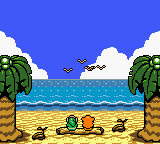
The Legend of Zelda: Link's Awakening DX - Thoughts


[contains spoilers]

There is an inimitable charm to The Legend of Zelda: Link's Awakening that we're likely never to see again. It came at the right time and landed on the right platform, allowing it to be a smaller, sillier title with some themes many would consider "too strange" for a traditional Zelda game (though Majora's Mask would push that envelope further in a more bleaker, crushing direction). It remains my favorite Zelda entry—though I wouldn't argue for it being the best—and the quaint simplicity of it makes Link's Awakening possibly the best title on the Game Boy.


Having the game be on a handheld complements its themes extremely well. In a nutshell, Link's Awakening is about bliss found in ignorance as well as the bittersweet sadness of letting go. The goal of the journey is to venture off of Koholint Island, but to do so Link must wake the Wind Fish and end its dream (and thereby terminating the island and all of its denizens). Curiously however, none of the inhabitants outside of the Owl are cognizant of the dream, or the rise of the Nightmares intending to keep the island from vanishing. Everyone lives in a perpetual state of naivete, trapped within the dictation of their desires, and even the ever-curious Marin is bound by the dream in her human form.

These are important themes because nearly every other Zelda reverses this progression—Hyrule is in a state of disarray and it's up to Link to fix the problems of the people, climaxing with the defeat of the ultimate baddie. In Link's Awakening, the people have no overarching problem as the plot revolves around Link freeing himself from this ethereal prison, whereby he erases them. Sure, some island dwellers would like eclectic items (dog food or pen pal letter) and Madam MeowMeow gets her chain chomp stolen, but the issues of the islanders are relatively sedate compared to Agahnim's police state or Ganondorf's vile transformation of Hyrule. Link's adventure revolves solely around himself on Koholint Island, the island folk resulting in nothing more than passing memories by the time the curtains close.

Link's Awakening a lonely, ephemeral experience. It's the quintessential Game Boy entry because it embodies the transitory state of "mobile games" in the 90s, existing to tide you over until the next big (console) experience. The game is simple but astonishingly pithy with its story, prodding the player to grapple with the nature of reality without ever forcing it upon them (the Nightmares are the only creatures that explicitly criticize you for your actions). "Ballad of the Wind Fish" deserves a special mention here as well for perfectly capturing the mood in the game, conveying it in a way words are incapable of expressing. The slow wash of all the characters along with entire island while the ending theme plays is still one of the most striking things I've experienced on a handheld; parting is indeed such sweet sorrow, especially when you know you'll never see one another again.


With my melancholy reflections out of the way, I should take a couple sentences to at least talk about the gameplay. For the most part it works as intended, being a more bite-sized version of Link to the Past with a larger emphasis on puzzles. It's not too difficult of a game—there were a couple spots that gave me trouble as a kid that I could now breeze through—and it lasts a comfortable amount of time (not too long, not too short). The biggest con I can think of is that switching out items on the menu becomes a major drag on the game, but most Zelda games suffer from this dilemma so it's not a unique gripe. Oh, and there's a ton of text you have to mash through every time you pick up the compass (or bump against a rock or crystal). These are minor blemishes on an otherwise joyous experience. Perhaps the best thing that can be said about the design is that—along with Ocarina of Time—it works perfectly as an introduction to the Zelda style of gameplay.


All things go through a process of change—some of which are irrevocable. Before venturing into the game's fifth dungeon, Catfish's Maw, you have to escort a gloomy ghost back to the house he used to live in. It's a brief but heartfelt moment as he looks upon the decrepit cottage, feeling intense nostalgia for the tiny box that had once been his home. In some ways I feel like the ghost when gazing upon this game, looking back upon the hours & hours I spent playing it as a kid and using the screen warp to clip my way into places I shouldn't have been. It didn't age nearly as much as the cottage had, but it still ekes a tear out of me when visiting familiar areas or watching Tarun get chased by bees.

Truly a poignant masterpiece for its time.
---------------------

Images obtained from: addictedgamewise.com

Thursday, May 21, 2015

Mario vs. Donkey Kong: Minis on the Move - Thoughts

Boy howdy is this a strange one. I haven't played any of the Mario vs. Donkey Kong entries beyond the official first, but the gameplay featured in Mario vs. Donkey Kong: Minis on the Move seemed like something I would enjoy, so I decided to pick it up during Club Nintendo's closing. What I got wasn't really what I expected, and though I had fun with it there's a couple hiccups that keep it from being as competent as something like, oh say, Pushmo.


From the screenshots alone, the premise looks simple enough—arrange the square platforms so that the mini Mario has a clear path from the start to the exit. There's four different modes in the game, each of them containing some variation on the main objective: Mario's Main Event gives you random pieces you must put on the board quickly before time runs out, Puzzle Palace gives you a limited amount of tiles but infinite time to deduce the answer, Many Mini Mayhem has you rearranging a preset board but juggling many minis, and Giant Jungle is like Mario's Main Event on aggressive steroids. There's also Mario 64 DS-style minigames, but those are far from the main draw of the game (outside the slightly entertaining Cube Crash).

Out of all of the modes, Puzzle Palace is the closest to the game I imagined Minis on the Move to be. The puzzles start out modest but become unbelievably complicated, with some of the expert stages forcing you to reverse engineer how the designers pieced it together. On one hand the vague direction you're given per level can be really frustrating (the only clue on how to proceed are the colored coins you [usually] collect in a specific order), but on the other hand it leads to some utterly brilliant moments when you finally overcome a puzzle you had to solve from scratch. It had a slight Sudoku/Picross element to it, where you start by realizing which spots absolutely need a piece and then working from there. I'm pleased Puzzle Palace had the most amount of puzzles in the game, as it was a delight all the way to the end.

Mario's Main Event was a nice surprise, but it was a mode that didn't gel with me at times. I like the idea of taking a mode like Puzzle Palace and adding random blocks to it—essentially allowing you to create your own "solution" to each puzzle—but in the later stages the randomization served to thwart me whenever I had a solution already visualized. Even with the groundwork laid down, I would often lose to the time limit as the mini marched slowly on its way, my stylus incessantly prodding it so that it would hurry up. To succeed you have to work in tandem with the mini's slow pace, hoping you get the right blocks to pop up in your pipe queue, which can be extremely vexing on the larger maps.


Many Mini Mayhem was a peculiar mode I was glad didn't have as many puzzles as the other two. Since all you do is rearrange the board, the difficult came from having to manage multiple minis at once; this made the puzzles where you had to simultaneously help four of the little guys an obnoxiously strict chore, and I wound up forfeiting the chain bonuses since it was easiest to send one to collect the coins and the others straight to the exit. The majority of the puzzles were "somewhat fun" I'd say, but it could get downright stupid with the micromanagement sometimes.

Giant Jungle is a monstrosity. As I said above, it's Mario's Main Event except about 5x bigger. The problem is both the absurd length of these levels combined with the severe time restriction—having to collect ten stars and dozens of stopwatches while navigating a massive maze with randomized tiles was all I needed to know that the mode wasn't for me. I had completed every other event in the game so I was content with skipping this one; it's certainly a hardcore challenge for those that are adept at the game.


Despite the family-friendly vibes one may receive from a puzzle game about Mario toys, Minis on the Move can certainly feel very malicious at times. It's less of a deductive puzzle game and more of an adaptive one, encouraging you to piece together solutions on-the-go. Having to tap the mini to make them move rather than pressing a "go fast" button is probably the stupidest design decision I've encountered all year, but other than that I had a decent time overall. I still wish I could've had twice as many Puzzle Palace puzzles...
-----------

Images obtained from: howlongtobeat.com, egmnow.com, exophase.com, examiner.com

Sunday, May 10, 2015

Banjo-Kazooie - Thoughts


With the recent surge of support for Playtonic's Yooka-Laylee kickstarter, I thought it might be interesting to go back and visit the collectathon genre's poster child, Banjo-Kazooie. While it is possible to lump the game in with other titles like Super Mario 64 and Crash Bandicoot, Banjo-Kazooie has its own distinctive taste that sets it apart from the other platformers. It's slower, strongly emphasizing exploration over execution, its world endearing and childish rather than being quirky or edgy. At times it can be too slow for its own good, but on the whole there's a good reason it's often thought of as Rare's signature Nintendo 64 title.


After a few minutes of intro exposition you're plopped down into the world, ready to poke your nose into its nooks and crannies. How quickly the gameplay is introduced is a definite plus—I miss the pick-up-and-play nature of a lot of older gen titles, cutting straight to the point without chipping away at your attention with meandering cutscenes. Another great design choice is that all the worlds (barring Freezeezy Peak) can be fully completed as soon as you step foot into them, only requiring a keen eye to spot all the jiggies, jinjos, and music notes. I was able to play the game in small, two-world-per-play chunks thanks to this, and though the latter stages can be quite heady (Click Clock Wood is a marathon of patience when you play it in a single sitting), each one is appropriately sized and paced.

Games like these are often criticized for featuring the stereotypical "water, ice, and desert"-themed levels, but Banjo-Kazooie handles them in its own charming way. Clanker's Cavern is a rusted series of tunnels featuring the eponymous (and terrifying!) Clanker, Freezeezy Peak is a Christmas-oriented wonderland with a gargantuan snowman just begging to be mountaineered, and Gobi's Valley focuses more on pyramids with self-contained puzzles than traversing its sun-baked sands. There's other vibrant worlds that are quite clever as well, like the spooky Mad Monster Mansion and the seasonal Click Clock Wood. The pretty bow that holds this package together is definitely Grant Kirkhope's whimsical tunes, the instruments and progression changing during the expeditions. My nostalgia may play a part in me reverence for this title, but I still feel that anyone that has a soft-spot for childlike curiosity would easily be sucked into these worlds.


Perhaps the biggest knock against the game is that it can be quite slow at times. Even with Kazooie at the helm it can take a while to go from point A to point B, and dying in a stage like Rusty Bucket Bay when going for all the music notes (curse that turbine room!) can only exacerbate the game's leisurely pace. Funnily enough, some of the timing requirements on the latter parts of the game (like the flight pad switch above the Freezeezy Peak entrance) can be extremely cruel in contrast to the mellow tone of the game. Beyond that there's not much to chastise the game for—sure, the note and jiggy requirement for beating the game is pretty demanding, but as the theme of the game is to "collect" stuff, it's a natural fit for completionists. Plus collecting everything is hardly a hassle; no matter where you go there's something to see and someone to talk to, making the world feel very much alive and thriving even without your presence.


Banjo-Kazooie's style of gameplay isn't one I find myself yearning to return to a lot—in fact, most of my N64 catalogue is filled with games I'm not eager to replay—but it was nice returning to this humble title. It's adventurous without being overambitious, the characters goofy without feeling forced. The quiz show and final battle were an excellent way to test the player's knowledge on the game and its mechanics, and there's not much else to say other it has rightfully earned its place in the hearts of many adolescents.

However, my real interest is in whether or not its sequel has remained as timeless...
---------------------

Images obtained from:  wikipedia.org, vizzed.com, ign.com, gameinformer.com

Sunday, April 26, 2015

Castle in the Darkness - Thoughts


Don't let the 8-bit aesthetic fool you—Castle in the Darkness is a lawless game. Developed by Nicolis's artist Matt Kap, this quiet knight's action-adventure romp has more in common with the Souls series and I Wanna Be the Guy than Metroid or Castlevania. This may sound titillating to video game masochists—and there certainly are some challenging moments—but there's also a notable lack of polish and refinement in the title. Shovel Knight it's not; Castle in the Darkness has its own quirky rules that you'll have to adapt to if you want to discover the delightful game hidden within.


Coming to terms with these rules will be easier for some than others. For instance, you can only access the menu at save points, meaning that you're unable to change equipment or check what your items do until you reach an angelic statue. Warping is only allowed at certain statues too, which can be very nettlesome when you have to backtrack through the game's mundane initial rooms or the demanding final areas just to look for cracks in the wall you may have missed. There's no map at all either, forcing you to rely on your memory to recall which paths needed what items—a somewhat rude design decision in 2015. Some save points are right next to bosses while others are very far apart, and the amount of instant-death spikes can easily get on your nerves. Sprite-flicker also needs to be mentioned for how obnoxious it can be when you get hit in midair and lose your position for a split-second, falling to your death after a long platforming segment.

I nevertheless had fun with it though; I'll admit I'm a sucker for rudimentary 8-bit action and this game has plenty. Bosses run the gamut from questionable to thoroughly engaging (like Ruth and the titan at the top of the Crystal Tower), and the finger-dexterity required when running to nab the ten pages can be quite a workout. It's nothing too hard, but it's likely to cause some hair-pulling for those that get frustrated from dying easily (I wound up with around 350 deaths by the end). There's a strong variety of weapons, spells, and armor included in the game, but unfortunately most of it is locked away until you've acquired the double jump—which is obtained over halfway through the game.


The fact that the game doesn't truly open up until the latter portion is a good indicator of the weird design choices at play here. There's also dozens of "gotcha!" troll deaths that you'll roll your eyes to, and blatant references to other video games (like the copy & pasted seaweed from TMNT, or Abobo from Double Dragon) which feel unnecessary in a game this well-put together (I had similar gripes with the abundant amount of memes in the otherwise excellent Guacamelee). Since the game doesn't have the ambiance of Metroid or the loot-depth of Castlevania, the backtracking can become taxing when you go for 100% completion, further emphasizing just how... rough the game feels.

Yet while Matt Kap's design decisions come across as amateurish, the guy is fantastic at everything else. The art is crisp and clean, the music is really catchy and energetic ("Path of Least Resistance" being my favorite), and the game—while jittery during screen transitions—performs well for the most part. The combat is a little strange (emphasizing spamming attacks over being cautious) but the amount of enemies and spells there are continue to keep things fresh all the way to the end. There's also a neat sense of mystery you explore each nook, not entirely sure what you'll come across next (a la the Souls series). I haven't poked my nose in any of the bonus content after I got all the achievements, but I'm happy that something as strange as old demos of the game were included.


It's clear that Castle in the Darkness was designed by a person that adores videogames. At times it feels like a throwback to the older 8-bit era, but thrown into a blender with the rudimentary design of a flash game. There's a ton of content here (over 50 bosses!), the journey lasting a comfortable six hours before you'll be fully done with it. While the philosophy here is quantity over quality—something I've rarely preferred—it's a decent adventure with a smart prince point, claiming no regrets from me.

Thursday, April 16, 2015

Otomedius Excellent - Thoughts


I really like Gradius—it's a peculiar series, chock-full of some quirky tropes (Moai heads & feeble final bosses), a wide variety of customizability, and some absolutely brutal gameplay that demands an R-Type level of memorization. I also like the concept of Parodius, Konami's spectacularly bizarre way of turning Gradius into a nonsensical cartoon. Otomedius though... I struggle with. My first foray into Gradius-meets-moe is with Otomedius Excellent, and I'm not exactly sure how I feel on it other than embarrassed for its existence.


The idolization of young anime girls isn't something new to video games, and many STGs have veered into this area over the last decade—CAVE in particular has touched upon this with recent DoDonPachis and Deathsmiles. In some series like the eXceed or Touhou games, I don't mind the all-female cast seeing as the fetishization is minimal (arguably?). But my ideal anime girl involvement—if it must be there—is in something like Mushihimesama, where the protagonist is the token example. On most occasions I try to let the gameplay overrule the art style and/or character models (like with Castle Shikigami), but Otomedius Excellent is the prime example of a game that tests these boundaries.

The game is unabashedly eager to please the player right out of the gate. It opens with the an animated intro, showcasing its scantly clad, nonstop-grinning magical girls as they ride about on top of their ship like a hood ornament. It looks even more ridiculous in game as the model jostles back and forth as you steer it around, like she's trying her best to hang onto her cosmic chair. Each girl can only be leveled up individually, prompting you to pick your favorite and stay with her, and during the loading screens you can poke her with a pointer to induce cute catch-phrases and exasperated vocal foleys. The theme of the game stands somwhere between Gradius and Parodius, containing a self-serious story wrapped up in a bunch of nonsense like your sensei being a stage boss, unexplained time travel, and a gothic loli maid equipped with an armada-disintegrating doomsday laser. Visually it looks quite a bit like a PS2 game at times, being bright, blocky, and colorful.


One of the enjoyable oddities about Excellent is that it is a very newbie-friendly game. It can be easily 1cc'd on normal (as long as you memorize some of the safe-zones on the last boss)—a somewhat rare aspect for its umbrella franchise. Gradius-style games are frustratingly punishing if you die during the last couple of stages, with the arcade version of Gradius III being perhaps the worst I've ever experienced, so the tone-down in challenge is a bit surprising. It's still fun to play through because you don't have to attune yourself to the game like you do with 95% of other shmups, the 1cc victory feeling like a bite-sized reward for your efforts.

The game also has a maddening amount of customizability. There's a host of weapon types that I continuously unlocked for my chic pink-haired doll, and though I stick to most of the shot-types introduced in the first few Gradius games (Spread Bomb-4-life) being able to mess around with the goofier shot types is somewhat fun (I couldn't figure out whether I liked the Dagger laser-type or not). The stages are alright and the bosses aren't anything to write home about—the only thing that surprised me was the lack of the penultimate walker boss. Most of the achievements don't seem too hard to get either, but my cheevo-grinding days are well beyond me now.


On one hand, Otomedius Excellent is the best way to jump into the world of Gradius without having to endure its harsh arcade roots. On the other hand... just look at it. Perhaps I tend to wax too nostalgic on a series I always felt was "cool" growing up, but this rendition was really trying its best to humiliate me for playing through it. I became numb to most of it on my third go-around, but it doesn't detract from the fact that Otomedius Excellent as the newest Gradius game is unfortunate... or, as one could say, far from Excellent.
---------------------

Images obtained from: demonoid.ooo, amazon.com,  g4tv.com,  gamershell.com,

Tuesday, April 7, 2015

Far Cry 4 - Thoughts

[contains spoilers]

Far Cry 3 was easily one of my favorite games that I played last year. It's funny looking back on it—after just the first hour with Far Cry 3: Blood Dragon, I was ready to give up on the series, whereas after the final hour of third installment, all I wanted to do was sing its praises to high heaven. Therefore playing Far Cry 4 was an absolute no-brainer; I was more than happy to hop back into Ubisoft's hostile world of improv madness, bow and C4 in hand. While the gameplay is not nearly as fresh as it was in 3, the younger Indian sibling improves upon nearly everything else—visuals, content, and story have been refined to create the perfect FPS adventure romp.


The gameplay in the Far Cry series is a well-established formula by this point, and Far Cry 4 doesn't stray far from the ruleset. This can be disappointing if the previous game didn't grab you, but I was personally thrilled to start from square one and amass my armaments and abilities once again. The world feels a bit bigger this time around, and while Kyrat is missing the seawater and tropical mood of the Rook Islands, it comes with its own (gorgeous!) mountainous landscape, riddled with native mystique and an absurd amount of quests. There's racing, sniping, hostage saving, bomb defusing, animal hunting, fortress-taking, and poster-burning, and none of these even advance the main story! Plus, despite the increase in quantity, the quality thankfully remains more or less the same (though many missions will blur together).

The most significantly change in gameplay for me came from the minor adjustment to your loadout—one of your four slots is now reserved for a sidearm, intended to be used during vehicle sections. My beloved tetralogy in Far Cry 3 was the bow, sniper rifle, shotgun, and assault rifle; I begrudgingly had to change up my arsenal, but it did lead me to experiment around with more weapons. I stuck closely to the sawed-off shotgun as my sidearm for a while but towards the end of the game I became enamored with the portable grenade launcher and various LMGs. Nothing wound up topping the bow however, as that trusty tool still remains the most invigorating to use when silently conquering an outpost (the sniper rifle makes the game child's play, even on the hardest difficulty). Most of my other gameplay insights have already been covered in the Far Cry 3 and Blood Dragon entries, so I'll get on to (what I feel) is one of the most important things Far Cry 4 gets right—the story.


Honestly, the narrative was better than it had any right to be. I've voiced my disdain for Far Cry 3 quite extensively; the indelible Vaas deserved more exploration than he got before his untimely demise. The main antagonist of Far Cry 4—Pagan Min—is cut from the same luny cloth that Vaas is, but lacks the same level of appeal... at first. After the wild intro, Pagan Min takes a back seat to your two questionable allies in the game, Sabal and Amita, as the plot attempts to explore the rough paths one must take to ensure the success of a revolution in a war-torn country. Since both of the Golden Path leaders have different visions on how to achieve this (old vs. new), whomever you side with will determine the outcome of Kyrat in a way that's purposely ambiguous.

But this isn't the interesting decision in the game (well, it can be, but it feels a bit too contrived for me). At the end of the game you're given a choice of whether to kill Pagan Min or not—a decision that would be a no brainer to most players. Yet the kicker of the whole shebang is that Pagan Min does nothing to fault you. Sure, he's the leader of an army of people willing to shoot your head off the moment they smell your American cologne, but while you're killing his lieutenants, stealing his treasures, and smashing his idols, all he tries to do is plead with you over the radio to come to an understanding. The guy has done some obviously heinous things since he was instated, but he's never done anything to personally attack you. When I walked into the final encounter I was fully expecting a QTE shootout with him after what I've done, but instead the two of us just sat down to dinner and he asked me to rethink my choices.

Far Cry 4 is brilliant because it succeeded at the subtle meta-commentary that Far Cry 3 struggled with. The ultimate question posed to the puppeteer behind Jason Brody was, "are you trying to play this game realistically or do you just enjoy killing dudes?", but it was abandoned during the Hoyt arc until a hasty revisit at the end. Here, its presence is finely woven into the story. The first (and only) blurb of cutscene text is from your mother telling you where to lay her ashes to rest, and as soon as Pagan Min captures Ajay, the player's very first instinct is to go out and blow stuff up. So when the end of the game comes around and Min poses the initial task yet again—will you do what you came here to do or continue to be a blood-thirsty maniac?—the player is given Far Cry 3's dilemma without the hamminess of slice your girlfriend's throat. Pagan Min is an evil eccentric but would having Sabal or Amita in command be entirely different? The decision is arguably arbitrary but what's more important is whether or not the player feels they have a responsibility to honor their mother as Ajay would; shooting Min brings the player no closer to Lakshmana than at the very beginning of the game, but it instead satiates this weird, unnecessary bloodlust that he/she revels in throughout the entire journey (seriously, watching bodies ragdoll out of an exploding vehicle is pretty entertaining). I just found it so fascinating that the game handed you essentially one objective to keep in mind from the start, but by its closing you're left to decide if you even care what the game (or any game!) tells you to do.

Most of the plot threads outside of the main path are cute, but not nearly as interesting. Hurk and the stoner twins get too much screen time considering how shallow their characters are, whereas I would've liked to hear more from dialogue Noore and De Pleur (I had an especially strange moral dilemma regarding whether to kill Noore or not, and I wish I read more about her character other than her various perfectionist demands regarding the arena). Rabi Ray Rana is the most affable out of the entire cast and I enjoyed piecing together The Goat notes, though it's disappointing that that thread didn't lead anywhere. I was trying to get a better understanding of just who or what The Goat was, at times wondering if we were perhaps the same person, but by the last mask it seemed as though it was nothing more than another checkmark collectible. These activities, like with the holy land segments and drug trips, were interesting diversions that added a little more color to the world at least.


The biggest fault I can find with the game is that it is too similar to its previous title; Far Cry 4 lies somewhere between an expansion pack and a true sequel, retreading ground with a similar core theme and symmetrical gameplay. I can discredit the game for that, but the problem is that it's so much fun that the repetition hardly becomes a bore due to the numerous ways you can go about playing it. The story being as thoughtful and interesting as it was is precisely what I wanted from a sequel to 3, and though I was lukewarm on the plot during the outset I hold no shame in thinking it's one of the best AAA tales of 2014 along with Wolfenstein: The New Order. I think if Far Cry 5 fails to change things up I'll likely burn out on the series (especially since the games contain so much content to wade through), but so far Far Cry 4 hits all the right notes and feels like the definitive experience.