Friday, April 15, 2022

The Great Ace Attorney Chronicles - Thoughts


The Great Ace Attorney Chronicles manages to pull off an incredible feat, one which every game in a modern franchise can only dream of: it surpasses its predecessors. What's doubly impressive about this accomplishment is that the original trilogy can stand tall off of its unique premise alone, whereas The Great Ace Attorney doesn't really bring anything "new" to the series. Rather, where The Great Ace Attorney's excels is in its masterful craftsmanship, culminating in the best story Shu Takumi has penned yet. It's a roller coaster of bizarre twists, endearing characters, and mysteries so elaborately tangled up that even the great Sherlock Holmes would be left stupefied.
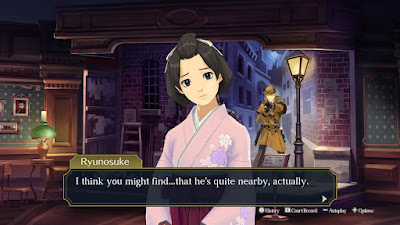

At first blush, this may all sound like a baseless boast, especially given how The Great Ace Attorney opens. You'll note early on that the narrative moves at a glacial pace, turning its first case—the intended tutorial—into an overwrought and verbose affair. This pervades the entire experience, as events, details, and motives are explained and then re-explained in elaborate detail, heedless of the player's understanding. Characters will belittle and infantilize you in court as you wait to present decisive evidence, drawing out conclusions that you've worked out several lectures ago. While this foible is present to some degree in every Ace Attorney game, it's arguably at its worst here—particularly because Shu Takumi should know better by now. The sole vice of The Great Ace Attorney's is that it's incorrigibly loquacious, like a college professor enamored by the sound of their own voice.

But as long as you don't mind being battered by wordy tidal waves, The Great Ace Attorney offers a fantastic ride from start to finish. Even its plodding first case contains several twists and turns, turning it into a struggle befitting of a penultimate case in an earlier game. The Great Ace Attorney doesn't let up either, repeatedly gobsmacking the player with baffling developments, wild conspiracy theories, and enough red herrings to make you suspect a nine-year-old of murder. So many mysteries underpin The Great Ace Attorney that by the end of the first game in the duology, you'll be left with more questions than answers. Fear not however, as by the end of the second every disparate piece of evidence will link together, like the cogs of a great machine.

And therein lies what makes The Great Ace Attorney so good: it's a competently told, standalone story. No character is invincible because they're a fan favorite, no ally inscrutable because they're on the "good" side, and no villain so deplorable as to commit a crime for the sake of it. The Great Ace Attorney's is an elaborate tale of nationalities and deep-seated hatreds, where conflicting ideologies mix with freak accidents to produce Machiavellian outcomes. At times the yarn it weaves is as fantastical as it is improbable, but glimmers of reality will bleed through, painting the world as a tragic place where good intentions frequently clash with carnal impulses—and often lose.
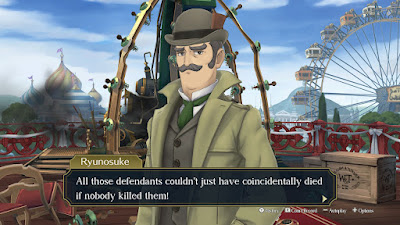

It's difficult to talk about the game without delving into full-on spoilers, so I'll just say that I was left very satisfied with how The Great Ace Attorney Chronicles resolves. While it's by no means perfect—expect some preposterous motives and incongruous details—the mystery surrounding the Professor case is utterly captivating. Even if you correctly guess the perpetrator lurking at its core, the way the final trial unfolds is spectacular, delivering some dark revelations that took me by surprise. Given how easy it is for a murder mystery to misstep in its final act (see Dual Destinies and Pretty Little Liars Season 7), The Great Ace Attorney deserves to be commended for not only delivering a convincing climax, but doing so with an unexpected, morally-gray gut punch.

Of The Great Ace Attorney's many delights (including its knock-out soundtrack), the way it plays with expectations is my favorite. Despite the franchise formula being well-trodden by this point, there are some genuine surprises to stumble upon in court—especially if you're expecting the game to mirror its predecessors. While I'm impressed most by the final case of the second game, it's the third case of the first game that left me smitten, as I pulled several 180° turns trying to guess its outcome. In fact, I don't think there's a bad case between either game; there are some laboriously long trials, yes, but every case is peppered with reveals both big and small that'll push you onwards. Be prepared for anything, from an innocent-yet-unexpected pet to a curious piece of evidence that can blow the case wide open. If you've grown weary of Phoenix Wright's 20-year-old tricks, I wholeheartedly recommend giving The Great Ace Attorney an try—there's bound to be something here that will impress you.

If you're a new player however, be forewarned that the game is long—very long. Like 80 hours long. The Great Ace Attorney is an exhaustive undertaking akin to Persona 5, where you'll have to chip away at it over the course of several months. I very much enjoyed the time I spent with it, but I'd be lying if I said I wasn't tempted to start another game after the conclusion of every other case. And like Persona 5, it's an absolute marvel of ambition... that you probably won't be touching again until a decade or two has passed. Still, a game's replayability isn't its sole defining factor; The Great Ace Attorney is worth the price of admission for the amount of "wait what?"s it elicits on the first time through.
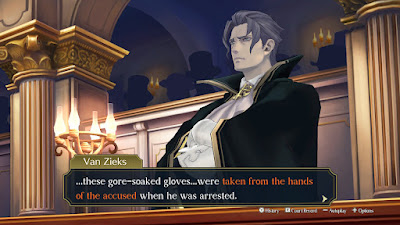

While I contend that The Great Ace Attorney Chronicles would be improved with a firmer editor (you could probably cull 10% of the script without sacrificing anything of importance), everything else about it is spot on. If you're in the mood to read a tale as charming as it is impactful, and as puzzling as it is goofy, then The Great Ace Attorney will not disappoint. It really can't be overstated what an accomplishment it is for this duology to dethrone the OG trilogy. The Ace Attorney Trilogy might be the better introduction but The Great Ace Attorney is the more provocative package, in theme, style, story, substance—you name it. It is gaming's greatest whodunit, one that will leave you with a single question after its credits: how can Shu Takumi possibly outdo himself next?

Monday, April 11, 2022

Up Left Out - Thoughts


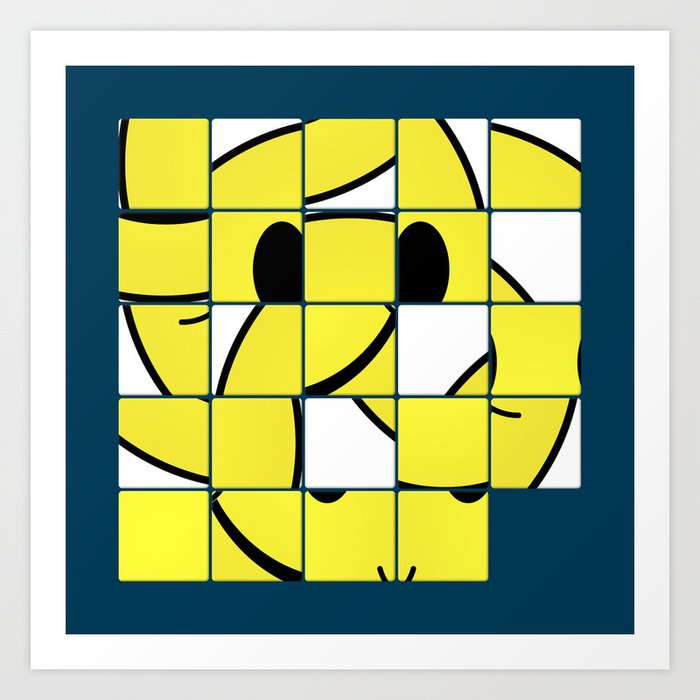
I have a bit of a love-hate relationship with sliding tile puzzles that—admittedly—leans on the latter more than the former. When the tiles are faceless or asymmetrical, I usually enjoy monkeying with the pieces until I accidently come by the solution. But for traditional puzzles, I'm forced to relive my childhood frustration, transported back to the impenetrable bonus minigame from Bart vs. the World. I'm obviously better at them as an adult than a child, but I nevertheless view them as the more restrictive and unimaginative cousin of Sokoban-style puzzles. Thus, I began Up Left Out cautiously, uncertain if I'd be forced once again to mash together the irreparable bust of Homer Simpson.

But thank goodness I stuck with it—Up Left Out is a fantastic little puzzler that will give your brain a delightful workout.


Like with klocki, Up Left Out's greatest strength is the way it frequently plays with its rules. It starts off with a simple goal: move every block once. Eventually new objectives and gimmicks will weasel their way onto your board, like blocks of varying sizes, blocks you can rotate, blocks that need to be aligned, and blocks that grant access to similarly-shaped blocks. If that sentence sounds silly or confusing, have no fear; Up Left Out carefully complicates its mechanics one step at a time, ensuring the player never feels lost.


As you continue to rotate, align, and mimic the blocks on the table, you'll notice that there's a kind of unexpected quirk to the way they move. The board itself utilizes classic ice physics, meaning once a block moves it won't stop until colliding with the wall or another object. At first I feared this would make puzzles more step-intensive than they needed to be, but I quite enjoyed the mechanic by the end. It keeps the constant reorganization of the tile puzzler interesting, sometimes turning what would otherwise be a simple move into a challenge.

Up Left Out bears a decent mix of easy-to-moderate puzzles, taking care not to lean on one mechanic too heavily. The fifth to last puzzle (pictured below) is probably the most complicated, requiring deft maneuvering inside of its claustrophobic confines (which is why it's my favorite). Besides that, you won't find any real brain scratchers among the lot. Up Left Out prefers to stimulate rather than demoralize the player, so you'll always be close to a solution as long as you can muster up the brainpower. If it's lacking in any area, it's that it might be a bit too short—but with a $1 price tag, it's kind of silly to ask for more.


I found Up Left Out to be a lot of fun, offering a pleasant diversion that you can blast through in one or two afternoons. It's more of a substantial puzzle game than Maciej Targoni's other entries, but still adheres to his philosophy of keeping the experience tranquil and relaxing. Up Left Out tests but never confronts, knowing how to keep the player calm without putting them to sleep. It's one of the few tile puzzlers that I can jibe with; if you spot Up Left Out on sale, don't hesitate to pick it up.

Thursday, March 31, 2022

Narita Boy - Thoughts

 
[contains minor spoilers]

Undeniable is the passion that drips from Narita Boy's pixelated pores. It's a game designed by an artist, painting a vibrant and cautionary tale of obsession, ostracism, and the value of family. While screenshots of it are stunning, in motion it's a categorical wonder. And I'd heap even more praise atop Narita Boy's pedestal... if not for the fact that as a video game, it's a fairly troubled product. It straddles the line between "okay" and "mediocre", unsure if it should be a metroidvania, scenic platformer, or battle-focused brawler. Narita Boy is an easy game to suggest a trailer for, but a hard game to recommend a playthrough of.


First off, I can't make heads or tails over whether I enjoyed Narita Boy's story or not. Early on, you'll be subjected to massive blocks of text from NPCs—and that never really lets up. Worse yet is most of the dialogue is jargon-heavy, tossing out proper nouns like the first draft of a fantasy novel. Reading gradually turns into a chore as directives and backstories are frequently interwoven, utilizing so much programming language that you're never really certain what the hell it is you're supposed to be doing. At the best of times there will be a modicum of cogency, but at the worst of times you'd be better off interpreting it high on acid.

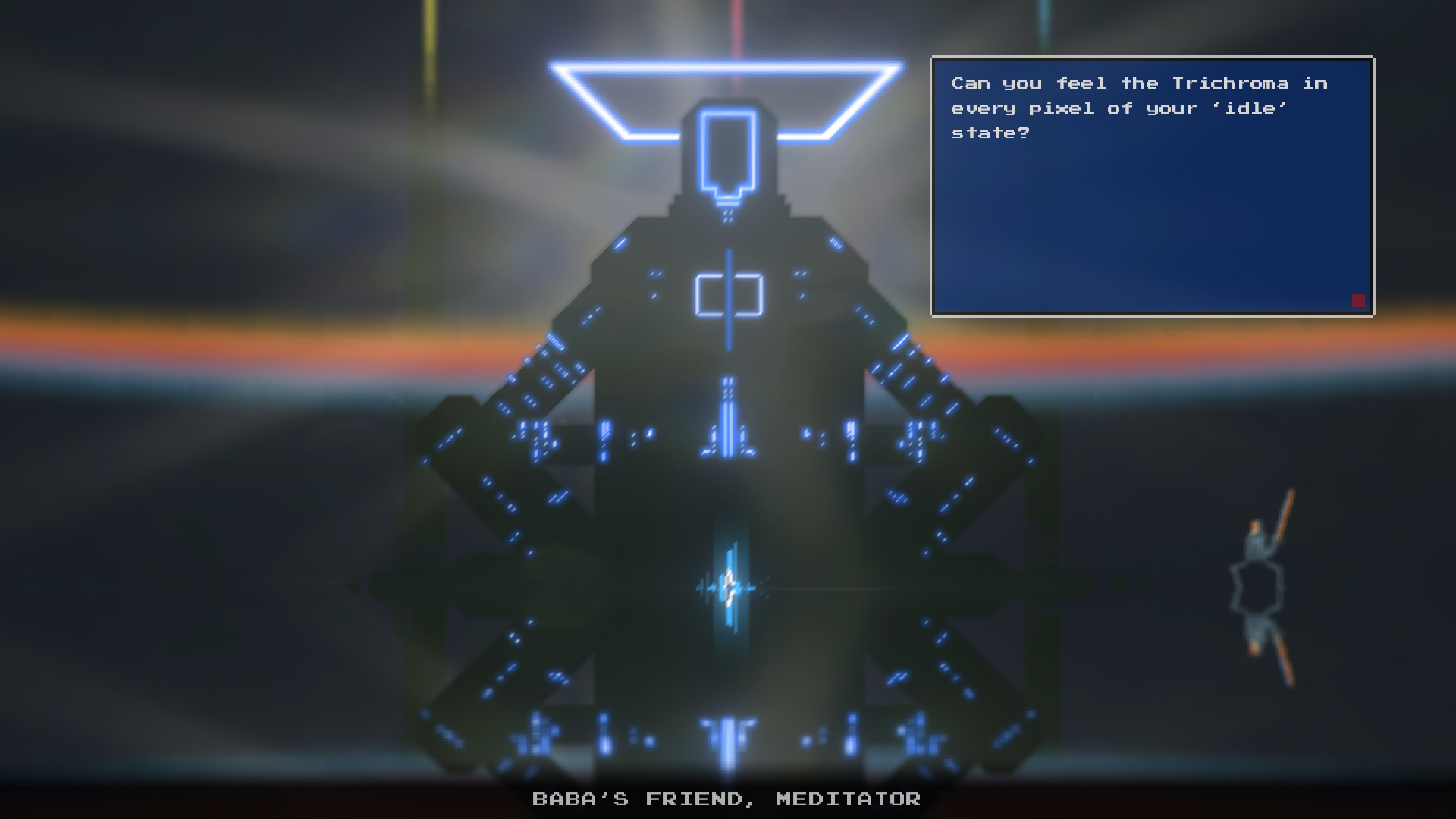
Yet there's a beauty and subtly to Narita Boy, one I didn't expect given its cartoonish opening. Narita Boy's story opens by emulating Tron but unfolds closer to Ready Player One, using the digital world as a means to detail the life of its lauded-yet-troubled creator. You'll learn about his childhood, early trauma, favorite hobbies, and the emotional ties to his family. It's quite touching at parts (in no small part due to the pensive music), hiding a lot of gorgeous detail in each of the vignettes you unlock. Plus it provides a nice, humanistic reprieve from the silly digital people and their all-too-videogamey problems.

However, Narita Boy fails to stick its landing in a graceful manner, opting to read too literally for my tastes. The central villain—the black and crimson cloaked HIM—doesn't merely represent a digitized malice born from the creator's darker inclinations; HIM can physically enter the real world and plans to do so in order to subjugate all of humanity. It's a bizarre motive that shifts the narrative away from how trauma can fracture one's reality, leaning heavily into a juvenile, tokusatsu-esque goal of "save the world from the bad guy." It's a little hard to describe if you haven't played Narita Boy, but it effectively takes the interior struggle of the creator and morphs it into an external threat, transforming HIM from a personal villain into some faceless, unnuanced evil.

Additionally, central to Narita Boy is the poignant theme of a mother's love and guidance—something nice to see in a medium dominated by sad-dads. I thought it was a good twist too, given that the game starts with Narita Boy's mother stereotypically nagging him to stop playing video games and go to bed. But as the story continues, the theme really only extends to the creator's mother—and even then, her guidance is somewhat muddied by prophecy. At its end, Narita Boy re-emphasizes the love of the creator's mother while callously discarding the titular character's own mother (while she's injured no less!) in favor of teasing a genre-shifting sequel. Similar to the HIM development, it just goes to show how Narita Boy prioritizes being epic over being meaningful.


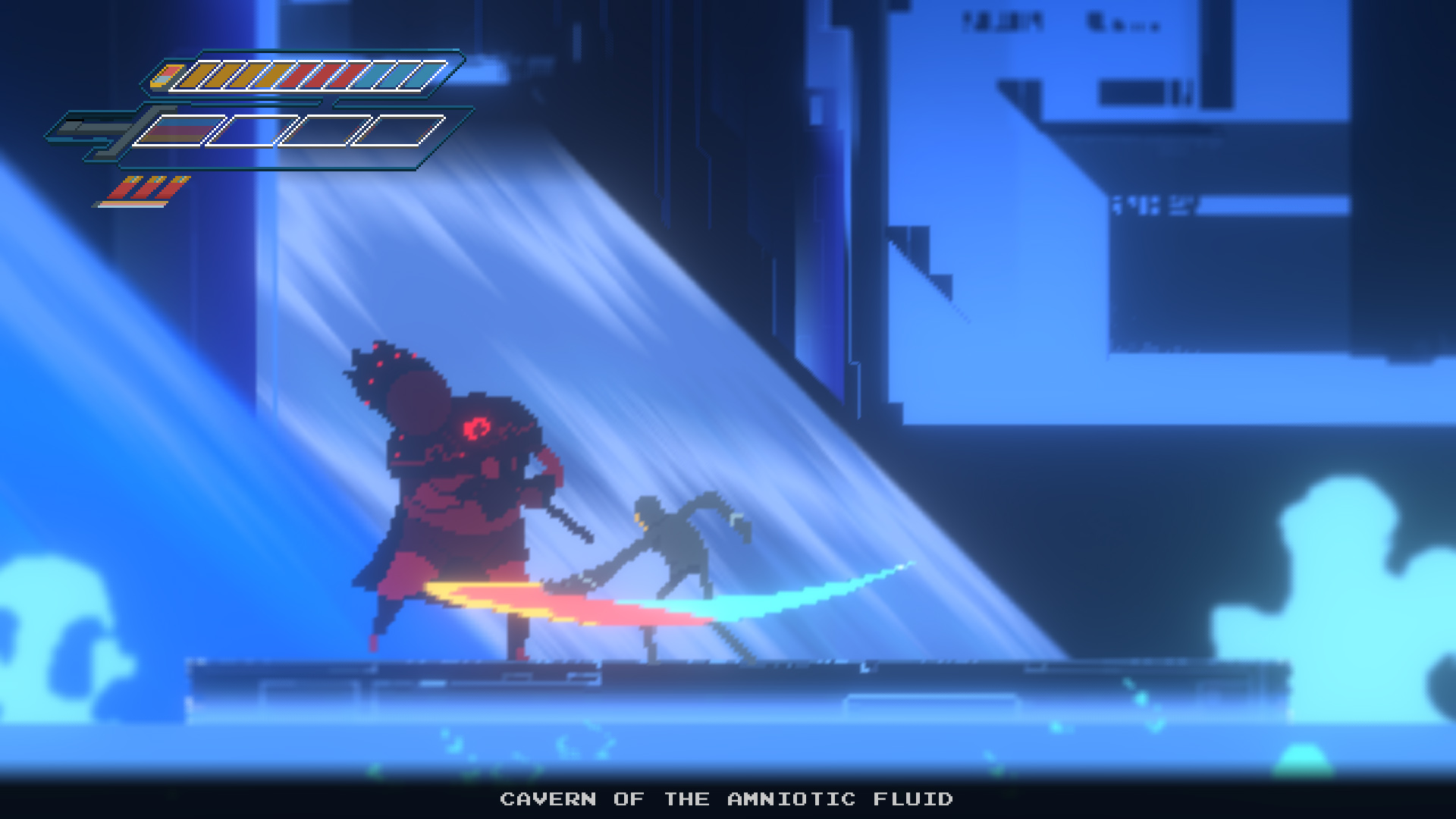
While the story didn't come together in a way I had hoped for, the visuals absolutely blew me away. Seriously, seeing how many frames of animation are contained not just within Narita Boy but each of the enemies and all of the background NPCs is mind-blowing, especially given how you only see a big chunk of the world once. Encounters like Black Rainbow, White Noise, and the final boss are a wonder to behold, and if there's one reason I'd have for recommending Narita Boy, it'd be to marvel at the game's fluid, playful artistry. The music is also appropriately moody during exploration but goes hard on the synths when the action picks up, fitting the game's aesthetic nicely.

Would that I could say the same about the gameplay, but that's where Narita Boy stumbles the most. Exploring the world is a confusing, bewildering mess until you understand that you're either doing one of two things: remembering where locked doors are or hunting down colored passcodes. Narita Boy is structured like a metroidvania, doling out traversal-boosting powerups and frequently requiring backtracking, but its progression is entirely linear, blocking access to earlier sections once you've completed them. It's not as annoying as it sounds however, as there aren't any health, energy, or damage upgrades; as soon as you pick up the trichroma sword, you'll have everything you need to beat the game. So Narita Boy gets the worst of both worlds: it's tediously sprawling while simultaneously lacking a gameplay motive to explore.


Likewise, combat is also a disorganized mess that takes some getting used to. By the end you'll have a variety of ways to engage your opponents, but since attacks have little-to-no animation canceling, expect to be doing hit and runs for the most part. Narita Boy also slides around like his shoes are coated in butter, so expect to occasionally collide with enemies and slip off ledges. Your sword comes with a nifty little shotgun blast but it shares the ammo with the laser beam (your most powerful attack by far), so you won't really be using it outside of an accidental finger slip. And there's plenty more to whinge about: the charge attack can only be done after a standing swipe, the shoulder bash is ineffective on most foes, the dodge button sends you backwards—but the thing that gets me the most is that you don't heal between fights. Instead you have to consume precious energy to recover one pip at a time... or you can die and restart nearby with full health. Why? Why make me spend five seconds killing myself at the start of every lengthy encounter? Why not at least heal me after boss fights, or save the "no healing" for a harder mode?

While Narita Boy boasts a healthy variety of enemies, almost all of them come with bloated HP values. Later on you'll get the ability to do more damage if you match your color to theirs, which carries the downside of same-colored foes doing more damage to you as well. I actually quite like this gamble, but sadly only a handful encounters encourage this buffing system. Some battles will simply have you switching to one color and dispatching the most annoying (ie tankiest) foe with a laser shot, while other battles won't use the dynamic at all, forcing you to whittle down enemies one inefficient stab at a time. There's a couple of decent gauntlets at the end of the game that push you to switch often and quickly, but by then it's too little too late.


There's plenty to like about Narita Boy—but there's also a hell of a lot that feels off. It's ultimately a hyper-polished amateur project, having the creative chops of an indie gem that's been unfortunately stuffed into the sloppy body of a late 2000's Newgrounds game. Perhaps it needed a few more programmers, or a larger playtesting pool, or a bit more time in development—or maybe this is exactly the game Studio Koba wanted to make, warts and all. They're clearly a talented developer that poured a lot of manpower and sweat into their product, which is why I feel so down on disliking it. Narita Boy at least put Studio Koba on my radar... but I'll likely be going into their next title with warranted skepticism.

Wednesday, March 30, 2022

Elden Ring - Thoughts


[contains minor spoilers—mostly names of stuff]

On one hand, open world Dark Souls sounds like a terrible idea. The genre is at its best when you're crawling through tightly designed, mischievous levels like Shulva, Lothric, Irithyll, Oolacile Township, and the downright devilish Sen's Fortress. Meanwhile, the wider, more open areas tend to be categorized by their sloppy enemy placement and mandatory sprints: Darkroot Basin, Ash Lake, Belfry Sol, Road of Sacrifices, Mibu Village, Demon Ruins, and Lost Izalith. That's not to say that these zones are categorically terrible—I quite like Ash Lake, Mibu Village, and yes, even Lost Izalith—but if someone told you "imagine the Royal Wood, but 100x bigger!", no one would fault you for rolling your eyes. An open world Dark Souls is a disaster waiting to happen, one that could've only been greenlit by a brainless executive in pursuit of a trend a decade old by now. It's a crass and careless fantasy better left in the margins of a middle schooler's notebook.

On one hand.

On the other hand is Elden Ring, a game so utterly majestic that the first hand deserves to be severed for daring to doubt it.


So, first things first: Elden Ring is Dark Souls 4 in all but name. Expect most of the series' staples to return, albeit under a new pseudonym: Estus Flasks are now Crimson Flasks, Weapon Arts are Ashes of War, rings are talismans, soapstones are fingers, embers are rune arcs, ashes are bell bearings, so on and so forth. Most of the habits you pick up from the Souls series can also serve you well: expect monsters around corners, roll for bosses you can't block, leveling weapons trumps leveling stats, don't give up skeleton!, and heed the cryptic advice you'll receive from NPCs. Sometimes I knock other games for borrowing a bit too much from Dark Souls (Mortal Shell, Salt and Sanctuary) but it's kind of hilarious how naked Elden Ring's roots are. Hell, the premise of the game is to play as some Joe Schmoe seeking to succeed the ruler of a broken kingdom, embarking on a vague quest to claim their age-defining MacGuffin—if that doesn't reek of Dark Souls, what does?

If you can make it over that meagre hurdle, Elden Ring will bloom like an other-worldly flower. It takes Dark Souls 3's gameplay and expands on it in all directions: you can now customize your armament's Weapon Art Ashes of War, you can call upon (and upgrade!) ghostly allies in solo, and there's a massive crafting system that lets you to generate items on the spot. On top of all that, there's ~100 named bosses, ~150 spells & incantations, and ~200 weapons that span a gamut of playstyles, all flung across Elden Ring's beautiful, staggering world. And that's no exaggeration; Elden Ring's Lands Between is a gargantuan continent hosting a variety of vividly colored biomes, castles, and vile dungeons to delve into. I beat the game around the 130 hour mark and continued to discover new things for 30 hours past that—all on a single character/build.

A jaded player will be quick to question these PR-like boasts: "This sounds like it has the Dark Souls 2 problem of quantity over quality." And to that I'd hesitantly reply "... eh kinda." Make no mistake—Elden Ring is not only more substantial than the bloated cousin, but also smarter with its space, feeling less like a patchwork of disparate ideas and more like a melting pot of cool concepts. There's no windmill that suddenly transports you to the heart of a volcano, or dull boss encounter on the main path designed to waste your time like the Ancient Dragon, Twin Dragonriders, and Prowling Magus. Each of the game's major locations are visible from afar, and the duels awaiting you inside of these elaborate (and non-linear!) fortresses are among From Software's best.

Unfortunately, Elden Ring succumbs to a major foible, one that's apparently baked into the open world genre's foundation: repetition.


Now "repetitive" is not the first word I'd use to describe Elden Ring—evidently it's "majestic"—but the adjective does apply to a lot of the game's content. Catacombs, caves, villages, and wooden shacks are cobbled together from pre-fabricated building blocks, meaning you'll see over and over again with very few alterations added (or in the case of the merchant shacks—none.) Likewise, enemies in the latter half of the game will be familiar foes with mostly minor changes, dulling the allure of a new zone as you realize you'll be fighting "that damn thing!" yet again. Not even bosses are immune to repetition, spanning from story bosses with inexcusable clones (how are there multiple Astels, Mohgs, and peg-legged Commanders?) to minor bosses that are recycled so frequently they become tiring (Watchdogs, Avatars, and Tree Spirits.) This problem is less egregious if you beeline your way through the main story, but for anyone looking to 100% the game, it'll feel as though you've literally played through the entire thing twice—and then some.

Like Breath of the Wild, Elden Ring is at its strongest at the start of the game where every interaction with the world is fresh, exciting, and tinged with suspense. Yet unlike Breath of the Wild, Elden Ring maintains its charm throughout the entire journey... even if it is most of the charm is front-loaded. Despite the rampant reuse of architecture, enemies, and bosses, From Software sprinkles in some magic every now and then to keep the thrill of adventure alive. Sometimes it's an old foe busting out a new attack, or an alternate method of reaching a towering mausoleum, or an inconspicuous wall that when struck, reveals an entirely new location or boss fight. There's plenty of really cool, rarely-used events that'll surprise you just as you start growing complacent—and if friends or family members are also playing the game, expect to uncover even more wild secrets ("wait, how did you get into Volcano Manor?!")

Another reason Elden Ring's world never loses its luster is because it hides a treasure trove of unique items. No matter which direction you start exploring in, you're bound to find some new armor, ashes, spells, or weapons—none of which are procedurally generated. There's nothing quite like beating a difficult boss or surviving a poisonous grotto to then encounter a shiny new reward that synergizes perfectly with your current build. Of course, expect to venture through plenty of dungeons and groan at the outcome (especially if you don't dabble intelligence or faith), but it's a small price to pay for having a world that lets you go anywhere and fight anything. For me, I had plenty of fun collecting exotic weapons and scrolls inlaid with the bizarre magics; if you're a fan of theorycrafting builds, Elden Ring only gets better and better the deeper you dive into it.


It's not just the player's arsenal that's received a huge upgrade however—expect enemies to be harder, trickier, and far more ruthless than in the past four Souls titles. While you can easily offset the challenge by summoning allies or looking up overpowered builds, pure solo/melee folks are going to have their work cut out for them. In fact, the first story boss you're likely to run into—Margit—is worthy of being a final boss in plenty of other games, including Demon's Souls itself. And a dark pallor will befall your face upon realizing he's just the appetizer! Elden Ring furthers the frantic, hard-won battles of Sekiro and Bloodborne, handing complicated combos, animation cancelling, and magical artillery to dozens of bosses—and even some regular enemies!

While it can be overwhelming to tussle with so many foes that know no chill, I found the higher intensity of combat kept the experience tense and organic. Whenever I struggled too long with a fierce enemy, I was prompted to reassess my armor and talismans, trying to figure out how to best alter my approach. Should I be two-handing my weapon? Relying on my shield more? Or do I have some physick ingredients that can shift the tide of battle in my favor? If all else failed and I grew weary of having to fight tooth and nail against yet another hyper-aggressive boss, there were a myriad of dungeons left to explore in the distant hills, offering a chance at restoring my lost confidence. Plus, the complicated move sets given to your enemies help to ameliorate their frequent reuse, promising an edge-of-your-seat battle even when you're up against your fifth Crucible Knight (best enemy in the game!)

What really solidified Elden Ring as a phenomenal game for me wasn't any single one moment (though discovering that Leyndell was built into the very Erdtree itself came close) insofar as noticing the rate at which I was gobbling the game down. Over the course of a month I was routinely dumping my free time into it, at an upwards of eight hours a day on the weekends. Elden Ring had morphed into a full time job that kept me joyously restless and constantly curious as to what dangers lurk inside the new dungeon I'd discovered, or if I could find a weapon to replace my ever-reliable longsword (I found two! The Golden Epitaph and the Godslayer, among many other candidates.) It was an experience that didn't let up until the credits rolled—and even afterwards I was hungry for more, scribbling my summon sign down in front of boss doors to relive the best battles in the game. Elden Ring left me bewildered, not only by how much content From Software managed to stuff into this mountain of a game, but also because somehow, even after I'd explored every inch of the Lands Between, I was left hungry for more.


What I wrote in the introduction wasn't meant as a joke—there were a lot of things that could've gone wrong with Elden Ring. And given how many times the game was delayed, how infrequently it was being shown to the press, and the way the first trailer visually paled compared to the Demon's Souls remake, fans were right to be nervous and a little doubtful. But time and time again, From Software expertly delivers some of the most hair-raising, intense, and genuinely surprising moments you can only find within a video game. Even if Elden Ring feels like a Souls game at heart, it has transcended to a new plane, bestowing upon the player a vibrant variation of playstyles, exploration, and customization. Its world is gorgeous, its fights brutal, and the wealth of content is as plentiful as it is phenomenal. Elden Ring is perhaps From Software's best game yet; finally, we have Dark Souls II done right.

Friday, March 25, 2022

Super Mario Bros. 2 (JP) - Thoughts


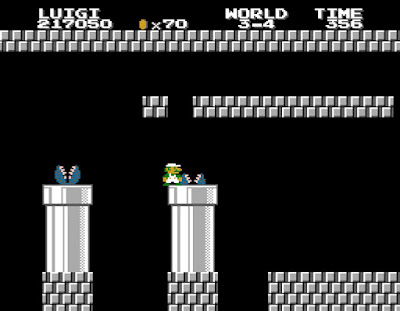
If you've ever wondered what a "proper" Super Mario Bros. sequel might look like (one thoroughly scrubbed of its Doki Doki quirkiness) then behold—your monkey's paw wish has been granted! Released less than a year after the original, Super Mario Bros. 2 on Famicom Disk System was the true successor to the platforming classic, the sequel the West was sadly robbed of. Or at least, that's what die-hard fans would grouse, before finally getting their mitts on the Lost Levels version of the game in the All-Stars collection. Nowadays you won't find too many folks urging others to play—let alone purchase—Super Mario Bros. 2 in order to complete their Super Mario adventure. And with good reason too: Super Mario Bros. 2 is a lackluster expansion pack of levels designed to be as rude as possible.


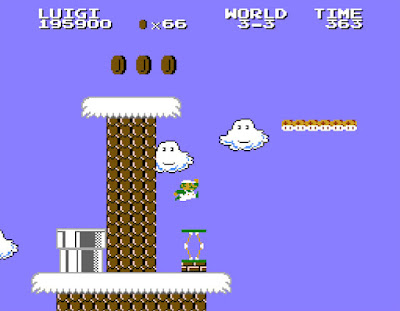
Before the proliferation of romhacks, Super Mario Bros. 2 carried an intriguing promise: it quite literally offered more Super Mario Bros. There are more levels, more hazards, more secrets, more enemy types, and even more characters—well, one more character. Luigi finally differentiates himself beyond his white painter overalls, leaping higher and further than Mario at the cost of his brake speed. He's a cool addition that transforms the Mushroom Kingdom into a low gravity ice rink, making the game a tad easier due to his ability to reach numerous ledges Mario otherwise struggles with. However, his inclusion oddly replaces the 2P option—which isn't that big of a deal, as I can hardly imagine more than one person per household actually wanting to play this game.

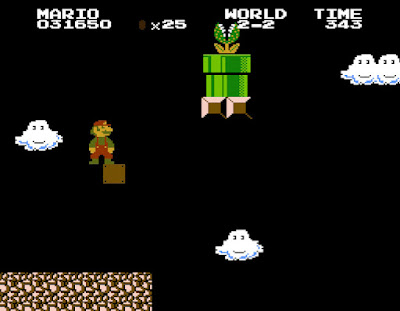
Early on (ie the third item box of 1-1), you'll be clued into Super Mario Bros. 2's new tenet: trolling. Poison mushrooms are a "power-down", bottomless pits are now ubiquitous, and there are hidden warp zones that can send you backwards through the game. Expect frequently tight gauntlets of piranha plants and fire bars to test your reaction time, as well as the occasionally hammer bro you can only bypass with a risky leap. But the worst offenders have to be the hidden blocks and repeating mazes, which will terrorize you as early as 2-2 and 3-4 respectively. It's funny that two decades before amateurs could flood Mario Maker with belligerent kusoge, Nintendo was playing the original offender, gleefully toying with its audience.

Super Mario Bros. 2 may be billed as a game "for super players" but that's a touch misleading; 2 isn't a challenging game insofar as it's a rude one. That doesn't mean it's not difficult—it most certainly is—but like Battletoads, the largest hurdle is the amount of rote memorization required to beat it. Power-ups are not only few and far between but are commonly hidden, making the game's trickiest stages (primarily World 8) feel impossible until you sniff them out. Likewise, the game isn't shy about throwing blind jumps at you—especially whenever the super spring is involved, meaning you'll have to intuit where you are offscreen. Perhaps what clinches Super Mario Bros. 2 as more "rude" than "challenging" is the paltry amount of lives you have to beat it with... unless you know of the (intentional!) 1-up trick at the start of the game.


Despite Super Mario Bros. 2's obsession with screwing you over, the level design actually ranges from "okay" to "pretty good." Stylistically, the stages are hewn straight from the first game: you have underground levels (with more pits), tree top levels (with more pits), castles (with more pits) and annoying underwater sections (with more pits and now koopas!) Because of this, I don't remember entire stages as well as their troublesome sections, like the brutal koopa hops of 4-3/8-1, the fake dead end of 5-1, the Groundhog's Day loop of 5-3/7-2, the stratospheric leaps of faith of 7-3, and the insidious secret exit to 8-2. Ironically, the common element between these sections is that they contain one of more of the aforementioned trolling devices—repeating mazes, hidden blocks, and blind jumps.

That's why I don't think Super Mario Bros. 2 is necessarily bad for including anti-player gimmicks—it's just that they'll chip away at your patience with a diamond pickax every time they're used. If you're more resistant to tilt and enjoy repeatedly running levels in the pursuit of perfection, then great! There's a good chance you'll like Super Mario Bros. 2 more than its admittedly tame predecessor. But my problem is that "trolling" is all 2 really brings to the table. Sure, there's Luigi and super springs and wind and more aggressive piranha plants... but none of those dynamically change the way you play (well, besides Luigi). Audibly, visually, and mechanically, you're essentially playing the first Super Mario Bros again, but this time with a pitiful "new" coat of paint and a penchant for cruelty. As an adolescent I dragged the American 2 for being too different, but now near my mid-30s I find the sameness to be the most disappointing thing about this sequel.

To its credit, Super Mario Bros. 2 does add in a couple of bonuses for skillful players: namely, World 9 and Worlds A-D. I like World 9 as a hyper-difficult achievement, granting folks that beat the game on a single continue only one life to make it through a surreal, underwater-only series of stages. What makes it work for me isn't just the inverted palette but that it feels like a goofy victory lap rather than a punishing final challenge. Worlds A-D on the other hand, are a fine inclusion (they're a smidge harder than the regular stages) but they unfortunately hinge on the player completing the game eight times. I could understand maybe beating it as both Mario and Luigi once, but requiring quadruple that amount is just tedious busywork. One could argue it offers good practice for making it to World 9, but I was able to get there on my third attempt as Mario—all the other five runs did was solidify my opinion on Super Mario Bros. 2 even further.

On one hand, I admit that it is pretty cool playing what is essentially the earliest Mario romhacks ever made, especially by the "casual-friendly" Nintendo. But on the other, I judge Super Mario Bros. 2 so harshly because players nowadays are spoiled for choice. There are plenty of good hacks for purists that want something similar but more creative (Super Mario Unlimited, New Mario Bros) as well as hacks that allow you to better show off your Mario mastery (Super Mario Forever/Frustration, Rohrleitung Gate). The best reason to play Super Mario Bros. 2 over anything else is to learn about a forgotten relic in history, a kind of "what if Nintendo turned nasty?" And even then, I'd suggest playing the (improved) All-Stars first, whereupon you'll quickly realize Howard Philips was right—not having fun is indeed, bad.


When I claimed that Super Mario Bros. 2 was literally "more" Super Mario Bros., I neglected to add that it's more obnoxious, more difficult, and way more tedious. The game plays with physics in interesting ways via Luigi and the wind mechanic, but all that really amounts to is needing a finer degree of precision—and a lot more memorization—to master it. Super Mario Bros. 2 doesn't offer a new dimension of freedom like 3 does, nor a compelling new playstyle like with the American 2. Its strength lies solely in its mischievous level design, and even then you have to have a high tolerance for stupid deaths if you wish to see the end. When viewing the Super Mario Bros. franchise as a whole, I don't think you can argue that 2 deserves any spot other than the rock bottom.

Monday, February 28, 2022

Forza Horizon - Thoughts


After careening through six Mario Karts straight in a row, I wanted to take a break and play something more on the simulation side. I gave franchises like Gran Turismo and Forza some serious consideration (and purchased a good number of them), but what really captured my curiosity was the Forza Horizon series. Forza Horizon 5 was soon to release so talk of the game was bubbling up everywhere—and as someone that's only dabbled in arcade and kart racers, I figured there was no better time to strike than now. But anyone that knows me can attest to the fact that I have a bit of a chronological obsession, a problem that would undoubtedly nip while vacationing in sunny Mexico. So instead I stayed in the states, booting up my Xbox 360 to return to where it all began: scenic Colorado.


I'll be frank: the first Forza Horizon is a great game. But its greatness takes on a different form compared to the fiery excellence of other titles like Spelunky and Doom. Horizon offers a subtle and warm enjoyment, radiating contentment like lounging outside on a breezy Spring afternoon. It rejuvenates not with spikes of energy but gentle massaging, applying just enough pressure to exfoliate your worries away. Horizon grips your attention tighter than other laudable diversions like Bejeweled, Hexcells, or Wordle, but it's similarly prone to meditative trances, where minutes just drift away. "Pleasant" is perhaps the best word I'd use to describe Horizon—it carefully soothes like a much-needed phone call from one of your parents.

I'm hammering on this point because honestly, there's not really a lot I can do to describe what gives Forza Horizon its ineffable magic. The game looks great despite being a decade old, the soundtrack is loaded with bangers, and there's enough content to keep you sated for forty hours—or more! But at the core of the experience is a simple promise: you can drive around to your heart's content. Naturally, there's a lot more to Horizon than that—collecting cars and dominating races are also huge draws—but the game excels most from the freedom it hands you. One moment you can be cruising around looking for collectibles, and then the next you can be slamming headfirst into a guard rail during a haphazard street race. Horizon doesn't bring anything new to the open world formula (especially since Burnout Paradise came out four years prior), but somehow manages to feel fresh and rejuvenating, even if "open world driving" isn't your cup of tea. A big part of is the aforementioned indescribable magic, emanating a tinge of... authentic homeliness, I suppose. Though that could just be my rural New York roots coloring the experience more fondly.

Another reason for my fondness is Forza Horizon's ingenious approach to custom difficulty. Rather than throwing the nebulous "easy/medium/hard" metrics at you, Horizon lets you manually tailor how realistic you want your racing to be, rewarding you with additional credits for each handicap removed. This is an absolutely brilliant approach that keeps the ball in the player's court, letting them customize their experience beyond cranking up the CPU's cheatometer. Of course you can still do that—expect the AI to maintain impossible leads on Hard and above—but modifying your own controls to increase the difficulty helps to keep races interesting, and more importantly: RNG-free.


While driving around Colorado is an exquisite experience, I have some gripes with the systems that surround and unfortunately pinch the game. Forza Horizon's biggest issue is its menus—more specifically, how obtuse they can be at times. Obviously the "pay real money to fast travel anywhere" feature is a terrible inclusion, but it's the game's needlessly restrictive behavior that's worse. For instance, once you start a race you won't be able to tweak AI difficulty, modify driver aids, change cars, or purchase new upgrades/vehicles without first backing out. And then you'll have to load the world map, start the race again, load the race data, and then you can change what you need to. Several times I wanted to test out a handful of cars for a particular track (or at least nudge the AI difficulty up/down) but each instance required a multi-minute load time, even with the game installed on my hard drive. Therefore I settled on a handful of vehicles as my dependable go-tos, ironically betraying the collectible mentality of the Forza series.

Another problem I routinely ran into was trying to figure out what cars were viable for which events. Some of the descriptions are self-explanatory (it's not hard to guess what's required for a "Toyota only" event) but there were a bunch I had no clue for, like decade-specific events, price-specific events, and drivetrain-specific events to name a few. Horizon will notify you whether or not you need to buy a new vehicle, but you won't be able to see an eligibility list—that is, unless you personally drive to the event to start it (which incurs yet another load time.) And while the game is nice enough to let you purchase directly from the eligibility list, you can't manually tweak the cars or even take them for a test drive!

Note that all these grievances have a commonality: they burden you with load times that keep you from playing the game. Forza Horizon would undoubtedly be improved if these problems were fixed, but at worst they render your experience inconvenient—not insufferable. Plus I imagine the more one knows about cars and racing, the more these issues would come across as speedbumps rather than roadblocks. The core of Horizon itself—the controls, the engine, the visuals, the music, the atmosphere—are all encased in solid gold, not only standing the test of time but managing to frequently impress a full decade later. Forza Horizon is a stunning, priceless package; I feel as though I've missed out on nothing by jumping into the first entry instead of the fifth.


I would have never expected Forza Horizon to be the ideal dessert to my painfully fickle Mario Kart entrée, but here we are. Horizon showed me the perks of serious racing without including too much simulation to drag down my integrity, keeping my cruise light, breezy, and blissful. Plus I got to learn a little more of the automotive world, realizing which manufacturers and models I prefer (Audi R8 GT baby!), as well as which types of vehicles and events I detest (hatchbacks and rally racing—it's not fun sliding around everywhere.) I enjoyed my time with the game so much that I went out of my way to complete every racing event, as well as drive across every road. Even after exhausting the non-repeatable content, I didn't feel like the game dragged on too long or lacked enough to do—Forza Horizon was genuinely the perfect drive.

---------------------

Images obtained from: amazon.com, forzamotorsport.net

Friday, February 18, 2022

Mortal Shell - Thoughts


Whereas some games wear their Dark Souls inspiration on their sleeve, Mortal Shell fashions its entire suit out of From Software's fabric. Most of the series' staples are here: a grim fantasy world, trigger-focused control scheme, laborious combat, corpse runs, bosses with esoteric names, experience that doubles as currency, lore through item descriptions, et cetera, et cetera. But to Mortal Shell's credit, it applies some creative twists to the well-worn genre, generating new mechanics in the process. It's a neat and ambitious game... that unfortunately feels like an unbalanced tech demo in the end.


Surprisingly, Mortal Shell offers that rare introductory Souls experience that few games nowadays provide, where the opening hours feel like bullshit. You're given no direction, no estus flasks, and a forest littered with nasties that want you dead. As if that wasn't bad enough, Mortal Shell doesn't even offer a class, weapon, or item selection at its start—nor are you able to level your stats! It's like being dumped naked into 1-1 of Demon's Souls armed with only a longsword, and the best moon grass you can find is half as effective as the crescent variety. But you better learn to love that eighth moon grass because it's the best healing you'll find for the entire game.

You're not left entirely defenseless however, as Mortal Shell provides an new way to shield: hardening. By holding LT you can innately block any type of attack, transforming your flesh into an impenetrable statue à la the tanooki suit. This ability is also on an extremely generous cool down, allowing you to counter every other combo made by your opponent. It's a bit tricky learning to rely on it as a Souls vet, since it's best used in the middle of an attack animation to avoid interruption. Plus your impulse will likely be to mash roll or parry—both of which can be done here in addition to hardening. It's a cool mechanic though, and is super gratifying to pull off in the nick of time.

Another unique aspect about Mortal Shell I liked were the titular shells. While you can't choose what build you start as, there are three inhabitable bodies you can stumble upon out in the wild: one with high health, one with high stamina, and one that offers a compromise between the two. You may not be able to level these husks in a tradition sense but you can still dump your souls tar into their individualized skill trees wheels. Though I found the wheels to be underwhelming (a 5% resistance buff upon taking damage... hooray...), it was an interesting way to portray character growth beyond the trite "watch number go up."


The way Mortal Shell handles items is ingenious too—on paper. Every item you stumble across will have an unknown use until you consume it, incentivizing you to experiment with everything you pick up. The more you use an item the more familiar with it you'll become, eventually upgrading its potency to a second tier. I thought this was brilliant when I stumbled upon the tarspore—consuming the fungus can transform it from a poison edible to a poison-immunity treat once it hits familiarity. But every other item in the game is mundane by comparison; their effects become a tiny bit better once you cross the familiarity threshold. Considering how low-impact most of the items are already (I get health back for a single parry?), their evolved forms didn't do much to convince me they were even worth using in the midst of combat.

Early on, when your ass is being repeatedly handed to you, you'll probably stumble upon a mighty realization: dying is kind of... good? Not that being sent back to a checkpoint feels rewarding—it's frustrating as hell—but dying creates a statue of your shell you can reclaim for full health upon return. As you can already survive one ejection per life, your stone corpse serves as a second full heal waiting out on the field. Factor that together with the Eredrim shell's massive health pool (seriously, the dude's a tank), and you won't need consumables to win battles—as long as a copy of your corpse is nearby, any fight can be won through endurance alone. (Well except the last boss... you have to learn to roll for that obnoxious hopping dingbat.)

Combat is fun for the most part, as enemies run the gamut from slaughter-fodder to competent swordsman to "oh no not this guy!" But the problem with Mortal Shell's bestiary is that there's just not enough variety. The three arcs of your journey each feature a different—but small—set of enemies to clash swords with, but they're reused so many times that combat becomes stale and repetitive, your blade worn down to a nub. Given how sluggish and costly parrying can be, skipping encounters is often the safer option later on, especially during a gland run. Plus I didn't find much of a reason to fight foes once Eredrim was fully upgraded. Sure, I could funnel his tar into the other shells and try them out, but as soon as the going got tough I would revert back to the ol' dependable-Venerable. 

Amongst Mortal Shell's (many) shortcomings, the worst has to be its scarcity of locales. There are only four major zones in the game, each split up into three similar-looking subregions. The Seat of Infinity is the only zone of the four I'd readily call awe-inspiring: it's an expanse of pitch black stones carved into looming, brutalist architecture, bending even gravity to its will as you venture deeper inside the ominous Dim Gate. Unfortunately the area drags on for forever, emulating the charred remains of Lost Izalith. Yet compared to the other areas it's the crowning jewel of Mortal Shell; the three remaining zones are a gigantic swamp, featureless cave, and some chilly catacombs. Each are comprised of muted, featureless corridors that often blend into one another, with the swamp being worst labyrinth of the lot—which is an egregious sin for a hub world to have! Toss in a washed out color palette, dearth of shortcuts, and the aforementioned enemy problem, and you'll be happy when the adventure is finally over.


While Nioh still retains the top spot as the premier 3D soulslike, Mortal Shell is a confident runner-up that's not without its flaws. Its merciless start offers no options other than "gitting gud", but as long as you can endure the initial beating you're bound to find something you enjoy. The combat has its foibles but is solid for the most part, and while its reuse of enemies was tiresome the placement of them was often devious, if not clever. I maintain that it's worth a playthrough for die-hard fans of the genre, as it's the closest a game has gotten to loyally copying Dark Souls. And hey, if that doesn't tickle your fancy—at least Mortal Shell can reveal all the things From Software does right by occasionally showing you what could go wrong.