Tuesday, May 31, 2022

Naboki - Thoughts


Would PUSH have been a better game without the fixed perspective? Naboki serves as the answer to this question, continuing its predecessor's penchant for tedious clicking—but this time in the thiiiird dimensiooon! There's actually a little bit of every one of Targoni's puzzle games here, letting you shift, rotate, and align blocks, all while taking into account the physical space these puzzle cubes occupy. It's a clever game that is unquestionably better than PUSH, however it bears an unfortunate flaw: Naboki is too short.


Now, I understand that complaining about the brevity of a Marciej Targoni game is an oxymoron, like whining about a Team Ninja title being difficult; the alleged foible is the appeal of the developer. But whereas PUSH and Up Left Out provide complete experiences, Naboki feels as if it was cut short, lacking 10 puzzles or so. Perhaps it's just my imagination—klocki lasts just as long (50 minutes) yet I didn't ding it for its length—but I still would've liked to see maybe a little more from Naboki. One or two more mechanics would've really hit the spot, or a couple more levels that utilize every mechanic you've learned thus far.


Although in hindsight, perhaps it had enough mechanics by the end; puzzles in Naboki become so convoluted that you can't help but bumble your way through. I wouldn't go as far as calling it "trial and error" but Naboki borrows from PUSH's tediousness, delaying your victory with a checklist of switches that need flicking. Thankfully, Naboki counters its predecessor's failing by offering the player freedom—in the form of the third dimension. Whereas PUSH was designed around clicking on stuff in a preset order, Naboki centers itself around exploration. You're expected to spin its puzzle cubes as inquisitively as a tot at daycare, hunting for the right spot to begin chipping away. While it can feel a bit plodding at times (especially when there's half a dozen switches on screen), Naboki manages to remain more playful than dull, largely because progress is never ripped away. Every step you take towards the solution is permanent; every block removed gradually reveals your victory.


Naboki can be a bit cumbersome at times—particularly if you struggle with object permanence—but it's still a fun game to spend some of your downtime on. I found Targoni's description of it as a "disassemble puzzle" to be quite apt, evoking the same strange catharsis found in unraveling a Lego structure brick by brick. Naboki is patient, humble, and sadly brief; give it a go if you like seeing your puzzles crumble.

Friday, May 27, 2022

Death's Door - Thoughts


[contains minor spoilers]

Acid Nerve taking a second shot at a combat-focused Souls-like was a gift I never knew I wanted. I left Titan Souls feeling that it was unremarkable—and as time has passed, forgettable too—but there's no way I could say "no" to seeing what a follow-up might look like. And from the reveal trailer, Death's Door knocked it out of the park: it had a charming art style, meatier combat, and no longer hinged upon getting lucky with a single attack. Acid Nerve took inspiration from The Legend of Zelda and Hyper Light Drifter while avoiding the pitfall of creating a copycat of either. After finishing it, I can say that Death's Door is all that and more—but perhaps most crucially, it's just a straight-up good game.


Before I go any further, I must confess that my experience with Death's Door is bizarrely tinged due to playing it soon after finishing Tunic. The comparisons are inescapable—both are isometric RPG-slash-metroidvanias featuring melee-oriented combat supplemented with various ranged attacks. But whereas Tunic has a stronger focus on world cohesion and puzzles, Death's Door is centered on arena brawls and stage variety. Coincidentally, the pros of one game happen to be the cons of the other: Tunic has flimsy and unrefined swordplay while Death's Door lacks any kind of meaningful discovery. There are unexpected secrets in Death's Door to be sure—the entire postgame is built on that premise—but you won't find the same variety of secret paths or unpredictable twists that are sprinkled across Tunic. Death's Door prefers to play it safe, adhering strictly to a "hub world > upgrade level > boss level > boss" formula, doling out abilities that will be all too familiar to fans of Zelda.

Thankfully, Death's Door manages to astound in spite its faults. The combat in particular is a lot of fun; imagine Hyper Light Drifter but slower and more methodical, pitting you against quirky enemies that you'll need to corral rather than decimate. I also enjoyed the levelling system, which allowed me to choose the stats I wanted to focus on first. I'm usually a big dumb STR player but this time I dumped my early level-ups into magic so I could pelt my foes from afar with ethereal arrows and piercing fireballs. Naturally that playstyle paired well with the lightning-fast daggers, letting me refill my mana reserves in a flurry of emerald strikes. While I found the weapon variety to be mostly lacking (every weapon feels carved from the same template), I was impressed by how different the magical attacks were, each of them filling a particular niche (well, after being upgraded). Tunic's combat eventually became laborious but Death's Door kept me enthralled all the way to the end. If anything, I was bummed out whenever I wasn't fighting.


Though Tunic takes top spot in the exploration category, Death's Door will still set the player wandering aplenty. I rarely get lost in video games but my internal compass sure was tested in this title; you'll stumble upon so many looping pathways and unlockable shortcuts that losing your sense of direction is unavoidable, especially whenever you return to the cemetery hub. On one hand, the labyrinthine nature of Death's Door is forgivable because you never really need to backtrack to finish its linear story. But on the other hand, completionists will see their playtime doubled—if not tripled—due to the numerous laps you'll run looking for goodies you could've sworn were nearby.

Yet even if you get lost backtracking through Death's Door's vacant estates, you'll have some great music and gorgeous visuals to accompany you. I think Tunic's vibrant aesthetic is more my speed, but Death's Door feels similarly handcrafted and cared for, designed to look soft without ever sacrificing detail or energy. Enemy design is also spectacular, managing to walk that thin line between being eccentric and familiar, letting you marvel at what you're fighting while intuitively understanding how to fight it. And atop all of this is David Fenn's emotive, majestic score that conveys the history of a setting a thousand times better than dialogue windows ever could. Lastly, the story and characters are quite charming—an impressive feat, given that the gloomy inevitability of death that underpins the entire game. Expect some surprisingly touching moments here and there, but know that Death's Door prefers to make you smile rather than weep.


One of the best aspects about Death's Door—something I didn't realize until writing this entry—is that it comes across as its own thing. From the story, to the art style, to the enemy design, bosses, and friends you'll make along the way, the game has a lot of personality. And it's not as though Titan Souls was lacking personality per se, but that Death's Door feels so much more polished and expressive. Acid Nerve not only learned a lot from their previous title, but have somehow captured that elusive artistry of marrying passion to workmanship, innovation to foundation. Death's Door isn't perfect, but it doesn't need to be—it's beautiful, fun, and memorable, a trifecta most games rarely achieve.

Tuesday, May 3, 2022

PUSH - Thoughts


Out of all of Maciej Targoni's simple puzzlers, I found PUSH to be the least appealing. It's not a terrible game per se, but it demands a lot of recalling and spatial manipulation, neither of which feel engaging to exercise. PUSH is one part memory matching game, another part code breaker, and a third part tedious fiddler—and it's the "tedious" part you'll experience the most. It's admittedly callous to criticize the game so harshly—especially considering its infinitesimal cost—but if you're looking for a nice, chill puzzler to soothe the brain-aches, Targoni himself has plenty better to offer.


PUSH starts off as simple as can be, requiring the player to click on matching buttons to solve each puzzle. Soon a pink knob is thrown into the mix which can rotate the object you're looking at, granting access to buttons hidden from your fixed view. The game carries on like this for a while, occasionally throwing a new gimmick your way like alternating black & white buttons or operating a jelly cube to push buttons you cannot. For the most part it's mildly entertaining, but a nagging suspicion will creep up the back of your neck, whispering that all you're really doing is mindless busywork.

Hook similarly suffered from this problem, the issue here is exacerbated in two ways: not only does a single incorrect guess reset a good chunk of the puzzle (if not the entire thing), but information is often concealed from the player, requiring constant rotations of the puzzle polyhedron. This isn't a big deal early on—so long as you can recall a handful of shapes—but the deeper you go the more the game tries to confound your memory. Eventually you'll be flicking switches faster than a mad scientist, checking each side in the hopes that you haven't forgotten a concealed button somewhere that could unravel the entire sequence. Understand that PUSH's hardest puzzles aren't its most complicated but rather its most obfuscated, where the solution veils itself in a surfeit of viewpoints.


Halfway through, PUSH doubles down on this approach, introducing buttons that must be pressed in a precise order. Thankfully the game denotes which button to start with, but deciphering the right path can still be an irksome experience. PUSH arbitrarily discounts buttons hidden from view, sometimes penalizing the player for forgetting a hidden button, yet other times discounting the hidden button entirely as part of its solution. You'll eventually grow accustomed to the game's strange reasoning, but it won't come with that special epiphany that defines the greatest puzzle games. Your comprehension will be a lukewarm "I guess" as you start over, trying to remember which button among the dozen hidden did you in.


Again, I don't think PUSH is a bad game; if you're a fan of Targoni & Hamster on Coke's work, you won't lose anything by ambling through PUSH. It's short, cheap, and at times kind of pretty in a minimalist way. But for me, it's just a little too unengaging to require the amount of memorization it asks of the player. Hook is for folks that like untying knots, Up Left Out has a huge variety of sliding tile puzzles, and PUSH... well, all it brings to the table is the feeling that you forgot your car keys over and over again.

Saturday, April 30, 2022

Tunic - Thoughts


Ignorance is the double-edged sword of childhood. You are born into it and made happier by its presence, albeit unwillingly. As one grows older so too does their pool of knowledge, aging into wisdom like a fine wine. But with that maturity comes (or should come) the loss of naiveté, the juvenile fount of joy. Childlike glee dulls—if not fades entirely—over the years, an arduous realization that will cement itself into late adolescence and early adulthood. Though man is made better, surer, by the loss of ignorance, it takes with it an enviable bliss, one he may find himself devoting a considerable amount of his adult life toward reclaiming.

Basically, it's nice finding stuff that can turn us into a kid again. What I find common among media that evokes this is that they often challenge expectations, opening a door on your ignorance to reveal brand new possibilities. Despite being eagerly sought out, examples for this are numerous: the provoking layout of House of Leaves, Undertale's messages directly to the player, the gruesome deaths in Game of Thrones, the slow-boiling scenes of 1979's Stalker, the crushing waves of Nadja's Radiance of Shadows, and hundreds, if not thousands more. Yet foolishly, after each invigorating experience, one wonders if anything can drop their jaw like that again.

So let's talk about Tunic.


Tunic's inspiration is nakedly obvious—it's an isometric adventure game modeled after the original Legend of Zelda. Its references to Link's debut are plentiful, from the items you'll acquire, to the location of secrets, to the adorable art found inside the game's manual. Sprinkle in some Soulslike combat (stamina meter, health flask, corpse runs) and Tunic doesn't just make nods towards its idols—it full-on headbangs. Yet despite Zelda and Souls being perhaps the most trite combination for an indie dev to mash together, there are two more things about Tunic that propel it from mundanity into sheer brilliance.

The first is its presentation; Tunic is a really good looking game. Note that I played it immediately after finishing Elden Ring too, a veritable giant of unparalleled art direction! But whereas Elden Ring goes big and wide, Tunic aims small—its world is simultaneously soft and vibrant like polymer clay, inhabited by creatures as adorable as their chibi renditions in the manual. You play through Tunic as you would explore a diorama, peeking around its handmade nooks and crevices for secret paths and hidden goodies. And the cherry on top of this stunning sundae is Kwan & Lifeformed's equally gorgeous soundtrack, providing not only a lush and mysterious ambiance, but one that is piercingly meditative—if not mournful—most of the time.

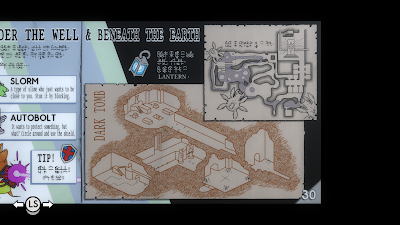
While Tunic's aesthetics alone are plenty laudable, the second thing it has going for it is where the game truly shines: its in-game manual. To anyone that hasn't played the game, that probably sounds as unexpected as it does bizarre—and that's merely the first surprise Tunic has in store! The entire game doesn't just emulate Zelda out of adoration, but with mischievous purpose: Tunic recreates the experience of playing an imported Legend of Zelda game, with your only guide being a paper manual written in a foreign language. But it unveils its secrets slowly, meticulously doling out one double-sided page at a time. You'll first be given tips on your controls, then the surrounding map, then the items you've been gathering—all while trying to parse gobbledygook that could be hiding important information. And those precious few pages are just the tip of the iceberg—Tunic is a treasure trove of secrets, some of which can actually change the way you play.

A little ways in, Tunic will reveal its third—and arguably largest—inspiration: Fez. A big chunk of the game hinders on navigating Tunic's dense world, rewarding you not just for memorizing pathways but pushing against the game's boundaries in the hopes of a new discovery. Like Fez, its camera (albeit static) doubles as a hurdle to hide puzzles and pathways, provoking the player to question everything. Similarly, there's an unexpected endgame squirreled away inside of Tunic that a majority of players probably won't access, even with the cryptic language being an optional challenge to decipher. The more similarities I describe the closer I inch towards spoiler territory, so let me entice you with one more tease: the enigma that lurks at Tunic's heart is probably the best puzzle I've ever solved in a video game.

If the manual serves as Tunic's splendid soul, then you might be wondering how its body—the gameplay—fares in comparison. My answer is noticeably less enthusiastic: not too bad. Traversal is a bit slow at the start but gradually picks up as you uncover secret roads and unearth new items. Combat on the other hand feels unrefined, mostly due to your character's weighty roll. Tunic provides you with i-frames but you'll find them lacking compared to the swift and wide-reaching attacks of your enemies. Upon encountering the Garden Knight you'll see exactly what I mean—and battles only get more complicated and ruthless from there.

The final act in particular features a hyper-aggressive gauntlet, one that will undoubtedly waylay folks drawn to Tunic for its serene atmosphere. Combat-hardened players will be able to muscle through it (as well as the brutal last boss), but that doesn't prevent the endgame from feeling like an unprecedented spike in difficulty. It's important to remember to play Tunic more like Zelda than Dark Souls—your items are often more impactful than your sword, so don't be afraid lob grenades and blast away with magic. Tunic's insistence on the player utilizing their entire arsenal is what keeps me from deeming its combat as "poor", as you're given plenty of options to neutralize annoying enemies and dangerous threats. Plus, like with Zelda, combat is mostly an auxiliary diversion to the game's main draw: Grade-A Adventuring.

Anyone over thirty has likely played a fragment of Tunic before, whether it be roaming the grassy overworld of The Legend of Zelda, engaging in the dodge-centric duels of Dark Souls, or busting out the ol' pen and paper for Fez. But to reduce Tunic down to its core inspirations does a disservice to how skillfully it combines these aspects together, creating an experience that's constantly clever, unique, and fresh. It's a decent game for intrepid explorers but a must-play for the puzzle connoisseur, especially if you like thinking outside the box. Tunic may not be for everyone—players that frequently find themselves lost in games will undoubtedly suffer—but for anyone that sticks with it, you're guaranteed a memorable experience at the very least.

Friday, April 15, 2022

The Great Ace Attorney Chronicles - Thoughts


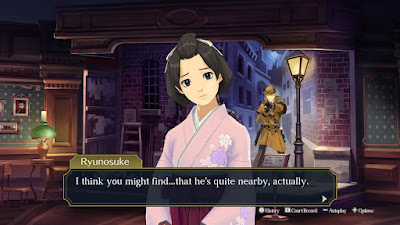
The Great Ace Attorney Chronicles manages to pull off an incredible feat, one which every game in a modern franchise can only dream of: it surpasses its predecessors. What's doubly impressive about this accomplishment is that the original trilogy can stand tall off of its unique premise alone, whereas The Great Ace Attorney doesn't really bring anything "new" to the series. Rather, where The Great Ace Attorney's excels is in its masterful craftsmanship, culminating in the best story Shu Takumi has penned yet. It's a roller coaster of bizarre twists, endearing characters, and mysteries so elaborately tangled up that even the great Sherlock Holmes would be left stupefied.


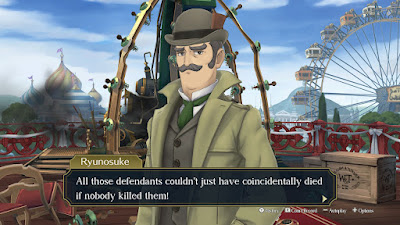
At first blush, this may all sound like a baseless boast, especially given how The Great Ace Attorney opens. You'll note early on that the narrative moves at a glacial pace, turning its first case—the intended tutorial—into an overwrought and verbose affair. This pervades the entire experience, as events, details, and motives are explained and then re-explained in elaborate detail, heedless of the player's understanding. Characters will belittle and infantilize you in court as you wait to present decisive evidence, drawing out conclusions that you've worked out several lectures ago. While this foible is present to some degree in every Ace Attorney game, it's arguably at its worst here—particularly because Shu Takumi should know better by now. The sole vice of The Great Ace Attorney's is that it's incorrigibly loquacious, like a college professor enamored by the sound of their own voice.

But as long as you don't mind being battered by wordy tidal waves, The Great Ace Attorney offers a fantastic ride from start to finish. Even its plodding first case contains several twists and turns, turning it into a struggle befitting of a penultimate case in an earlier game. The Great Ace Attorney doesn't let up either, repeatedly gobsmacking the player with baffling developments, wild conspiracy theories, and enough red herrings to make you suspect a nine-year-old of murder. So many mysteries underpin The Great Ace Attorney that by the end of the first game in the duology, you'll be left with more questions than answers. Fear not however, as by the end of the second every disparate piece of evidence will link together, like the cogs of a great machine.

And therein lies what makes The Great Ace Attorney so good: it's a competently told, standalone story. No character is invincible because they're a fan favorite, no ally inscrutable because they're on the "good" side, and no villain so deplorable as to commit a crime for the sake of it. The Great Ace Attorney's is an elaborate tale of nationalities and deep-seated hatreds, where conflicting ideologies mix with freak accidents to produce Machiavellian outcomes. At times the yarn it weaves is as fantastical as it is improbable, but glimmers of reality will bleed through, painting the world as a tragic place where good intentions frequently clash with carnal impulses—and often lose.


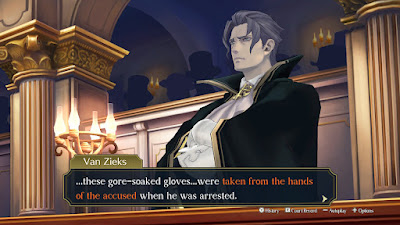
It's difficult to talk about the game without delving into full-on spoilers, so I'll just say that I was left very satisfied with how The Great Ace Attorney Chronicles resolves. While it's by no means perfect—expect some preposterous motives and incongruous details—the mystery surrounding the Professor case is utterly captivating. Even if you correctly guess the perpetrator lurking at its core, the way the final trial unfolds is spectacular, delivering some dark revelations that took me by surprise. Given how easy it is for a murder mystery to misstep in its final act (see Dual Destinies and Pretty Little Liars Season 7), The Great Ace Attorney deserves to be commended for not only delivering a convincing climax, but doing so with an unexpected, morally-gray gut punch.

Of The Great Ace Attorney's many delights (including its knock-out soundtrack), the way it plays with expectations is my favorite. Despite the franchise formula being well-trodden by this point, there are some genuine surprises to stumble upon in court—especially if you're expecting the game to mirror its predecessors. While I'm impressed most by the final case of the second game, it's the third case of the first game that left me smitten, as I pulled several 180° turns trying to guess its outcome. In fact, I don't think there's a bad case between either game; there are some laboriously long trials, yes, but every case is peppered with reveals both big and small that'll push you onwards. Be prepared for anything, from an innocent-yet-unexpected pet to a curious piece of evidence that can blow the case wide open. If you've grown weary of Phoenix Wright's 20-year-old tricks, I wholeheartedly recommend giving The Great Ace Attorney an try—there's bound to be something here that will impress you.

If you're a new player however, be forewarned that the game is long—very long. Like 80 hours long. The Great Ace Attorney is an exhaustive undertaking akin to Persona 5, where you'll have to chip away at it over the course of several months. I very much enjoyed the time I spent with it, but I'd be lying if I said I wasn't tempted to start another game after the conclusion of every other case. And like Persona 5, it's an absolute marvel of ambition... that you probably won't be touching again until a decade or two has passed. Still, a game's replayability isn't its sole defining factor; The Great Ace Attorney is worth the price of admission for the amount of "wait what?"s it elicits on the first time through.


While I contend that The Great Ace Attorney Chronicles would be improved with a firmer editor (you could probably cull 10% of the script without sacrificing anything of importance), everything else about it is spot on. If you're in the mood to read a tale as charming as it is impactful, and as puzzling as it is goofy, then The Great Ace Attorney will not disappoint. It really can't be overstated what an accomplishment it is for this duology to dethrone the OG trilogy. The Ace Attorney Trilogy might be the better introduction but The Great Ace Attorney is the more provocative package, in theme, style, story, substance—you name it. It is gaming's greatest whodunit, one that will leave you with a single question after its credits: how can Shu Takumi possibly outdo himself next?

Monday, April 11, 2022

Up Left Out - Thoughts


I have a bit of a love-hate relationship with sliding tile puzzles that—admittedly—leans on the latter more than the former. When the tiles are faceless or asymmetrical, I usually enjoy monkeying with the pieces until I accidently come by the solution. But for traditional puzzles, I'm forced to relive my childhood frustration, transported back to the impenetrable bonus minigame from Bart vs. the World. I'm obviously better at them as an adult than a child, but I nevertheless view them as the more restrictive and unimaginative cousin of Sokoban-style puzzles. Thus, I began Up Left Out cautiously, uncertain if I'd be forced once again to mash together the irreparable bust of Homer Simpson.

But thank goodness I stuck with it—Up Left Out is a fantastic little puzzler that will give your brain a delightful workout.


Like with klocki, Up Left Out's greatest strength is the way it frequently plays with its rules. It starts off with a simple goal: move every block once. Eventually new objectives and gimmicks will weasel their way onto your board, like blocks of varying sizes, blocks you can rotate, blocks that need to be aligned, and blocks that grant access to similarly-shaped blocks. If that sentence sounds silly or confusing, have no fear; Up Left Out carefully complicates its mechanics one step at a time, ensuring the player never feels lost.


As you continue to rotate, align, and mimic the blocks on the table, you'll notice that there's a kind of unexpected quirk to the way they move. The board itself utilizes classic ice physics, meaning once a block moves it won't stop until colliding with the wall or another object. At first I feared this would make puzzles more step-intensive than they needed to be, but I quite enjoyed the mechanic by the end. It keeps the constant reorganization of the tile puzzler interesting, sometimes turning what would otherwise be a simple move into a challenge.

Up Left Out bears a decent mix of easy-to-moderate puzzles, taking care not to lean on one mechanic too heavily. The fifth to last puzzle (pictured below) is probably the most complicated, requiring deft maneuvering inside of its claustrophobic confines (which is why it's my favorite). Besides that, you won't find any real brain scratchers among the lot. Up Left Out prefers to stimulate rather than demoralize the player, so you'll always be close to a solution as long as you can muster up the brainpower. If it's lacking in any area, it's that it might be a bit too short—but with a $1 price tag, it's kind of silly to ask for more.


I found Up Left Out to be a lot of fun, offering a pleasant diversion that you can blast through in one or two afternoons. It's more of a substantial puzzle game than Maciej Targoni's other entries, but still adheres to his philosophy of keeping the experience tranquil and relaxing. Up Left Out tests but never confronts, knowing how to keep the player calm without putting them to sleep. It's one of the few tile puzzlers that I can jibe with; if you spot Up Left Out on sale, don't hesitate to pick it up.

Thursday, March 31, 2022

Narita Boy - Thoughts

 
[contains minor spoilers]

Undeniable is the passion that drips from Narita Boy's pixelated pores. It's a game designed by an artist, painting a vibrant and cautionary tale of obsession, ostracism, and the value of family. While screenshots of it are stunning, in motion it's a categorical wonder. And I'd heap even more praise atop Narita Boy's pedestal... if not for the fact that as a video game, it's a fairly troubled product. It straddles the line between "okay" and "mediocre", unsure if it should be a metroidvania, scenic platformer, or battle-focused brawler. Narita Boy is an easy game to suggest a trailer for, but a hard game to recommend a playthrough of.


First off, I can't make heads or tails over whether I enjoyed Narita Boy's story or not. Early on, you'll be subjected to massive blocks of text from NPCs—and that never really lets up. Worse yet is most of the dialogue is jargon-heavy, tossing out proper nouns like the first draft of a fantasy novel. Reading gradually turns into a chore as directives and backstories are frequently interwoven, utilizing so much programming language that you're never really certain what the hell it is you're supposed to be doing. At the best of times there will be a modicum of cogency, but at the worst of times you'd be better off interpreting it high on acid.

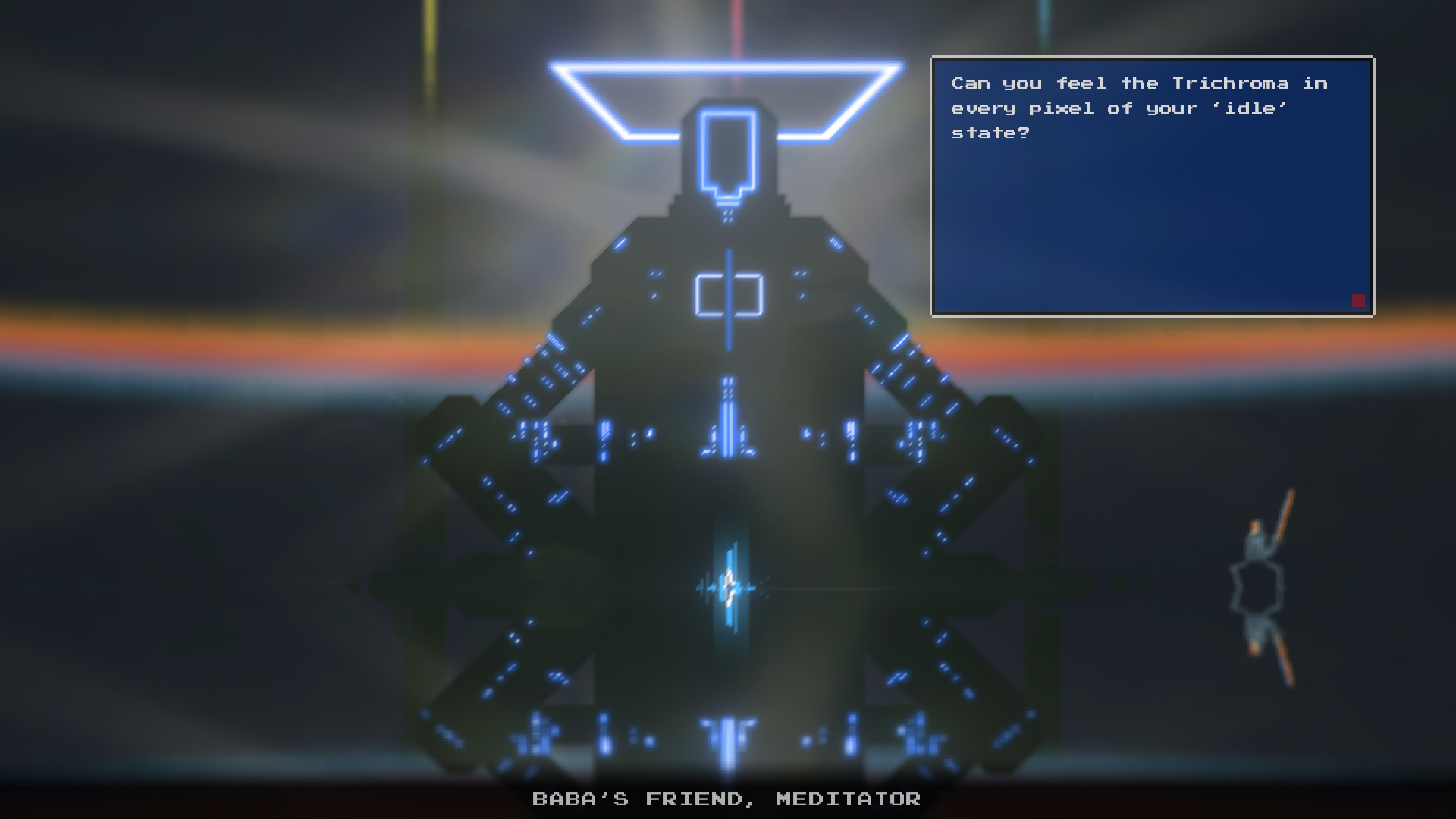
Yet there's a beauty and subtly to Narita Boy, one I didn't expect given its cartoonish opening. Narita Boy's story opens by emulating Tron but unfolds closer to Ready Player One, using the digital world as a means to detail the life of its lauded-yet-troubled creator. You'll learn about his childhood, early trauma, favorite hobbies, and the emotional ties to his family. It's quite touching at parts (in no small part due to the pensive music), hiding a lot of gorgeous detail in each of the vignettes you unlock. Plus it provides a nice, humanistic reprieve from the silly digital people and their all-too-videogamey problems.

However, Narita Boy fails to stick its landing in a graceful manner, opting to read too literally for my tastes. The central villain—the black and crimson cloaked HIM—doesn't merely represent a digitized malice born from the creator's darker inclinations; HIM can physically enter the real world and plans to do so in order to subjugate all of humanity. It's a bizarre motive that shifts the narrative away from how trauma can fracture one's reality, leaning heavily into a juvenile, tokusatsu-esque goal of "save the world from the bad guy." It's a little hard to describe if you haven't played Narita Boy, but it effectively takes the interior struggle of the creator and morphs it into an external threat, transforming HIM from a personal villain into some faceless, unnuanced evil.

Additionally, central to Narita Boy is the poignant theme of a mother's love and guidance—something nice to see in a medium dominated by sad-dads. I thought it was a good twist too, given that the game starts with Narita Boy's mother stereotypically nagging him to stop playing video games and go to bed. But as the story continues, the theme really only extends to the creator's mother—and even then, her guidance is somewhat muddied by prophecy. At its end, Narita Boy re-emphasizes the love of the creator's mother while callously discarding the titular character's own mother (while she's injured no less!) in favor of teasing a genre-shifting sequel. Similar to the HIM development, it just goes to show how Narita Boy prioritizes being epic over being meaningful.


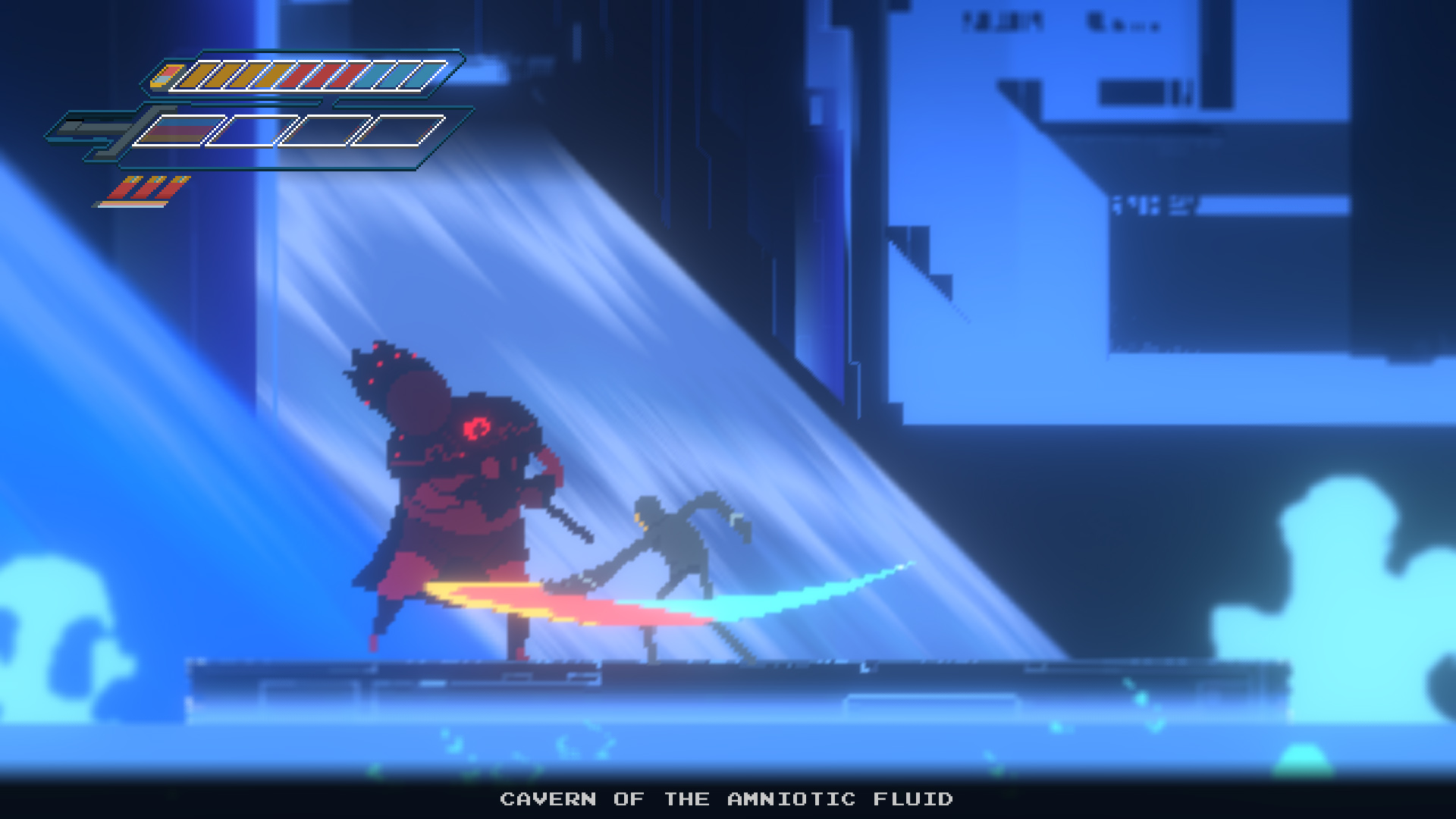
While the story didn't come together in a way I had hoped for, the visuals absolutely blew me away. Seriously, seeing how many frames of animation are contained not just within Narita Boy but each of the enemies and all of the background NPCs is mind-blowing, especially given how you only see a big chunk of the world once. Encounters like Black Rainbow, White Noise, and the final boss are a wonder to behold, and if there's one reason I'd have for recommending Narita Boy, it'd be to marvel at the game's fluid, playful artistry. The music is also appropriately moody during exploration but goes hard on the synths when the action picks up, fitting the game's aesthetic nicely.

Would that I could say the same about the gameplay, but that's where Narita Boy stumbles the most. Exploring the world is a confusing, bewildering mess until you understand that you're either doing one of two things: remembering where locked doors are or hunting down colored passcodes. Narita Boy is structured like a metroidvania, doling out traversal-boosting powerups and frequently requiring backtracking, but its progression is entirely linear, blocking access to earlier sections once you've completed them. It's not as annoying as it sounds however, as there aren't any health, energy, or damage upgrades; as soon as you pick up the trichroma sword, you'll have everything you need to beat the game. So Narita Boy gets the worst of both worlds: it's tediously sprawling while simultaneously lacking a gameplay motive to explore.


Likewise, combat is also a disorganized mess that takes some getting used to. By the end you'll have a variety of ways to engage your opponents, but since attacks have little-to-no animation canceling, expect to be doing hit and runs for the most part. Narita Boy also slides around like his shoes are coated in butter, so expect to occasionally collide with enemies and slip off ledges. Your sword comes with a nifty little shotgun blast but it shares the ammo with the laser beam (your most powerful attack by far), so you won't really be using it outside of an accidental finger slip. And there's plenty more to whinge about: the charge attack can only be done after a standing swipe, the shoulder bash is ineffective on most foes, the dodge button sends you backwards—but the thing that gets me the most is that you don't heal between fights. Instead you have to consume precious energy to recover one pip at a time... or you can die and restart nearby with full health. Why? Why make me spend five seconds killing myself at the start of every lengthy encounter? Why not at least heal me after boss fights, or save the "no healing" for a harder mode?

While Narita Boy boasts a healthy variety of enemies, almost all of them come with bloated HP values. Later on you'll get the ability to do more damage if you match your color to theirs, which carries the downside of same-colored foes doing more damage to you as well. I actually quite like this gamble, but sadly only a handful encounters encourage this buffing system. Some battles will simply have you switching to one color and dispatching the most annoying (ie tankiest) foe with a laser shot, while other battles won't use the dynamic at all, forcing you to whittle down enemies one inefficient stab at a time. There's a couple of decent gauntlets at the end of the game that push you to switch often and quickly, but by then it's too little too late.


There's plenty to like about Narita Boy—but there's also a hell of a lot that feels off. It's ultimately a hyper-polished amateur project, having the creative chops of an indie gem that's been unfortunately stuffed into the sloppy body of a late 2000's Newgrounds game. Perhaps it needed a few more programmers, or a larger playtesting pool, or a bit more time in development—or maybe this is exactly the game Studio Koba wanted to make, warts and all. They're clearly a talented developer that poured a lot of manpower and sweat into their product, which is why I feel so down on disliking it. Narita Boy at least put Studio Koba on my radar... but I'll likely be going into their next title with warranted skepticism.